

Many Lagos landlords believe that once a tenant defaults on rent, they can simply change the locks. This is a critical, and often criminal, mistake. The only legal way to evict a tenant in Lagos is by obtaining a court order. Attempting to remove a tenant yourself, a practice known as “self-help,” is a criminal offense under the Tenancy Law of Lagos State 2011. This guide provides the precise legal process for how to evict a tenant legally in Lagos, ensuring you recover your property without exposing yourself to litigation or criminal charges.
By the end of this tutorial, you will understand the exact legal steps, required notices, and court procedures for a lawful eviction in Lagos. We will cover grounds for eviction, notice periods, and common errors to avoid.
Prerequisites
Before you begin the formal eviction process, ensure you have the following:
- A Written Tenancy Agreement: While oral agreements are recognized, a written contract specifying terms, rent, and duration is far superior. It provides clear evidence of the landlord-tenant relationship and the agreed-upon covenants.
- Proof of Tenancy: This includes the tenancy agreement, rent receipts, and any correspondence with the tenant.
- Clear Grounds for Eviction: You must have a legally recognized reason to evict the tenant. Vague dissatisfaction is not sufficient.
- Patience and Financial Resources: The legal process is not instantaneous. It can take several months and involves costs for legal fees, court filing, and bailiff services.

1. Establish Legal Grounds for Eviction
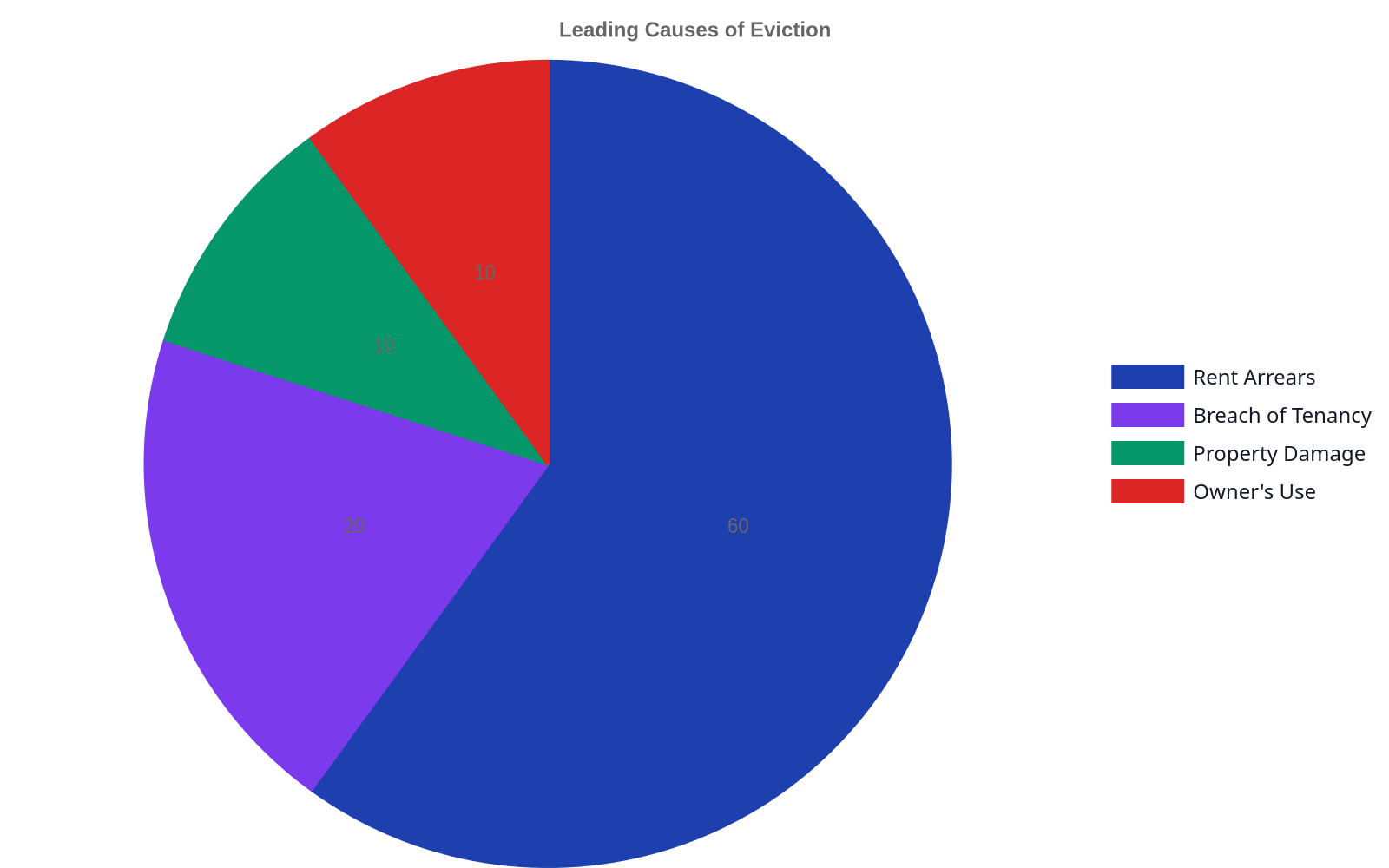
The first step is to confirm you have a lawful basis to terminate the tenancy. Under the Tenancy Law of Lagos State 2011, valid grounds include:
- Rent Arrears: This is the most common reason. The tenancy agreement will usually specify when rent is due. Once the tenant is in arrears, you have grounds to begin the process.
- Breach of a Covenant: If the tenant violates a specific clause in the tenancy agreement (e.g., subletting the property without consent, causing significant damage, or using a residential property for commercial purposes), you can initiate eviction. As a firm that advises both public and private companies, we see this frequently in mixed-use properties.
- Personal Use: The landlord wishes to recover the premises for their own personal use or for the use of a close family member (spouse, children, parents).
- Illegal or Immoral Use: If the tenant is using the property for criminal activities, eviction proceedings can be initiated immediately.
- Abandonment: If the tenant has abandoned the property.
- Property Requires Substantial Repairs: If the building needs major structural repairs that can only be carried out if the property is vacant.
- End of a Fixed-Term Tenancy: When a tenancy for a fixed period expires and the tenant refuses to vacate.
2. Issue a “Notice to Quit”
Once you have established grounds, you must serve the tenant with a “Notice to Quit.” This is a formal written notification that the tenancy will be terminated. The length of this notice is determined by law and is based on the tenancy period:
- Weekly Tenancy: 7 days’ notice
- Monthly Tenancy: 1 month’s notice
- Quarterly Tenancy: 3 months’ notice
- Half-Yearly Tenancy: 3 months’ notice
- Yearly Tenancy: 6 months’ notice
The notice must be drafted by a solicitor to ensure it contains all the necessary legal details, including the names of the parties, the property address, the date the tenant must vacate, and the reason for the notice. Any error can invalidate the notice, forcing you to start over.
The Notice to Quit doesn’t evict the tenant. It simply ends the legal tenancy, converting the tenant into a “statutory tenant” who no longer has a right to possession but is protected from unlawful ejection.
It is crucial to note that certain high-brow areas like Ikoyi, Victoria Island, Ikeja GRA, and Apapa are exempt from the Lagos State Tenancy Law. Evictions in these areas are governed by the common law of Nigeria.
3. Serve the 7-Day Notice of Owner’s Intention
If the tenant fails to vacate the property after the Notice to Quit expires, you cannot resort to self-help. The next step is for your solicitor to serve a “7-Day Notice of Owner’s Intention to Apply to Court to Recover Possession.”
This second notice informs the tenant that if they do not leave within seven days, you will commence legal proceedings to have them evicted. This notice is a final warning before the matter goes to court and is a mandatory prerequisite for filing an eviction lawsuit. According to a legal guide from Mondaq, this step is non-negotiable.

4. File an Eviction Lawsuit in Court
After the 7-day notice expires and the tenant remains in possession, your lawyer will file a claim at the appropriate Magistrate or High Court. The specific court depends on the rental value of the property.
The claim will seek an order for possession of the premises, recovery of rent arrears, and potentially “mesne profits.” Mesne profits are damages for the period the tenant occupies the property after the tenancy has been legally terminated. Essentially, rent for the time they were trespassing.
This is where having a strong tenancy agreement becomes invaluable. It serves as the primary evidence for the court. The process in court can be swift if the tenant does not contest the claim, but it can become drawn-out if the tenant raises a defence, valid or not.
5. Obtain the Court Order for Possession
Assuming your claim is successful, the court will grant an Order of Possession. This is the legal document that authorizes the eviction. It is a definitive judgment from the court stating that the landlord has the legal right to recover their property.
It is critical to understand that only the court has this power. A landlord cannot bypass this step. As legal professionals working with diverse clients like Nigerian and foreign investors, we consistently emphasize that adherence to due process is paramount to protect their investments.
One of the starkest warnings in the Tenancy Law is that self-help is a criminal offense. A landlord who forcibly ejects a tenant or cuts off essential services can face fines and even imprisonment. Legal resource platform, explicitly states, “only a court can evict a tenant in Lagos. It is a criminal offence under the Tenancy Law for a landlord to forcibly eject a tenant…”.
6. Enforce the Eviction with Court Bailiffs
Even with a court order in hand, you, the landlord, cannot personally enforce it. The final step is to have the order executed by the court’s officials: the Court Sheriff or Bailiff.
You will pay an enforcement fee to the court, and the Bailiffs will then schedule a date to go to the property and physically remove the tenant and their belongings. Police officers typically accompany the Bailiffs to prevent any breach of the peace.
This is the culmination of the legal process. The Bailiffs will legally eject the tenant and hand over vacant possession of the property to you. Any attempt by the tenant to re-enter the property at this point would be considered criminal trespass.
Eviction is not a customer service issue; it is a legal procedure. Treating it like a negotiation after the notices have been served is a common and costly mistake for landlords.
Troubleshooting Common Eviction Problems
- Tenant Cannot Be Found to Be Served: If a tenant is deliberately evading service of the notices, your lawyer can apply to the court for “substituted service.” This allows the notice to be legally served by pasting it on a prominent part of the property, such as the front door.
- Tenant Is Aggressive or Destructive: Document everything. Take pictures or videos of any damage. If you feel threatened, report it to the police. Do not engage in a physical or verbal altercation. Let the legal process and the authorities handle it.
- Tenant Leaves Belongings Behind: After a legal eviction by the court Bailiff, the tenant is responsible for their property. While there isn’t a rigid legal framework for this, the best practice is to inventory the items (preferably with the Bailiff as a witness) and store them safely for a reasonable period. You can then notify the tenant to come and collect them. This topic is often overlooked, but handling it properly prevents future claims.
By following these steps meticulously, you can ensure that the process of how to evict a tenant legally in Lagos is handled correctly, protecting your rights as a property owner while staying within the bounds of the law. This is not just about following rules; it’s about mitigating significant financial and legal risks, a principle we apply when advising all our clients, from individuals to governments.
FAQ
What is the average timeline for the full eviction process in Lagos?
The timeline can vary significantly. If the tenant does not contest the eviction, the process from serving the first notice to obtaining a court order and evicting can take 3 to 6 months. However, if the case is contested in court, it can easily extend to 12 months or longer.
What are the estimated costs involved in a legal eviction?
Costs include legal fees for your solicitor, court filing fees, and the fees for the Court Bailiff to enforce the possession order. Court fees are statutory and generally more modest.
Can I write and serve the eviction notices myself?
While technically possible, it is highly inadvisable. Eviction notices have strict legal requirements. A tiny error, such as a wrong date or an incorrect name, can invalidate the entire notice, forcing you to start the process from the beginning. It is always best to have a qualified lawyer handle all legal documents.
What are my rights as a landlord if a tenant destroys my property?
You can sue the tenant for damages in addition to seeking eviction and rent arrears. It is crucial to document the damage with photographs and get a professional estimate for the repairs. This will form part of your claim in court. A well-drafted tenancy agreement should also include clauses about the tenant’s responsibility for damages.
Can I increase the rent to force a tenant out?
No. Arbitrarily increasing the rent beyond what is reasonable or what is stipulated in the tenancy agreement, especially with the intent to make it unaffordable for the tenant, can be seen as constructive eviction and is illegal. Any rent increase must follow the procedure outlined in the tenancy agreement or be mutually agreed upon.
What is a “statutory tenant”?
A statutory tenancy arises when a contractual tenancy ends (e.g., after a Notice to Quit expires), but the tenant remains in possession. This concept, explored in academic legal research, means the tenant no longer has a legal right to the property but is protected by the tenancy law from being forcefully removed without a court order.
Can I evict a tenant for any reason if there is no written agreement?
No. Even without a written agreement, a tenancy exists, and the Tenancy Law of Lagos State 2011 still applies. The nature of the tenancy (e.g., monthly, yearly) will be determined by the pattern of rent payment. You must still provide the proper notices and have a legal reason for the eviction.
Navigating the eviction process requires careful adherence to legal protocols. If you are a landlord facing challenges with a tenant, seeking professional legal guidance is not just an option; it is a necessity to protect your property and your rights. Contact Ardnas Legal today for a consultation on your property matter.
Related reading
About the author

Sandra Adeniran
Principal Partner
Adebola Adeniran is the Founding Partner of Ardnas Legal Practitioners. She is a dynamic and forward-thinking lawyer with a passion for providing innovative legal solutions to businesses and individuals. Adebola combines deep legal expertise with a practical, business-oriented approach, ensuring that clients receive advice that is both strategic and actionable.