

Most business partnerships start with optimism and a shared vision. Few founders are thinking about divorce on their wedding day. But a company is much like a marriage, and failing to plan for disagreement is planning to fail catastrophically. A shareholders’ agreement is the single most important document you will create after your company registration. A shareholders’ agreement in Nigeria is a private contract among a company’s shareholders that outlines their rights, responsibilities, and the rules for managing the company. It functions as a prenuptial agreement for your business, defining everything from share transfers and dividend policies to what happens if a founder dies, becomes disabled, or simply wants out. Without it, you are subject to the default, often inadequate, provisions of the Companies and Allied Matters Act (CAMA) 2020.

What is a Shareholders’ Agreement?
A shareholders’ agreement is a legally binding contract between the shareholders of a company. Think of it as the internal rulebook for the shareholders. While the company’s Articles of Association (Articles) are a public document that governs the company’s relationship with the outside world, the shareholders’ agreement is private. This privacy is its superpower. It allows you and your fellow shareholders to agree on sensitive matters you would rather not disclose to the public through the Corporate Affairs Commission (CAC).
This contract specifies the rights and obligations of shareholders, regulates the management of the company, dictates ownership of shares, and provides a framework for making critical decisions. It is tailored to the specific needs and circumstances of the business and its owners. For many public and private companies we work with, it’s the document that saves the business when personalities clash or unforeseen events strike.
The Legal Framework in Nigeria
In Nigeria, there is no specific law that mandates a shareholders’ agreement. Its validity stems from the general principles of contract law. The primary legislation governing companies is the Companies and Allied Matters Act (CAMA) 2020. While CAMA provides a default set of rules, it is often generic and may not suit the specific dynamics of your company. For instance, CAMA’s provisions on share transfers might not prevent a co-founder from selling their stake to a competitor.
A shareholders’ agreement fills these gaps. It allows shareholders to customize their relationship in a way that CAMA does not. The key is that the agreement must be consistent with the company’s Articles of Association and CAMA. Where a conflict exists between the shareholders’ agreement and the Articles, the Articles will generally prevail. A 2022 PwC analysis highlights how CAMA 2020 introduced significant changes, making it even more crucial for shareholders to codify their specific arrangements.
Who Needs a Shareholders’ Agreement?
It’s a common misconception that only large corporations need these agreements. The reality is that any company with more than one shareholder should have one. This is especially true for startups, family businesses, and joint ventures, where the relationships are often as personal as they are professional.
Consider a tech startup founded by three friends. One codes, one handles marketing, and one provides the initial capital. What happens if the coder decides to leave after one year? Can they take their intellectual property with them? Can they sell their shares to a stranger? A shareholders’ agreement addresses these questions from the start, preventing disputes that could destroy the business and the friendships.
Shareholders Agreement vs. Articles of Association
| Attribute | Shareholders Agreement | Articles of Association | |
|---|---|---|---|
| Nature | Private contract | Public statutory document | |
| Parties Bound | Signatory shareholders | Company and all members | |
| Flexibility | Highly flexible | More rigid, requires special resolution for amendments | |
| Confidentiality | Confidential | Publicly accessible | |
| Scope | Broader; can cover commercial, financial, and relational aspects | Primarily corporate governance and administration | |
| Enforceability | Contractual remedies | Statutory remedies; impacts company operation |
One of the most common points of confusion for entrepreneurs is the difference between a shareholders’ agreement and the company’s Articles of Association. Both are foundational documents, but they serve distinct purposes.
The Articles of Association are for the world; the shareholders’ agreement is for the shareholders. One is a public declaration, the other is a private treaty.
The Articles are filed with the Corporate Affairs Commission (CAC) upon incorporation and are accessible to the public. They set out the basic governance structure of the company. The shareholders’ agreement, conversely, is a private contract and does not need to be filed with the CAC. This confidentiality is a major advantage.
The table below outlines the key differences:

Can They Work Together?
Yes, and they should. The best practice is to ensure both documents are aligned. Often, a clause is included in the Articles stating that it should be read and interpreted in conjunction with any existing shareholders’ agreement. This helps to reduce the potential for conflict between the two documents.
For example, if the shareholders’ agreement contains specific restrictions on share transfers, it is wise to also reflect these restrictions in the Articles. This gives them greater legal weight and makes them binding on any future shareholders who were not original signatories to the agreement. A guide from the International Finance Corporation provides a sample structure that illustrates how these documents can be integrated.
Key Provisions of a Shareholders Agreement

A robust shareholders’ agreement is not a generic template; it is a bespoke document tailored to the unique dynamics of the business. However, certain clauses are almost always essential for protecting the interests of all parties. As a firm that frequently assists both Nigerian and foreign investors, we have seen firsthand how the absence of these clauses can lead to protracted and costly disputes.
Management and Control
This section defines how the company will be run. It goes beyond the basic structure outlined in the Articles of Association.
- Board of Directors: The agreement should specify how directors are appointed and removed. Shareholders, especially minority ones, might want the right to appoint a director to the board to represent their interests. It can also stipulate the composition of the board and quorum for meetings.
- Reserved Matters: This is a critical provision. It lists key decisions that cannot be made without the consent of a specified majority of shareholders (often a supermajority, like 75% or 90%) or even unanimous consent. Examples include issuing new shares, taking on significant debt, selling major assets, or changing the line of business.
- Voting Rights: While CAMA dictates one vote per share, a shareholders’ agreement can create different classes of shares with different voting rights, subject to what is permitted in the Articles.
Share Ownership and Transfer
This is the heart of the agreement, designed to control who owns the company. Uncontrolled share transfers can lead to unwelcome partners or even hostile takeovers.
- Pre-emptive Rights (Rights of First Refusal): This clause requires a shareholder wishing to sell their shares to first offer them to the existing shareholders on the same terms. This keeps ownership within the original group.
- Tag-Along Rights (Co-Sale Rights): This protects minority shareholders. If a majority shareholder sells their stake, the minority shareholders have the right to “tag along” and sell their shares to the same buyer on the same terms.
- Drag-Along Rights: This protects majority shareholders. If a majority receives an offer to sell the entire company, they can “drag” the minority shareholders along and force them to sell their shares on the same terms, preventing a small minority from blocking a strategic sale.
- Permitted Transfers: The agreement often allows for transfers to close family members or affiliated companies without triggering the pre-emptive rights, subject to the transferee agreeing to be bound by the shareholders’ agreement.
Financial Matters
Clarity on financial policies is crucial to avoid misunderstandings about the company’s profits and funding.
- Dividend Policy: The agreement can set a policy for when and how dividends will be paid. For example, it might state that 40% of net profits will be distributed as dividends each year, provided the company meets certain solvency tests. This prevents directors from hoarding cash indefinitely.
- Funding: How will the company raise additional capital? The agreement should outline the procedure, whether through shareholder loans or issuing new shares, and detail how the burden will be shared.
Common Disputes Covered by Shareholders Agreements
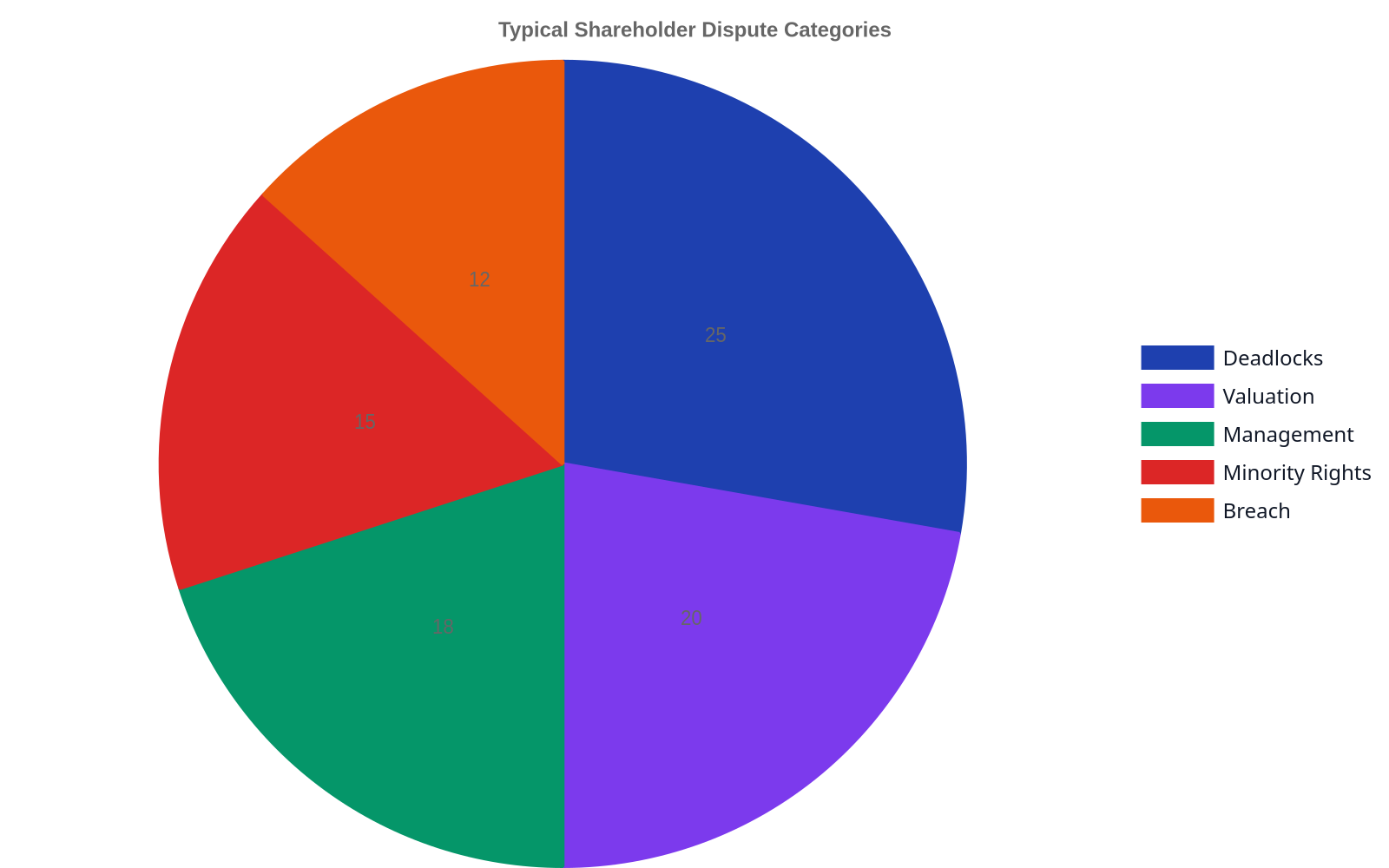
Disputes are an unfortunate reality of business. A well-drafted shareholders’ agreement acts as a first line of defense by anticipating common points of contention and providing a clear path to resolution. It forces difficult conversations early on, when everyone is on good terms, rather than in the heat of a crisis.
Exit Scenarios (The 4 D’s)
Much of a shareholders’ agreement is concerned with planning for a shareholder’s exit. The most common triggers are often called the “4 D’s”: Death, Disability, Divorce, and Disagreement.
- Death: What happens to a shareholder’s shares when they die? Without an agreement, their shares pass to their heirs, who may have no interest or expertise in the business. The agreement can create a compulsory buy-sell mechanism, funded by life insurance, where the company or remaining shareholders must buy the deceased’s shares at a pre-agreed valuation.
- Disability: If a shareholder becomes permanently disabled and unable to contribute to the business, the agreement can trigger a buyout of their shares, often funded by disability insurance.
- Divorce: A shareholder’s divorce can be a corporate problem. A court could award shares to an ex-spouse, introducing an unwanted third party into the business. A shareholders’ agreement can require that any shares awarded in a divorce settlement must first be offered for sale back to the company or other shareholders.
- Disagreement (Deadlock): If shareholders are deadlocked on a critical decision, it can paralyze the company. This is especially common in 50/50 partnerships. The agreement should contain a deadlock resolution mechanism.
Minority Shareholder Protection
Under CAMA 2020, a simple majority (over 50%) can control the board and the day-to-day running of the company. This can leave minority shareholders with little say. A shareholders’ agreement is the primary tool for minority protection.
Provisions like the right to appoint a director, supermajority requirements for reserved matters, and tag-along rights are all designed to give minority shareholders a voice and protect their investment from being unfairly diluted or oppressed by the majority.
Dispute Resolution Mechanisms
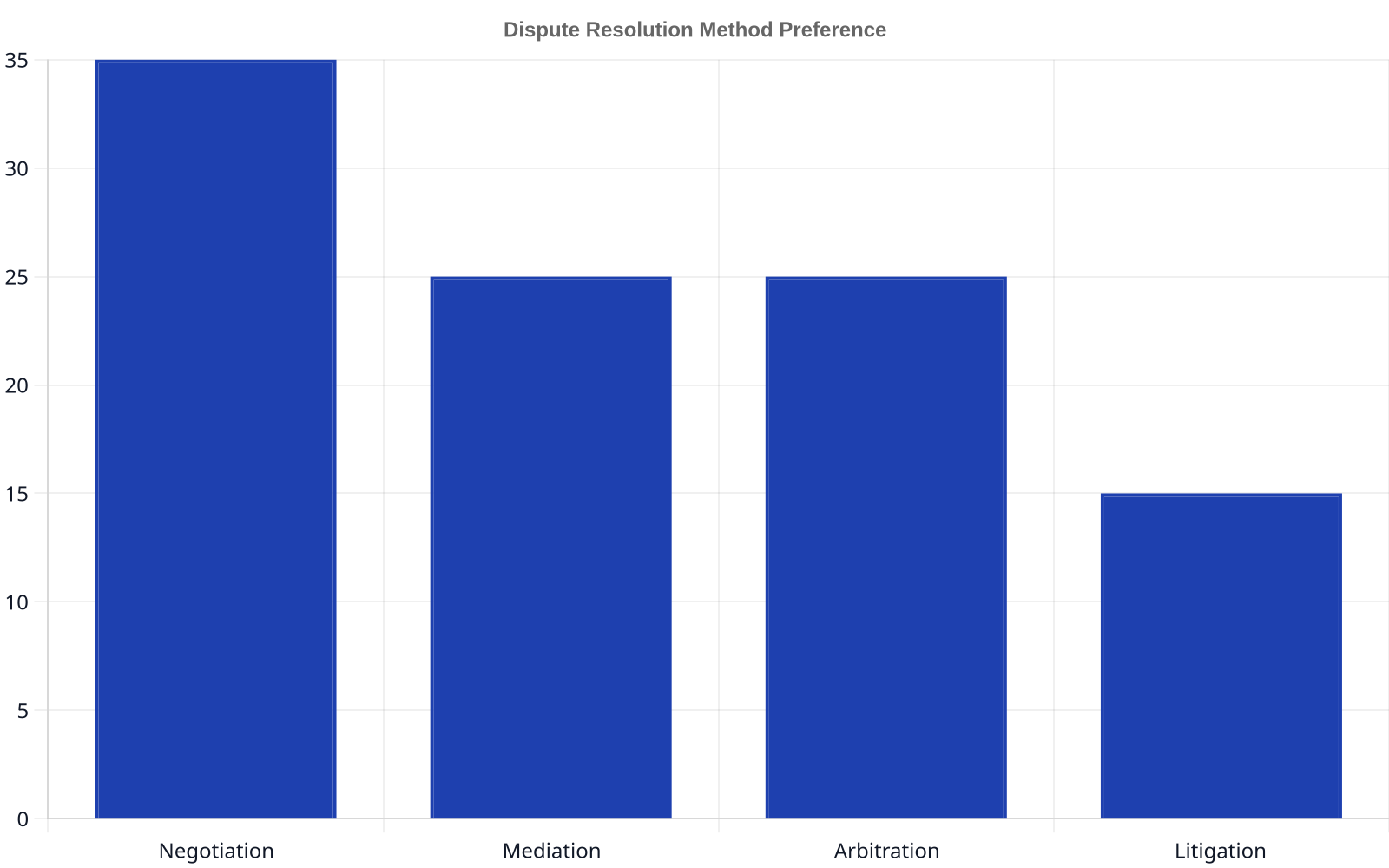
Even with the best planning, disputes can arise. When they do, the shareholders’ agreement should provide a clear, multi-step process for resolving them without immediately resorting to costly and public litigation. For the financial institutions and private companies we advise, this structured approach is paramount.
A lawsuit should be the absolute last resort, not the first response. A good agreement builds off-ramps before you get to the courthouse steps.
The Escalation Ladder
A typical dispute resolution clause will establish a tiered process:
- Negotiation: The first step is usually a requirement for the disputing parties to engage in good-faith negotiations for a set period (e.g., 30 days) to try and resolve the issue themselves.
- Mediation: If negotiation fails, the next step is often mandatory mediation. A neutral third-party mediator is brought in to facilitate a resolution. Mediation is non-binding, confidential, and much cheaper than litigation. The Lagos Chamber of Commerce International Arbitration Centre (LACIAC) offers world-class mediation services.
- Arbitration: If mediation fails, the agreement will typically require the dispute to be settled by binding arbitration rather than in court. Arbitration is a private judicial process. The parties can choose an arbitrator with relevant industry expertise, and the proceedings are confidential. It is generally faster and more flexible than litigation.
Litigation as a Final Option
Only if the above steps fail should litigation be considered. A well-drafted clause will specify the jurisdiction and governing law for any legal proceedings. For a shareholders’ agreement in Nigeria, the governing law will be Nigerian law, and the jurisdiction will typically be the courts of a specific state, such as Lagos State.

Drafting and Implementing a Shareholders’ Agreement in Nigeria
Creating an effective shareholders’ agreement is a collaborative process that requires careful thought and professional legal advice. It is not a document to be downloaded from the internet and signed without review.
Here is a step-by-step process:
- Initial Discussion: All founding shareholders should sit down and discuss their expectations, fears, and goals for the business. This is the time for frank conversation about what-if scenarios.
- Engage Legal Counsel: Hire an experienced corporate lawyer. A lawyer can guide you through the process, highlight issues you haven’t considered, and ensure the document is legally sound and enforceable. At Ardnas Legal, we have facilitated these foundational meetings for numerous public and private companies, ensuring all perspectives are heard.
- Drafting the Agreement: The lawyer will draft the agreement based on the shareholders’ discussions. This will involve several rounds of review and revision to ensure everyone is satisfied.
- Valuation Methodology: A critical part of the draft is determining how shares will be valued in the event of a buyout. Common methods include an agreed-upon value updated annually, a formula based on earnings or revenue, or appraisal by independent experts.
- Execution: Once the final version is agreed upon, all shareholders (and often the company itself) must sign the document. Each party should retain a signed original copy.
- Review and Update: A shareholders’ agreement is a living document. It should be reviewed every few years, or whenever a major event occurs (like a new shareholder coming on board or a significant change in the business model), to ensure it still reflects the shareholders’ intentions. A report on corporate governance by the Financial Reporting Council of Nigeria stresses the importance of periodic review of governing documents to adapt to evolving best practices.
Conclusion: Your Company’s Most Important Insurance Policy
Starting a business is an act of faith, but running it requires foresight. A shareholders’ agreement in Nigeria is not a sign of mistrust among partners; it is a mark of professionalism and prudence. It provides a clear framework for governance, protects both majority and minority interests, and offers a structured path for navigating the inevitable challenges of a company’s lifecycle.
By investing the time and resources to create a comprehensive agreement at the outset, you are purchasing the most valuable insurance policy your business can have: one that protects it from its own internal conflicts. It ensures that when disagreements arise, you have a pre-agreed roadmap to follow, allowing the business to continue and thrive.
If you are starting a new venture or are currently operating without a shareholders’ agreement, now is the time to act. Contact a legal professional to help you craft a document that secures your investment, your vision, and your relationships for years to come.
FAQ
Is a shareholders’ agreement legally binding in Nigeria?
Yes, a shareholders’ agreement is a contract and is legally binding on the parties who sign it, provided it is drafted in accordance with Nigerian contract law. However, its provisions cannot override the mandatory provisions of the Companies and Allied Matters Act (CAMA) 2020 or the company’s Articles of Association.
What happens if we don’t have a shareholders’ agreement?
Without a shareholders’ agreement, you are entirely reliant on the default provisions of CAMA 2020 and your company’s Articles of Association.
Can a shareholders’ agreement be changed?
Yes. A shareholders’ agreement is a contract, and like any contract, it can be amended. The agreement itself will usually specify the procedure for amendment, which typically requires the unanimous written consent of all shareholder parties. It is good practice to review the agreement periodically and update it as the business evolves.
Does a new shareholder have to sign the agreement?
A new shareholder is not automatically bound by an existing shareholders’ agreement. To ensure they are, the agreement should include a clause requiring any new shareholder to sign a Deed of Adherence, which is a short document that legally binds them to the terms of the original agreement.
Related reading
About the author

Sandra Adeniran
Principal Partner
Adebola Adeniran is the Founding Partner of Ardnas Legal Practitioners. She is a dynamic and forward-thinking lawyer with a passion for providing innovative legal solutions to businesses and individuals. Adebola combines deep legal expertise with a practical, business-oriented approach, ensuring that clients receive advice that is both strategic and actionable.