

Is litigation the only way to settle a commercial dispute in Africa? Many businesses assume so, heading straight to court and bracing for years of expense and uncertainty. This is a fundamental misunderstanding. The best dispute resolution legal services in Africa are not just about winning in court; they are about resolving conflicts efficiently and preserving business relationships. This involves a strategic choice between litigation, arbitration, and mediation, tailored to the specific conflict, jurisdiction, and commercial goals. Success is measured by a swift, cost-effective, and enforceable outcome that lets you get back to business.
This guide ranks the most effective approaches to dispute resolution across the continent. Our methodology isn’t based on firm size or marketing budgets. Instead, we’ve ranked these methods based on a composite score considering four key factors: average resolution speed, cost-effectiveness, enforceability across borders under international conventions, and confidentiality. Each factor was weighted based on feedback from corporate counsel and a review of case data from major arbitral institutions active in Africa.
Arbitration: The Cross-Border Standard
For international contracts and significant commercial disagreements, arbitration is often the default, and for good reason. It provides a neutral, private, and expert-led process outside of national court systems. Parties can select arbitrators with specific industry knowledge, which is a significant advantage over a judge who may lack technical expertise in, for example, oil and gas pricing disputes or complex construction claims. The final decision, known as an arbitral award, is typically easier to enforce internationally than a court judgment, thanks to treaties like the New York Convention, to which most African nations are signatories. A 2021 study revealed that 90% of respondents prefer international arbitration for resolving cross-border disputes, highlighting its global acceptance.
However, arbitration is not a panacea. It can be just as expensive as litigation, particularly if it involves a three-member tribunal and extensive discovery. The process can also be lengthy, despite its reputation for speed. As a firm that provides a specialized legal services for both domestic and international clients, we advise on the strategic selection of the arbitral seat and rules to manage these potential downsides. The choice between an institution like the London Court of International Arbitration (LCIA) or a regional center like the Kigali International Arbitration Centre (KIAC) can have profound implications for cost and procedure.
- Best for: International commercial contracts, disputes requiring technical expertise, and situations where cross-border enforcement is critical.
- Watch out for: High costs that can sometimes rival litigation, and the potential for the process to become protracted if not managed carefully.
Litigation: The Local Battleground
Litigation, or resolving disputes through national courts, remains the most traditional method. Its main advantage is its defined structure and the state-backed power to compel evidence and enforce judgments within national borders. For purely domestic disputes without an international component, litigation is often the most direct route. For instance, a property dispute in Lagos or a local debt recovery case would typically fall to the Nigerian court system. We are renowned as one of the leading law firms in Nigeria, well-versed in navigating these judicial processes for our clients.
That said, litigation in many African jurisdictions can be notoriously slow and unpredictable. Court dockets are often overloaded, leading to significant delays that can stall business operations for years. There is also a perceived risk of local bias and a lack of judicial expertise in highly technical commercial matters. Furthermore, a judgment from a national court can be difficult and costly to enforce in another country. The World Bank’s Doing Business 2020 report found that enforcing a contract through the courts in Sub-Saharan Africa took an average of 657 days and cost 42% of the claim value.
The biggest mistake clients make is assuming a court victory is the same as a commercial victory. A judgment you can’t enforce for five years while your legal fees mount is rarely a win.
- Best for: Purely domestic disputes, debt recovery, and cases where the coercive power of the state is needed to compel evidence.
- Watch out for: Extreme delays, high costs relative to the claim value, and challenges with enforcing judgments internationally.
Mediation: The Relationship Saver
What if the goal isn’t to win, but to find a mutually acceptable solution and preserve a critical business relationship? This is where mediation shines. A neutral third-party mediator facilitates a conversation between the disputing parties, helping them find common ground and craft their own agreement. Unlike a judge or arbitrator, a mediator does not impose a decision. The entire process is voluntary, confidential, and “without prejudice,” meaning anything said during mediation cannot be used against a party in later court proceedings.
Mediation is almost always faster and cheaper than both litigation and arbitration. A successful mediation can resolve in days or weeks what might take years in court. According to one analysis, commercial mediation has a success rate of between 70-80%. However, its effectiveness depends entirely on the willingness of both parties to negotiate in good faith. If one party is intransigent or if there is a significant power imbalance, mediation is unlikely to succeed. It also cannot produce a binding decision; if parties reach an agreement, it is documented in a settlement contract which is then enforceable like any other contract.
- Best for: Disputes where preserving the business relationship is important, situations needing creative business solutions, and as a first step before committing to arbitration or litigation.
- Watch out for: The process is non-binding, and a party can walk away at any time. It may not be suitable for cases involving fraud or where a legal precedent is needed.
Expert Determination: The Technical Verdict
For disputes that hinge on a single, specific technical issue, expert determination can be the most efficient route. Imagine a dispute over the valuation of shares in a private company, the quality of a delivered commodity, or the interpretation of a technical specification in a construction contract. Instead of arguing these points before a judge with a general legal background, the parties agree to appoint a single expert in the relevant field to make a binding decision on that specific issue.
This method is fast, confidential, and provides a decision from someone who truly understands the subject matter. It is a streamlined process focused solely on the technical point of contention, stripping away the procedural complexity of a full arbitration or court case. For example, the Centre for Effective Dispute Resolution (CEDR) reports that expert determination can often resolve disputes within 90 days. The expert’s decision is contractually binding on the parties. However, it is not an arbitral award, so enforcement relies on suing for breach of contract if one party refuses to comply, which is a key limitation. It is also limited to the specific technical question and cannot resolve broader legal claims. These are the kinds of distinctions we help clients navigate, particularly in specialized areas like specialized legal services.
- Best for: Disputes that turn on a specific technical, valuation, or scientific question.
- Watch out for: The decision is only contractually binding and may require a separate court action to enforce if a party defaults.
Common Types of Commercial Disputes in Africa
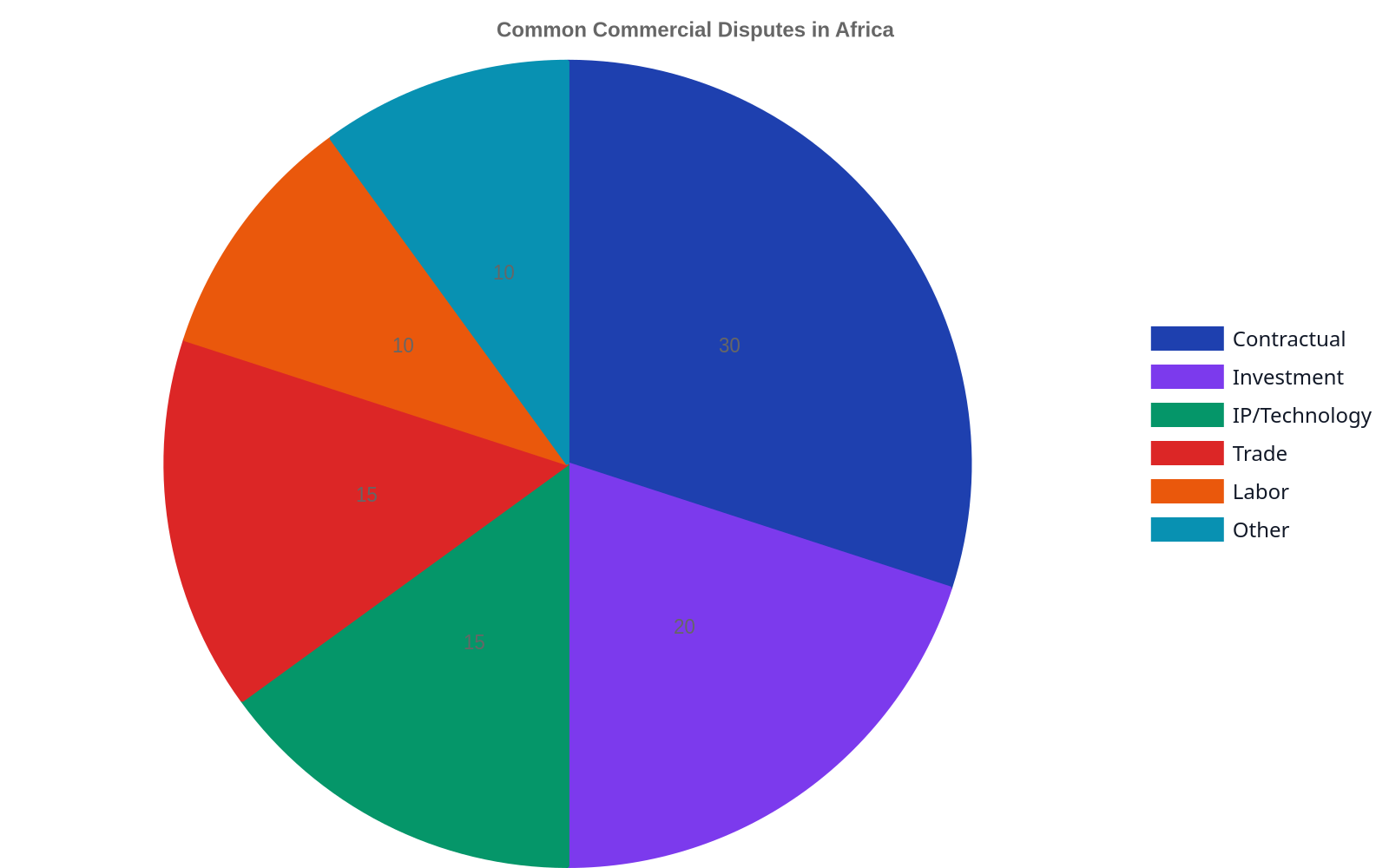
Understanding the landscape of disputes is key to choosing the right resolution strategy. While every case is unique, certain themes emerge frequently in African commerce. Contract breaches remain the most common source of conflict, stemming from everything from non-payment for goods to failure to meet service level agreements. Following closely are disputes related to large-scale infrastructure and construction projects, often involving complex claims about delays, cost overruns, and quality standards. As investment in the continent grows, so do shareholder and joint venture disputes, particularly concerning corporate governance and profit distribution. We also see a steady stream of cases related to real estate transactions and, increasingly, intellectual property rights.
Arbitration vs. Litigation: Key Considerations
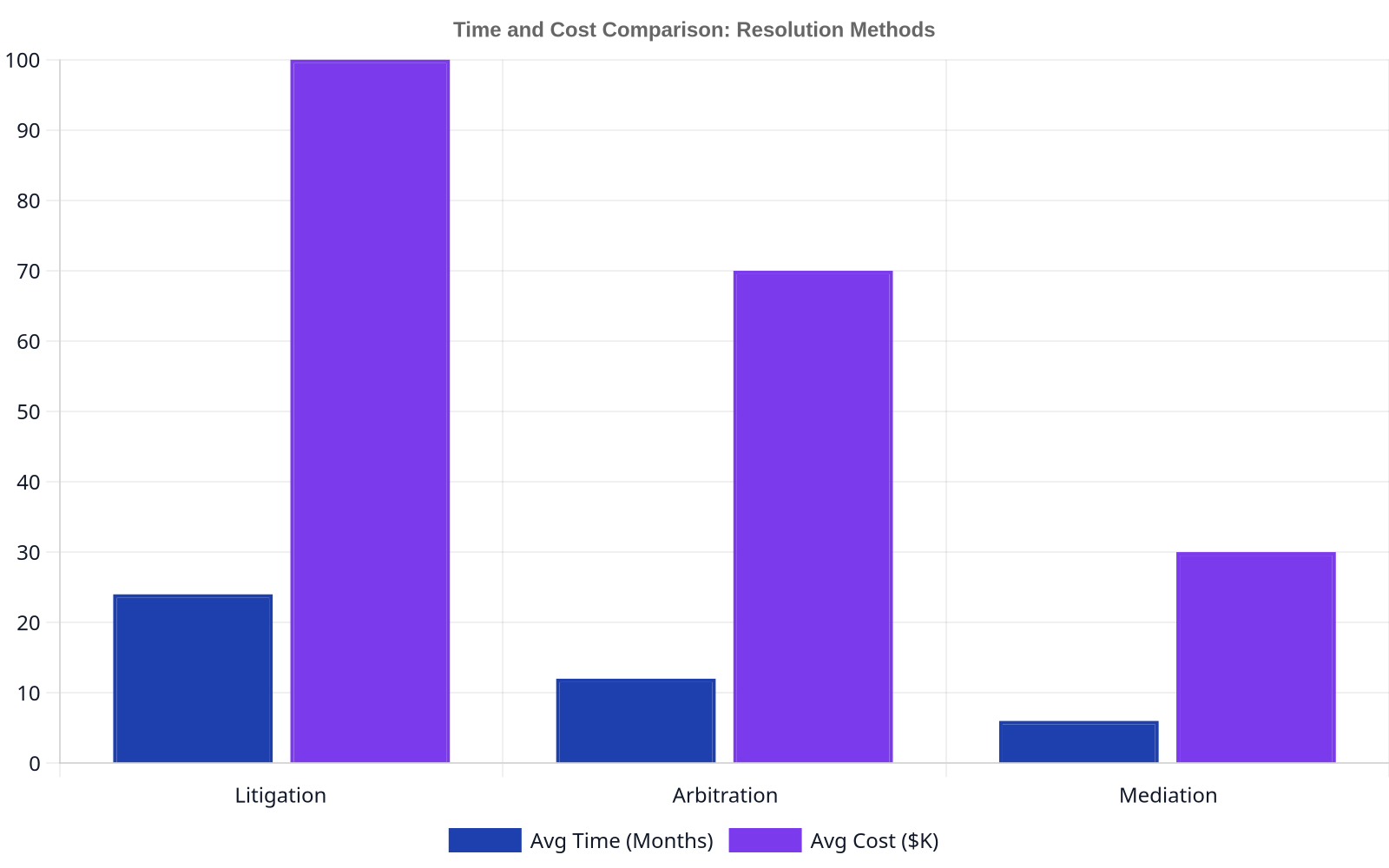
Choosing between arbitration and litigation is one of the most critical strategic decisions in any dispute. It’s not simply a choice between a private and a public forum. The implications for cost, timing, and outcome are immense. Litigation, being a state-run process, often involves lower upfront filing fees, but costs can escalate through protracted appeals and procedural delays. Arbitration may have higher initial administrative and arbitrator fees, but it can theoretically offer a faster, final resolution without lengthy appeals, potentially lowering the total cost.
Confidentiality is another major dividing line. Court proceedings are public record, a fact that can be damaging to a company’s reputation. Arbitration is private, allowing sensitive commercial information to remain shielded from public view. Perhaps most importantly for international businesses, an arbitral award under the New York Convention is significantly more portable and enforceable across borders than most court judgments. This is a critical factor for any company with operations or assets in multiple African countries. When you are looking for the best dispute resolution legal services in Africa, a firm’s ability to strategically advise on this choice is a key indicator of its expertise.
Choosing your dispute resolution mechanism after a conflict arises is like trying to buy insurance after your house is on fire. It needs to be written into your commercial agreements from day one.
Summary Comparison of Dispute Resolution Methods
| Method | Best For | Speed | Cost | Enforceability | Confidentiality |
|---|---|---|---|---|---|
| Arbitration | International Contracts, Technical Disputes | Variable (6-24 months) | High | High (International) | High |
| Litigation | Purely Domestic Disputes, Debt Recovery | Slow (2-5+ years) | High | High (Domestic only) | Low |
| Mediation | Preserving Relationships, Creative Solutions | Very Fast (Days/Weeks) | Low | Via Settlement Contract | Very High |
| Expert Determination | Specific Technical Questions | Fast (2-4 months) | Medium | Via Contract Law | High |
FAQ
What is the first step in resolving a commercial dispute?
The first step should always be a thorough review of the contract or agreement governing the relationship. Look for a dispute resolution clause, which may mandate a specific process like mediation or arbitration. The next step is to seek professional legal advice to understand your rights, obligations, and strategic options before engaging with the other party.
How much does dispute resolution in Africa cost?
Costs vary dramatically depending on the method, the complexity of the case, and the jurisdiction. Arbitration costs include administrative fees and arbitrator salaries, which can be substantial. Mediation is typically the least expensive option, often charged at an hourly or daily rate for the mediator.
What is an “arbitral seat”?
The “seat” of arbitration is the legal home of the process. It determines which country’s procedural law will govern the arbitration and which courts will have supervisory jurisdiction (for example, to challenge an award). It is a crucial strategic choice and does not have to be the same location where the hearings take place.
Can I enforce a Nigerian court judgment in Ghana?
Enforcing court judgments across African borders can be a complex and uncertain process. While some bilateral or regional treaties exist, it is not as streamlined as enforcing an arbitral award under the New York Convention. It would likely require a new legal action in Ghana to have the Nigerian judgment recognized, a process that can be time-consuming and expensive.
Is arbitration always confidential?
While arbitration is private (not open to the public), it is not automatically confidential. The duty of confidentiality depends on the specific arbitral rules chosen, the law of the arbitral seat, and any confidentiality agreement between the parties. It’s a common misconception that all aspects of every arbitration are strictly secret.
What makes a good dispute resolution lawyer?
A good dispute resolution lawyer isn’t just an aggressive litigator. They are a strategist who understands the commercial context of your dispute. They should be able to advise you on the pros and cons of every available method, from mediation to litigation, and help you choose the path that best protects your business interests, not just their billable hours.
Choosing the right path to resolve a commercial conflict is critical for any business operating in Africa. If you are facing a dispute and need clear, strategic guidance on the best way forward, our team is here to help. Contact Ardnas Legal today for a confidential consultation on your matter.
Related reading
About the author

Sandra Adeniran
Principal Partner
Adebola Adeniran is the Founding Partner of Ardnas Legal Practitioners. She is a dynamic and forward-thinking lawyer with a passion for providing innovative legal solutions to businesses and individuals. Adebola combines deep legal expertise with a practical, business-oriented approach, ensuring that clients receive advice that is both strategic and actionable.