
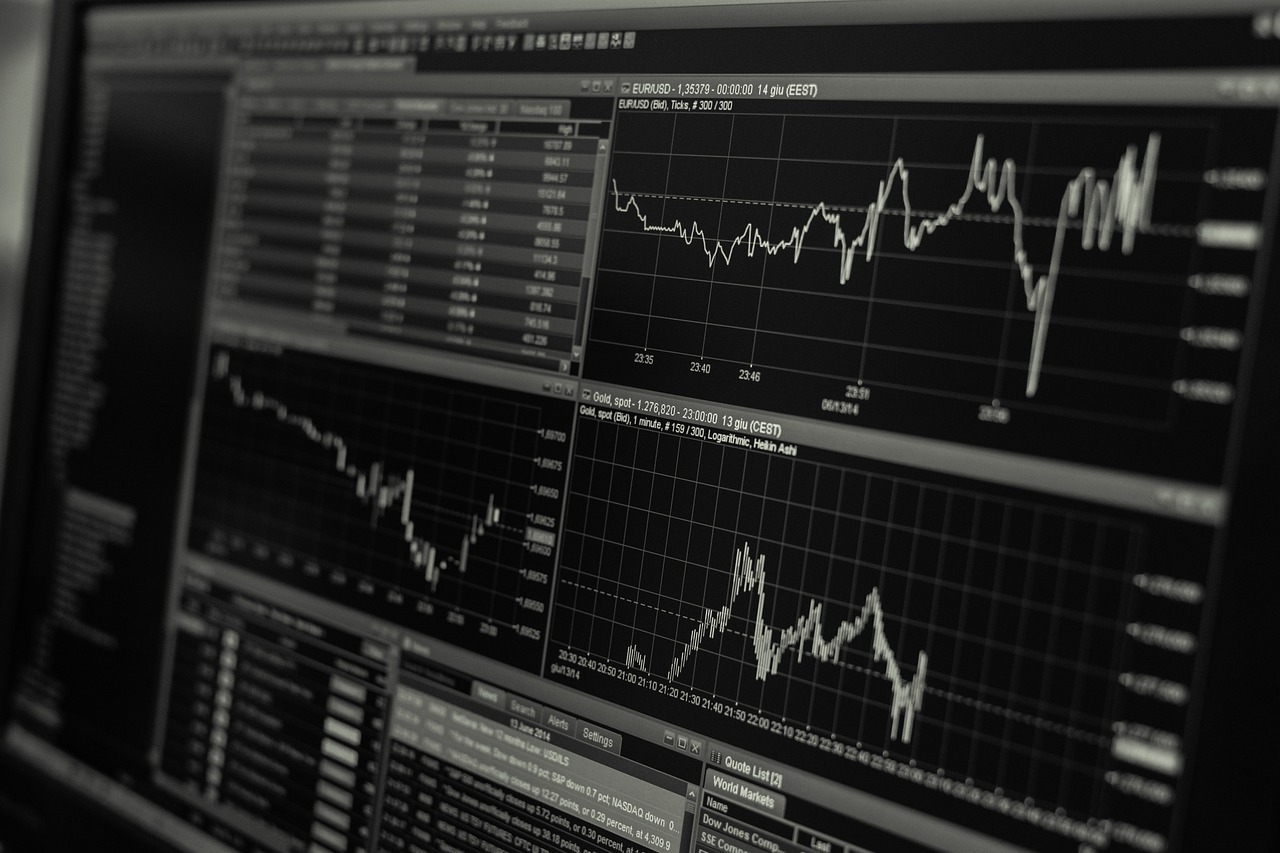
Many Nigerians see foreign exchange (forex) trading as a pathway to financial opportunity, but a persistent question casts a long shadow: is it actually legal? The answer isn’t a simple yes or no. The regulatory environment is complex, creating a landscape that traders must approach with caution and a clear understanding of the rules.
Forex trading by individuals in Nigeria operates in a legal grey area. While no specific law makes retail speculative forex trading illegal, the Central Bank of Nigeria (CBN) does not regulate it, offering no protection to traders. Furthermore, the Central Bank of Nigeria (CBN) has explicitly prohibited Nigerian financial institutions from facilitating transactions for forex trading. This means that while you may not be prosecuted for trading, you engage in it at your own risk, without legal recourse through Nigerian financial regulators.
What is the official position of the Central Bank of Nigeria (CBN) on forex trading?
The CBN’s stance is clear and has been consistent. Through its circulars, most notably the one issued in February 2021, the bank has directed all deposit money banks, non-bank financial institutions, and other financial institutions to close accounts of persons or entities transacting in or operating cryptocurrency exchanges. While this circular focused on crypto, its sentiment is widely applied to speculative forex trading. The CBN does not license or regulate online retail forex brokers and has actively restricted banks from processing payments for these activities. Its primary mandate is to maintain the stability of the Naira and manage the country’s foreign exchange reserves, not to oversee individual speculative trading.
Are there any laws that directly criminalize retail forex trading?
Currently, there is no Act of the National Assembly in Nigeria that explicitly names and criminalizes online retail forex trading for individuals. The legal ambiguity arises not from a prohibitive law, but from a lack of a regulatory framework. The Securities and Exchange Commission (SEC) is the apex regulator of the Nigerian capital market, but its rules have not yet extended to cover online retail forex brokers. This means that while you are not breaking a specific law by trading, you are operating outside of any regulated financial structure within Nigeria.
Why does the CBN restrict banks from facilitating forex transactions?
The CBN’s restrictions are rooted in its mandate to control foreign exchange outflows and protect the Nigerian economy from capital flight and currency pressure. Unregulated forex trading can create a significant, unaccounted-for demand for foreign currency, putting pressure on the Naira’s official exchange rate. By ordering banks to stop facilitating these payments, the CBN aims to curb speculative activities that it believes could destabilize the currency market. This policy forces many traders to rely on peer-to-peer (P2P) payment methods, which carry their own set of risks.
What is the role of the Securities and Exchange Commission (SEC) in forex regulation?
In most countries, the capital markets regulator—like the SEC in Nigeria—would be responsible for licensing and overseeing forex brokers. As of early 2026, the Nigerian SEC has not established a framework for this. In 2020, the SEC released a statement on cryptocurrencies, classifying them as securities. However, a similar classification has not been formally applied to the spot forex market that retail traders access. Until the SEC creates specific rules and a licensing process for forex brokers, the market remains under its purview but effectively unregulated in practice.
How should I choose a forex broker as a Nigerian trader?
Since no local regulatory body offers protection, Nigerian traders must look for brokers regulated by reputable international authorities. The most respected regulators include the Financial Conduct Authority (FCA) in the United Kingdom, the Cyprus Securities and Exchange Commission (CySEC), and the Australian Securities and Investments Commission (ASIC). A broker regulated by one of these bodies is required to segregate client funds and adhere to strict operational standards. Always verify a broker’s license on the regulator’s official website, never just trust the broker’s own claim.
Is it better to use an international or a local broker?
Given the current regulatory vacuum in Nigeria, using a well-regulated international broker is the safer option. So-called “local brokers” in Nigeria are typically just introducing agents for larger international firms or are entirely unregulated. They offer no additional layer of protection and may even add costs. An established international broker with a license from a top-tier jurisdiction provides a measure of security—such as segregated funds and access to an ombudsman service—that is simply unavailable in the Nigerian market today.
How much capital do I need to start forex trading in Nigeria?
Many brokers advertise very low entry barriers, some as little as $10. This is misleading. While you can open an account with a small amount, trading with insufficient capital is a primary reason why over 70-80% of retail traders lose money. A small account cannot withstand normal market volatility. A more realistic starting capital would be at least $500 to $1,000. This allows for proper risk management, where you risk only 1-2% of your capital per trade, giving you a better chance of surviving the learning curve.
What trading platforms are commonly used in Nigeria?
The vast majority of retail forex brokers offer the MetaTrader 4 (MT4) and MetaTrader 5 (MT5) platforms. Developed by MetaQuotes Software, these have become the industry standard due to their powerful charting capabilities, support for automated trading with “Expert Advisors” (EAs), and extensive customizability. Some larger brokers also offer their own proprietary platforms, which may have unique features, but MT4 and MT5 remain the most popular and widely supported choices for traders in Nigeria.
The legal status of forex trading isn’t a question of crime and punishment. It’s a question of risk and protection. Operating in an unregulated space means you are your only safety net.
What are the main risks associated with forex trading in Nigeria?
The primary risk is the complete absence of local regulatory protection. If an unregulated broker decides to withhold your funds, there is no Nigerian government agency you can turn to for help. Beyond that, traders face high market volatility, the risk of losing their entire investment, and the psychological pressures of trading. The widespread use of high leverage can amplify both gains and losses dramatically. Additionally, scams are rampant, preying on newcomers with promises of guaranteed high returns.
How can I identify and avoid forex trading scams?
Scams often promise unrealistic or “guaranteed” returns. No legitimate trading operation can guarantee profits. Be wary of anyone who pressures you to invest, especially through social media platforms like Instagram or Telegram. Scammers often showcase a lavish lifestyle, claiming it was funded by their “secret” trading strategy. Another red flag is the use of unregulated payment channels or demands to pay for training that promises to make you rich quickly. Always stick with internationally regulated brokers and be skeptical of anything that sounds too good to be true, as highlighted in warnings from financial regulators.
What legal recourse do I have if a forex broker scams me?
If you are scammed by an unregulated broker, your legal options in Nigeria are extremely limited. As our firm provides a comprehensive range of legal services in Nigeria, we can advise that the process would likely involve filing a complaint with law enforcement, but tracing and recovering funds from anonymous online entities is notoriously difficult. If the broker is regulated by an international body like the FCA or CySEC, you can file a complaint with that regulator. They may have a compensation scheme, but this protection generally only extends to clients under their specific jurisdiction.
How do Nigerian economic policies impact forex traders?
Recent Nigerian economic policies, such as currency reforms and interest rate adjustments, have a direct and significant impact on forex traders. For instance, changes in Nigeria’s official exchange rate policies create massive volatility in USD/NGN and other pairs involving the Naira. A sudden devaluation can wipe out accounts, while interest rate hikes by the CBN can affect currency strength and swap rates charged by brokers. Successful traders must stay informed about the local economic climate, not just global market trends. This is a level of complexity similar to what we see in highly regulated sectors like Oil & Gas law.
How Popular is Forex Trading in Nigeria?
Despite the regulatory ambiguity, forex trading is incredibly popular in Nigeria, particularly among the youth. The country is considered one of the largest forex markets in Africa, with daily trading volumes estimated in the hundreds of millions of dollars. The rise of mobile technology and a desire for alternative income streams have fueled this growth. This high level of participation underscores the urgent need for a clear regulatory framework to protect the large number of citizens engaging with these markets.
What is the Association of Online Forex Trading Agents in Nigeria?
The Association of Online Forex Trading Agents in Nigeria is a self-regulatory body created by a group of introducing brokers and agents. While it aims to promote ethical practices among its members, it is not a government regulator. It does not have the legal authority of the SEC or CBN. Membership in this association should not be seen as a substitute for being licensed by a reputable international financial regulator. Its influence and ability to enforce standards or protect consumers are limited.
How does forex trading compare to other investments in Nigeria?
Forex trading offers high liquidity and the ability to profit from both rising and falling markets, which distinguishes it from traditional investments like real estate or Nigerian stocks. However, it also carries significantly higher risk due to leverage and volatility. While real estate is illiquid, it provides a physical asset. The Nigerian stock market is regulated by the SEC, offering investor protections. Forex trading offers higher potential returns (and losses) but exists in a regulatory void, making it a high-risk, high-reward venture suitable only for those with a strong risk appetite and proper knowledge. Protecting your financial data is also key, a topic we cover in our guide on data protection compliance.
Where can Nigerians find credible education on forex trading?
Credible information can be found on educational websites run by regulated brokers, such as Babypips.com, or through financial news outlets like Bloomberg and Reuters. Many international regulators also provide investor education materials on their websites. Avoid “gurus” on social media who sell expensive courses with promises of quick wealth. A solid education in forex focuses on technical analysis, fundamental analysis, and—most importantly—risk management and trading psychology. It is a skill developed over years, not weeks.
FAQ
Is Forex trading a pyramid or Ponzi scheme?
Legitimate forex trading is not a pyramid or Ponzi scheme. It is the speculative trading of real-world currencies on a global, decentralized market. However, scammers often use the allure of forex trading to create Ponzi schemes, where they use money from new investors to pay “returns” to earlier ones, without ever actually trading.
Can I go to jail for trading forex in Nigeria?
It is highly unlikely that an individual would be prosecuted or jailed simply for trading forex with their own money. The government’s focus has been on restricting the financial channels that enable these transactions, not on punishing individual retail traders. The risk is financial loss, not criminal liability.
Are forex trading gains taxable in Nigeria?
Yes. All income earned by a resident in Nigeria is subject to tax, regardless of the source. While the practicalities of tracking and taxing gains from offshore brokers are complex, under the law, these profits should be declared as part of your annual income and are subject to personal income tax.
What is the best time to trade forex from Nigeria?
The forex market is open 24 hours a day, five days a week. The most active and volatile time—offering the most opportunity—is during the overlap of the London and New York trading sessions. This corresponds to roughly 1 PM to 5 PM Nigerian time (WAT). This is when trading volume is typically at its highest.
Can I use cryptocurrency to fund my forex account?
Many international brokers now accept cryptocurrency for deposits and withdrawals. For Nigerian traders, this has become a popular, albeit risky, alternative to bypass the restrictions on bank transfers. However, be aware that the CBN has also taken a firm stance against cryptocurrency, and the value of your crypto assets is itself highly volatile.
Navigating the world of forex trading in Nigeria requires a sharp an eye for both market trends and legal boundaries. If you are building a business in the financial technology space or require expert advice on financial regulations, our team at Ardnas Legal is here to help. Contact us for a consultation to ensure your venture is built on a solid legal foundation.
About the author
Sandra Adeniran
Principal Partner
Adebola Adeniran is the Founding Partner of Ardnas Legal Practitioners. She is a dynamic and forward-thinking lawyer with a passion for providing innovative legal solutions to businesses and individuals. Adebola combines deep legal expertise with a practical, business-oriented approach, ensuring that clients receive advice that is both strategic and actionable.