

Many assume that registering a company in Africa is a single, monolithic process. This is a costly mistake. The continent is home to 54 distinct legal jurisdictions, and the company registration requirements in Africa are as diverse as its cultures. Understanding these nuances is the first step to a successful market entry. Registering a company in Africa requires navigating diverse legal frameworks, from choosing a business structure and reserving a name to submitting incorporation documents, registering for taxes, and obtaining necessary permits, with specific steps varying significantly between countries like Nigeria, Kenya, South Africa, and Rwanda. By the end of this guide, you will have a clear, step-by-step framework for approaching company registration anywhere on the continent.
Prerequisites
Before you begin the formal registration process, you need to have several key pieces of information and documentation ready. Being unprepared is the number one cause of delays.
- Business Plan: A detailed document outlining your company’s purpose, structure, market analysis, and financial projections. This is often required by investment bodies and financial institutions.
- Founder & Director Information: Full names, addresses, nationalities, and valid government-issued identification (e.g., passport) for all proposed directors and shareholders.
- Proof of Capital: Evidence of the minimum share capital, which varies wildly. While some jurisdictions have no minimum, others require substantial proof of funds. The World Bank’s Doing Business reports provide specific capital requirements for each nation.
- Registered Office Address: A verifiable physical address within the country of incorporation. A P.O. Box is rarely acceptable. In many countries, like Nigeria, this must be a physical location that can be inspected.

Steps to Registering a Company in Africa
While the specifics change from the Corporate Affairs Commission (CAC) in Nigeria to the Companies and Intellectual Property Commission (CIPC) in South Africa, the foundational steps share a common logic. We work with many Nigerian and foreign investors looking to expand across the continent, and this is the general sequence we advise them to follow.
Step 1: Choose Your Business Structure
The first decision is the legal form your business will take. This choice impacts liability, taxation, and administrative requirements. Common structures across Africa include:
- Private Limited Liability Company (LTD): The most common choice for new businesses. It separates the owners’ personal assets from the company’s debts. This is the preferred structure for most of the public and private companies we advise.
- Public Limited Company (PLC): Allowed to offer its shares to the general public. This structure has more stringent reporting and compliance requirements.
- Branch Office: An extension of a foreign parent company. It is not a separate legal entity, meaning the parent company is fully liable for its debts and obligations.
- Representative Office: A setup for promotional and marketing activities only. It cannot engage in commercial activities, issue invoices, or sign contracts.
Your choice will depend on your long-term goals and investment scale. An LTD offers a good balance of protection and flexibility for most new ventures.
Step 2: Reserve Your Company Name
Once you have a structure, you must select and reserve a unique name. Most countries have an online portal for this process. You will typically submit 2-3 proposed names for approval. The registry will check for uniqueness and ensure the name doesn’t violate any restrictions (e.g., being misleading, offensive, or containing prohibited words like “National” or “Government” without special permission).
According to a report from the OECD, simplifying name reservation processes is a key factor in improving the ease of doing business. The process can take anywhere from 24 hours in Rwanda to several weeks in other jurisdictions. Get this step done early.
Step 3: Prepare Incorporation Documents
This is the most document-intensive stage. While the exact documents vary, you will almost always need:
- Memorandum and Articles of Association (MemArt): This foundational document outlines the company’s constitution, its objectives, the liability of its members, and the rules governing its internal management. In Nigeria, the Companies and Allied Matters Act (CAMA) 2020 provides a template, but it should be customized by a legal professional.
- Particulars of Directors and Shareholders: A form detailing the information you gathered in the prerequisite stage.
- Statement of Share Capital and Initial Shareholdings: This declares the total authorized share capital and its allocation among the founding shareholders.
- Declaration of Compliance: A sworn statement by a legal practitioner or a director confirming that all incorporation requirements have been met.
Engaging a local lawyer or a firm is critical here. As a firm that often collaborates with foreign law firms, we can attest that local expertise is indispensable for navigating the specific drafting requirements and avoiding rejections.
Step 4: File for Incorporation and Pay Fees
With your documents prepared, you will submit them to the country’s companies registry. This is increasingly done via online portals. You will also pay the requisite filing fees, which are calculated based on your share capital or a flat rate. For example, South Africa’s CIPC has a straightforward online filing system with a flat fee structure for standard private companies.
Upon successful review of your application, the registry will issue a Certificate of Incorporation. This document is the legal proof of your company’s existence. It will contain your company name, registration number, and date of incorporation.

Step 5: Post-Incorporation Registrations
Receiving your Certificate of Incorporation is a major milestone, but it’s not the end of the process. Your new company must immediately register with several other government bodies.
- Tax Registration: This is non-negotiable. You must obtain a Tax Identification Number (TIN) from the national revenue authority, such as the Federal Inland Revenue Service (FIRS) in Nigeria or the Kenya Revenue Authority (KRA). This is required for opening a corporate bank account and filing tax returns.
- Social Security: Registration with the national social security or pension fund is mandatory for companies with employees. This ensures compliance with labour laws regarding employee welfare contributions.
- VAT Registration: If your company’s turnover is projected to exceed a certain threshold, you must register for Value Added Tax (VAT). The threshold varies significantly by country.
- Business Permit/License: Depending on your industry and location (municipality), you may need specific operational licenses. For instance, a company in the oil and gas sector in Nigeria has a separate, rigorous set of permits to obtain.
A company isn’t truly operational until it’s compliant with the tax authorities. Viewing tax and social security registration as an afterthought is a recipe for fines and operational freezes down the line.
Understanding the Landscape: Key Differences Across African Nations
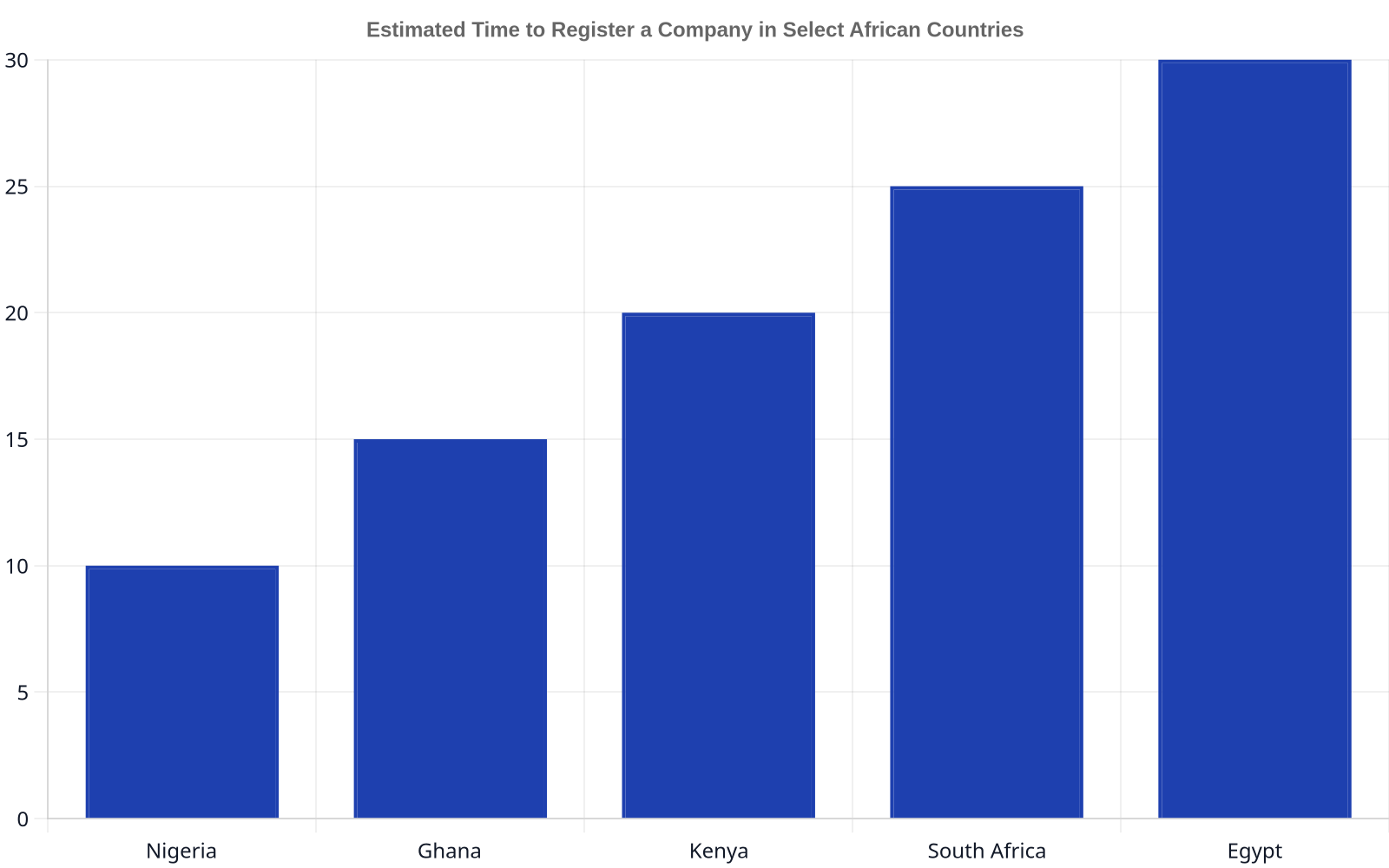
It’s impossible to apply a one-size-fits-all approach to company registration requirements in Africa. The continent’s economic blocs and national priorities create a varied landscape.
- East Africa (e.g., Rwanda, Kenya): Rwanda is renowned for its efficiency, with a highly digitized process that can take as little as 24-48 hours. The Rwanda Development Board (RDB) centralizes most registration steps. Kenya also has a robust online system, though it involves more distinct steps than Rwanda’s.
- West Africa (e.g., Nigeria, Ghana): Nigeria’s process has been streamlined by the CAC’s online portal, but requires meticulous documentation. Ghana offers a relatively efficient process, but requires a small percentage of share capital to be paid upfront.
- Southern Africa (e.g., South Africa, Botswana): South Africa’s CIPC provides a fully digital and cost-effective registration process. Botswana is also considered one of the easiest places to do business on the continent, with clear rules and a stable regulatory environment.
- North Africa (e.g., Egypt, Morocco): These jurisdictions often have more bureaucratic hurdles and may require documents to be translated into Arabic or French. The processes can be less centralized than in their sub-Saharan counterparts.
Common Pitfalls and How to Avoid Them
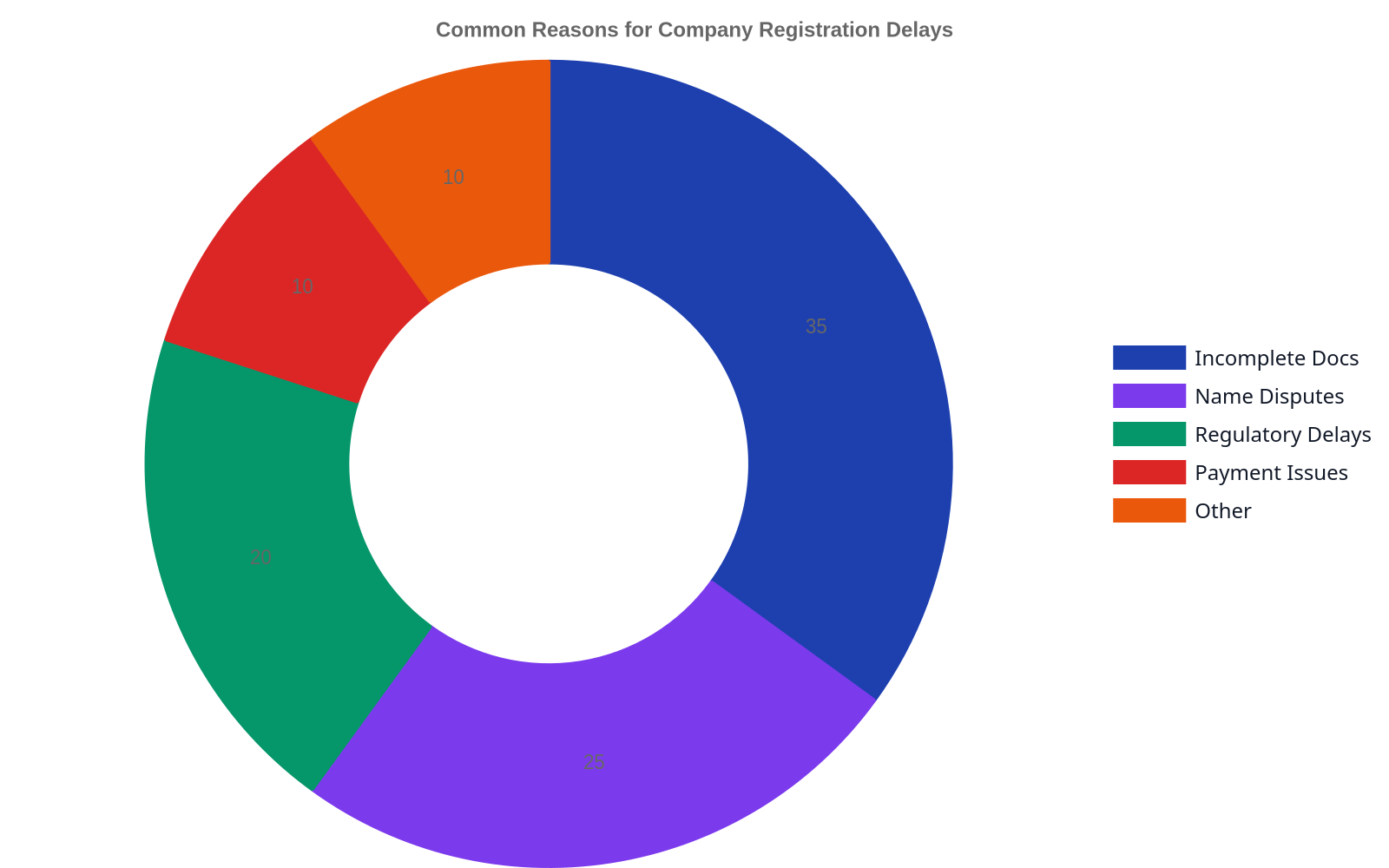
Navigating the company registration requirements in Africa can be complex. Here are some common mistakes we’ve seen cripple timelines and budgets:
- Incorrect Name Reservation: Submitting a name that is too similar to an existing entity or that is prohibited. Always conduct a thorough preliminary search.
- Incomplete or Incorrect Documentation: The single biggest cause of delays. A small mistake in the Articles of Association or a missing director’s signature can send you back to square one. Professional review is essential.
- Underestimating Local Nuances: Assuming a process that worked in one African country will work in another. Every jurisdiction has its unique quirks, from notarization requirements to specific forms.
- Ignoring Post-Incorporation Steps: Forgetting to register for tax, social security, or obtain the necessary business permits can lead to severe penalties. Your company isn’t ready for business without these.
Don’t mistake a Certificate of Incorporation for a license to operate. The certificate is the key to the car; tax registration and business permits are the fuel and the driver’s license.
FAQ
How much does it cost to register a company in Africa?
Costs vary dramatically. In Nigeria, fees depend on the share capital but typically start from a few hundred dollars for legal and filing fees. For larger, more complex entities in jurisdictions with higher capital requirements, costs can run into several thousand dollars. Always budget for professional legal fees in addition to government filing costs.
Can a foreigner own 100% of a company in Africa?
In many African countries, yes. However, some countries, including Nigeria, have specific laws for certain strategic sectors (like oil and gas or broadcasting) that may require local participation or have capital requirements. The Nigerian Investment Promotion Commission (NIPC) Act is a key piece of legislation governing foreign participation.
How long does it take to register a company?
This ranges from as little as 24 hours in Rwanda to several weeks or even months in other countries. The World Bank’s research indicates that while some nations have made huge strides, the average time across Sub-Saharan Africa is still over 20 days. The timeline depends on the country’s efficiency, the complexity of your business, and the accuracy of your application.
Do I need a local director or partner?
This depends on the country. Some jurisdictions do not require a local director. Others may require at least one director to be a resident, or they may have incentives for appointing local directors. This is a critical point to verify with a local legal expert before you start the process.
What is a Memorandum and Articles of Association?
The Memorandum of Association defines the company’s constitution and its external relationship with the world, stating its name, objectives, and capital. The Articles of Association govern the company’s internal affairs, such as the powers of directors, how meetings are conducted, and the rights of shareholders. Together, they form the company’s charter.
Is it necessary to hire a lawyer to register a company?
While some countries have simplified online portals that an individual can technically use, it is highly advisable to engage a local lawyer or corporate services firm. Legal professionals ensure your documents are correctly drafted, navigate the specific requirements of the local registry, and handle post-incorporation compliance, saving you time and preventing costly errors.
Getting Started on Your African Expansion
Successfully establishing a legal entity in Africa requires careful planning, local expertise, and a clear understanding of the specific company registration requirements in Africa. By following these steps and anticipating the common pitfalls, you can lay a solid legal foundation for your business venture.
If you are considering expanding into Nigeria or need guidance on cross-border corporate structuring in Africa, our team at Ardnas Legal has the experience to assist. Contact us today to discuss your specific needs.
Related reading
About the author

Sandra Adeniran
Principal Partner
Adebola Adeniran is the Founding Partner of Ardnas Legal Practitioners. She is a dynamic and forward-thinking lawyer with a passion for providing innovative legal solutions to businesses and individuals. Adebola combines deep legal expertise with a practical, business-oriented approach, ensuring that clients receive advice that is both strategic and actionable.