
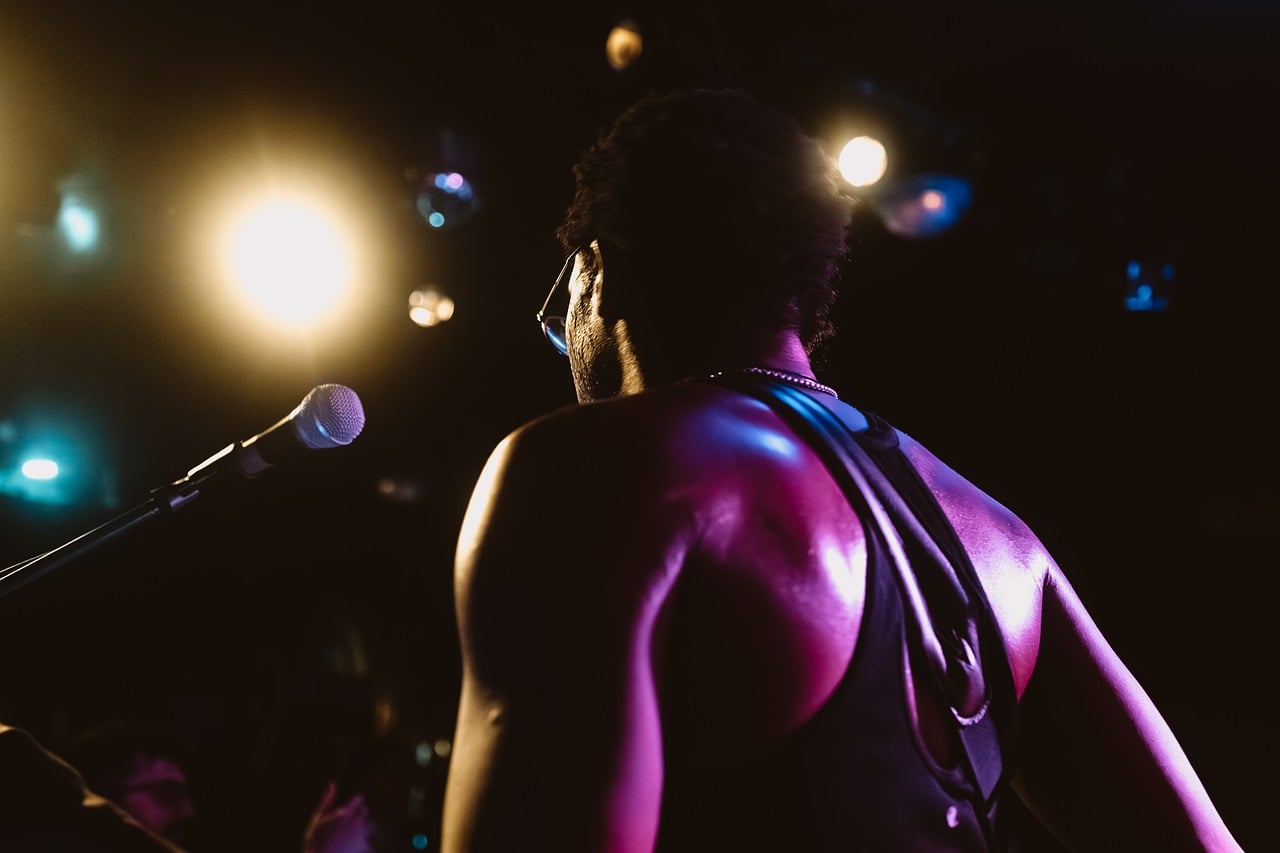
Your stage name isn’t just a cool moniker; it’s the foundation of your entire brand as an artist. Thinking it’s automatically protected just because you thought of it first is a costly mistake many Nigerian artists make. Securing legal protection for your stage name in Nigeria requires formally registering it as a trademark. This process involves conducting a thorough search to ensure uniqueness, filing an application with the Trademarks, Patents and Designs Registry, and paying the prescribed fees. This is the only definitive way to gain exclusive rights to your name, prevent others from using it, and build lasting brand equity.
Understanding Intellectual Property Rights for Stage Names

Many artists confuse the different types of intellectual property. They might think that because they’ve written songs (copyright), their name is also automatically protected. This isn’t the case. Your name as a brand identifier falls squarely under trademark law, not copyright. As a firm specializing in Intellectual Property & Technology law, we see this confusion daily.
Trademark vs. Copyright: The Core Distinction
A trademark is a source identifier. It can be a name, logo, or slogan that distinguishes your goods or services (your music, performances, merchandise) from others. Your stage name—Burna Boy, Tems, Rema—is a service mark, a type of trademark. Copyright, on the other hand, protects original works of authorship, such as song lyrics, musical compositions, and sound recordings. You copyright a song, but you trademark the name you release it under.
Understanding this difference is the first step. For a deeper look, you can read our guide on trademark versus copyright.
The Legal Framework: Nigeria’s Trademarks Act
The primary legislation governing trademarks in Nigeria is the Trademarks Act (Cap T13, Laws of the Federation of Nigeria 2004). This Act lays out the entire framework for what can be registered, the process for registration, and the rights conferred upon the owner of a registered mark. According to the Act, a trademark must be distinctive and not likely to cause confusion with existing marks. This is why a simple name like “DJ John” would be difficult to protect, while a unique name like “Flavour N’abania” is inherently more registrable.
Can You Use an Unregistered Trademark?
Yes, you can operate with an unregistered trademark. Under common law, you might acquire some limited rights through continuous use in a specific geographic area (what’s known as “passing off”). However, enforcing these rights is far more difficult, expensive, and uncertain than enforcing a registered trademark. You would need to prove your established reputation and that another’s use of the name is damaging your goodwill. Registration provides a clear, government-backed certificate of ownership, which is far more powerful.
Don’t rely on common law “passing off” actions to save your brand. Proving reputation and damage is an uphill, expensive legal battle you can avoid entirely with formal registration.
The Process of Registering a Stage Name as a Trademark in Nigeria

Knowing how to protect a stage name in Nigeria means understanding the formal registration process. It isn’t instantaneous, but it is a structured journey that our firm guides clients through regularly. As a leading law firm in Nigeria, we have extensive experience navigating the intricacies of the local IP landscape.
Step 1: The Crucial Trademark Search
Before you even think about filing, you must conduct a search. This is non-negotiable. The goal is to discover if anyone else has already registered or is attempting to register a similar name for similar services (entertainment, music, etc.).
- Initial Google Search: Start with a simple search for your proposed stage name, including variations. Check social media platforms—Instagram, X (formerly Twitter), TikTok, Facebook—and domain name registrars.
- Official Database Search: This is the most critical part. A formal search must be conducted on the Nigerian Trademarks, Patents and Designs Registry database. This search will reveal identical or confusingly similar marks that have been filed or registered. It is highly recommended to have a legal professional conduct this search to interpret the results accurately.
Step 2: Filing the Application
Once the search comes back clear, you can proceed with the application. This is filed with the Registrar of Trademarks. The application must include:
- The applicant’s name and address.
- A representation of the stage name (the word mark).
- The class of goods or services.
- A power of attorney if an agent (like a law firm) is filing on your behalf.
For artists, the most relevant trademark classes are typically Class 41 (Education; providing of training; entertainment; sporting and cultural activities) and sometimes Class 9 (for musical recordings) or Class 25 (for merchandise like clothing). Each class requires a separate application and fee.
Step 3: Examination, Acceptance, and Publication
The Registrar examines the application to ensure it complies with the Trademarks Act. They check for distinctiveness and conflicts with prior marks. If it is acceptable, the Registry issues a letter of acceptance. The mark is then published in the Nigerian Trademark Journal for a period of two months. This publication serves as notice to the public, giving anyone who believes they would be damaged by the registration an opportunity to oppose it.
Step 4: Opposition Period and Final Registration
If no opposition is filed within the two-month period, the Registrar will proceed to issue the Certificate of Registration. If an opposition is filed, it initiates a separate legal proceeding to determine who has the right to the mark. Once the certificate is issued, your stage name is officially a registered trademark. The entire process, if unopposed, can take anywhere from 12 to 24 months. For a detailed breakdown, see our article on the trademark registration.
Cost Implications of Protecting Your Stage Name
Budgeting for brand protection is an investment, not just a cost. The fees are not prohibitive, especially when weighed against the potential loss of your entire brand identity. The costs can be broken down into official fees and professional fees.
Official Government Fees
As of early 2026, the official fees paid to the Nigerian government for a straightforward, single-class trademark application are relatively modest. This includes the application fee, publication fee, and final registration fee. While the US system is often cited with costs around “$350 per class,” the direct filing fees in Nigeria are distinct. You can find the schedule of fees on the World Intellectual Property Organization (WIPO) website, which provides calculators and fee schedules for various member countries, including Nigeria.
Professional Fees for Legal Assistance
While you can technically file on your own, it is strongly advised against. The process is laden with procedural requirements. A mistake in the application, a poor search, or a missed deadline can lead to outright rejection, forcing you to start (and pay) all over again. Professional fees cover the cost of a lawyer or IP agent conducting the search, preparing and filing the application, responding to office actions from the registry, and monitoring deadlines. Our Intellectual Property & Technology Law practice offers transparent, fixed-fee packages for this entire process.
Comparison of Protection Options
To give you a clearer picture, here is how the different levels of protection compare:
| Feature | Common Law (Unregistered) | Registered Trademark (Nigeria) |
|---|---|---|
| Basis of Right | Use in commerce | Registration with the Trademarks Registry |
| Geographic Scope | Limited to the specific area of use | Nationwide rights across all 36 states |
| Proof of Ownership | Must prove reputation & goodwill (difficult) | Registration Certificate is direct proof |
| Right to Sue | Can sue for “passing off” (complex) | Can sue for trademark infringement (stronger) |
| Deterrent | Low. Others may unknowingly adopt it. | High. A public record deters others. |
| Remedies | Limited to damages and injunctions | Damages, injunctions, and account of profits |
| Use of ® Symbol | Not permitted | Permitted, signals official protection |
Avoiding Common Trademark Pitfalls
Many artists make avoidable mistakes when trying to protect their stage name. Being aware of these can save you significant time and money.
- Choosing a Descriptive Name: A name that merely describes your service (e.g., “Lagos Singer”) is weak and hard to register. Aim for a name that is arbitrary (“Apple” for computers) or fanciful (a made-up word).
- Skipping the Comprehensive Search: Relying only on Google is a recipe for disaster. A confusingly similar mark in the official registry can block your application, even if that brand isn’t active on social media.
- Failing to Use the Name in Commerce: A trademark must be used. You can’t just register a name and sit on it indefinitely without using it to market your musical services. You must provide evidence of use. According to the Nigerian Copyright Commission, use in commerce is a key part of asserting your rights, and this principle extends to branding.
- Ignoring Social Media and Domain Registrations: In 2026, your brand lives online. Securing the .ng domain name and the handles on major social platforms is just as important as the trademark filing itself. Do this simultaneously with your trademark search.
A stage name is an asset. Treating it casually online by not securing your handles and domain is like buying a house but leaving the front door wide open for squatters.
Enforcement and Legal Remedies for Stage Name Infringement

So you’ve registered your name. What happens when someone starts using it? Having a registered trademark gives you powerful legal tools.
Cease and Desist Letter
The first step is almost always to have your lawyer send a cease and desist letter. This formal communication informs the infringing party of your trademark rights and demands that they stop using the name immediately. Often, this is enough to resolve the issue without further legal action, especially if the infringement was unintentional.
Legal Action and Court Injunctions
If the infringer ignores the letter, you can file a lawsuit for trademark infringement. The Federal High Court of Nigeria has exclusive jurisdiction over these matters. Through legal action, you can seek:
- An Injunction: A court order compelling the infringer to stop using your name.
- Damages: Monetary compensation for the harm done to your brand and any losses you suffered.
- Account of Profits: Forcing the infringer to turn over any profits they made by using your trademark.
- Destruction of Infringing materials: An order to destroy any merchandise, flyers, or other materials bearing your mark.
There have been several cases in the Nigerian music industry highlighting these issues, often serving as a cautionary tale for upcoming artists about the necessity of formal protection. For example, disputes over band names or artist names often make headlines, demonstrating the real-world consequences of unclear branding rights.
FAQ
How long does a trademark registration last in Nigeria?
A Nigerian trademark registration is valid for an initial period of seven (7) years from the date of filing. It can then be renewed indefinitely for subsequent periods of fourteen (14) years.
What if my chosen stage name is my actual name?
You can trademark your own name, but it can be more complex. You may need to show that the name has acquired “distinctiveness” or “secondary meaning” through use, meaning the public has come to associate that name specifically with your music, not just you as a person.
Can I trademark a logo along with my stage name?
Yes. You can file a trademark for the word mark (the name itself) and a separate trademark for your logo (a device mark). You can also file for a combined mark that includes both the name and the logo design together.
How much does it cost to trademark a stage name in Nigeria?
The total cost varies based on the number of classes you file in and the professional fees of your legal counsel. Including professional fees for a search, filing, and prosecution for a single class, you should budget between ₦250,000 and ₦500,000 as a rough estimate in 2026, though this can change.
What is the role of artist unions like PMAN in name protection?
Organizations like the Performing Musicians Association of Nigeria (PMAN) can provide resources and mediation for disputes. However, they do not grant legal trademark rights. Their registries are internal. Only official government registration with the Trademarks Registry provides legally enforceable, nationwide protection in Nigeria.
Is it better to register my trademark myself or use a lawyer?
While it’s technically possible to file yourself, it is highly inadvisable. The process is a legal one with specific procedural rules. A single error can cause your application to be rejected, wasting months of time and money. Using an experienced IP lawyer is a critical investment in getting it done right.
Protecting your stage name is one of the most important business decisions you will make as an artist. It secures your identity, protects your investment in your brand, and provides the legal foundation for a long and successful career. If you are an artist in Nigeria looking to secure your brand, we can help. Contact Ardnas Legal today for a consultation on how to protect a stage name in Nigeria and build an enduring legacy.