

Is litigation the only way to settle business disputes? Many Nigerian businesses believe so, jumping straight into contentious court battles that drain resources and time. This is a costly misconception. A skilled commercial litigation lawyer in Lagos, Nigeria, understands that the courtroom is just one of several tools. Their primary role is to secure a favourable business outcome, which often means avoiding a protracted legal fight through negotiation, mediation, or arbitration. The goal is not to “win” a court case at all costs, but to resolve the dispute efficiently, preserving capital and relationships where possible.

What is Commercial Litigation?
Commercial litigation refers to the legal process of resolving disputes that arise in a business context. Unlike criminal law, which involves the state prosecuting an individual for a crime, commercial litigation deals with conflicts between two or more business entities. These disputes are not about personal grievances; they are about protecting a company’s assets, rights, and ability to operate. The scope is vast, covering everything from simple contract breaches to complex multi-jurisdictional financial fraud.
In Nigeria, the legal framework for these disputes is rooted in English common law, but heavily modified by Nigerian statutes and case law. Key legislation includes the Companies and Allied Matters Act (CAMA) 2020, the Sale of Goods Act, and various state-level high court rules. A case involving a shipping contract in Apapa, for instance, might also bring in maritime law, creating layers of legal complexity.
The Anatomy of a Business Dispute
At its core, every business dispute has a similar anatomy: a broken promise, a violated right, or an unmet expectation. A supplier fails to deliver goods as specified in a contract. A former employee starts a competing business using confidential client lists. A partner in a joint venture siphons funds. These are the sparks that ignite commercial conflicts.
For example, a real estate developer in Lekki might find that their contractor used substandard materials, violating the construction agreement. The developer’s loss isn’t just the cost of the faulty materials; it includes project delays, potential safety liabilities, and reputational damage. The legal process must account for all these dimensions of the harm.
Common Types of Commercial Disputes in Lagos
Lagos, as Nigeria’s economic engine, sees a specific flavour of commercial disputes. Our experience shows a high concentration in several key areas. Breach of contract is ubiquitous, stemming from the sheer volume of daily transactions. We also handle a significant number of matters for public and private companies concerning debt recovery, a persistent issue in a credit-driven economy.
Intellectual property (IP) infringement is another growing battleground. A tech startup in Yaba might discover a competitor has copied its software code, or a fashion designer on the Island might see their designs replicated without permission. These cases require swift action, often beginning with cease and desist letters and potentially leading to injunctions and claims for damages.
Other common disputes include shareholder and partnership disagreements, landlord-tenant issues for commercial properties, and professional negligence claims against auditors, architects, or other service providers. The specific details vary, but the underlying principle is the same: a commercial right has been infringed, and legal intervention is required to make the injured party whole.
Key Stages of Commercial Litigation in Nigeria
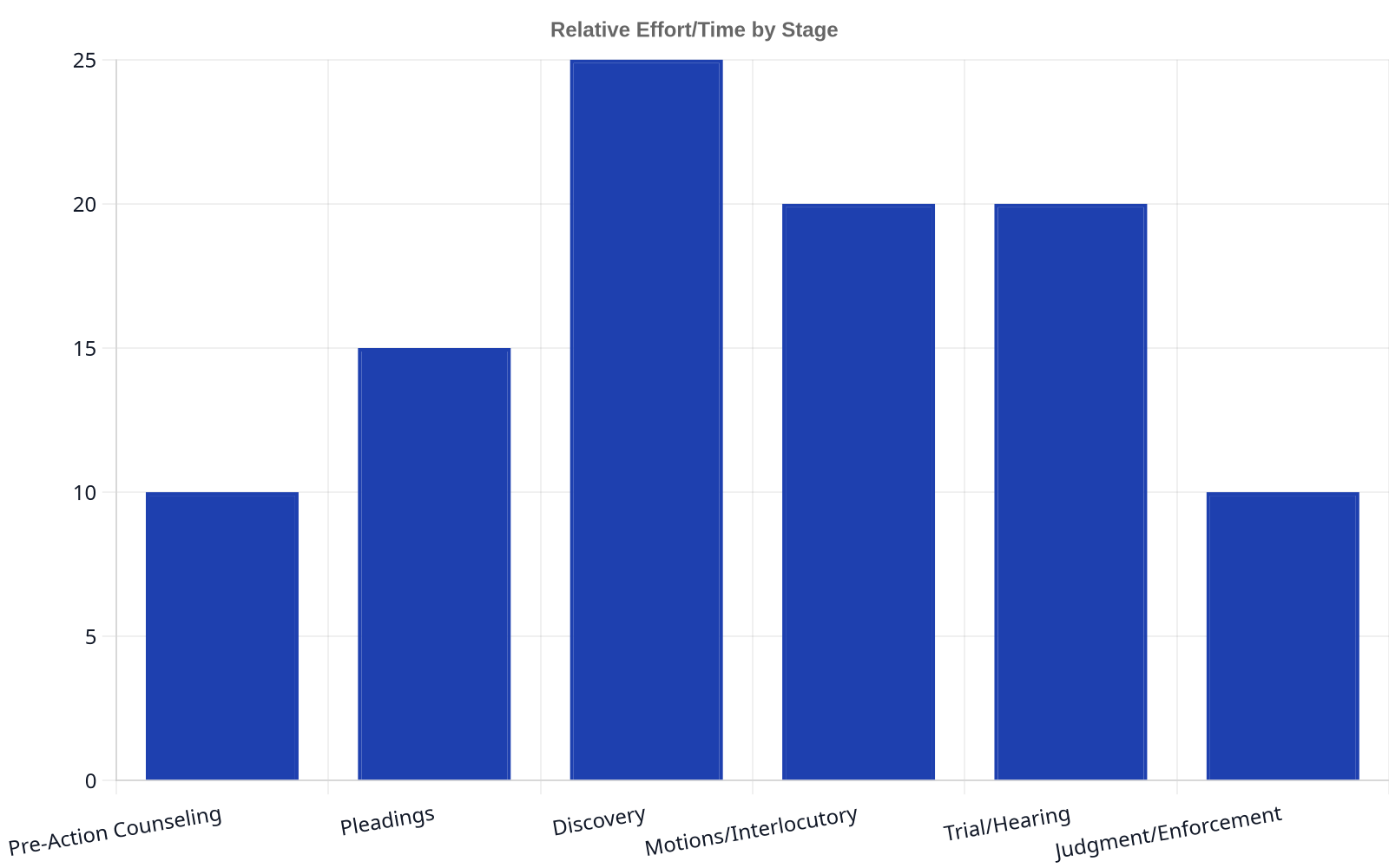
The journey of a commercial dispute through the Nigerian legal system is structured and methodical. It is not the chaotic, dramatic affair often depicted in popular media. Understanding these phases helps demystify the process and set realistic expectations for the time and resources required.

Pre-Litigation: The Most Important Phase
Before any documents are filed with a court, the pre-litigation phase begins. This is arguably the most critical stage. It involves a thorough investigation of the facts, gathering of evidence (emails, contracts, invoices, witness statements), and a detailed legal analysis of the client’s position.
During this phase, a competent lawyer will send a formal Letter of Demand to the opposing party. This letter outlines the client’s claims, the legal basis for them, and the specific remedies sought. As stated in the High Court of Lagos State (Civil Procedure) Rules 2019, many actions require evidence that pre-action protocols have been followed. This letter is not just a formality; it is a strategic tool that can trigger negotiations and lead to a settlement without ever seeing a courtroom. It shows you are serious and have a well-founded case.
Filing and Pleadings
If the pre-litigation phase does not resolve the dispute, formal litigation begins with the filing of a Writ of Summons or Originating Motion at the appropriate High Court. This document, accompanied by a Statement of Claim, officially starts the lawsuit. The Statement of Claim is a detailed narrative that sets out the facts of the case and the specific legal relief sought from the court.
Once served, the defendant has a specified period to file their defence. This includes a Memorandum of Appearance (indicating their intent to defend the action) and a Statement of Defence, which responds to the claimant’s allegations paragraph by paragraph. The defendant may also file a counterclaim, which is essentially a separate lawsuit against the claimant within the same proceedings.
Discovery, Trial, and Judgment
With pleadings closed, the discovery phase commences. In Nigeria, this is less extensive than in jurisdictions like the United States. It typically involves exchanging relevant documents and sometimes administering written questions called interrogatories. The goal is to ensure both sides have access to the evidence the other intends to rely on at trial, preventing “trial by ambush.”
The purpose of a trial isn’t to discover the truth from scratch; it’s to present a well-documented, pre-analyzed case to a judge who then applies the law to the facts presented.
The trial itself involves presenting evidence and witness testimony in open court. Witnesses are examined, cross-examined, and re-examined. Lawyers make opening and closing arguments, summarising their client’s case and citing relevant legal precedents. In Nigeria, commercial cases at the High Court are decided by a single judge, not a jury.
After the trial concludes, the judge reserves judgment for a later date. On the day of judgment, the judge delivers a reasoned decision, either upholding the claim, dismissing it, or granting a portion of the relief sought. According to the Constitution of the Federal Republic of Nigeria 1999 (as amended), a court must deliver its judgment within 90 days of the final addresses.
The Role of a Commercial Litigation Lawyer
What does a commercial litigation lawyer actually do? Their role extends far beyond arguing in court. They are strategists, project managers, and business advisors rolled into one. Their primary objective is to manage and resolve a business conflict in a way that aligns with the client’s commercial goals.
Strategist and Risk Assessor
From the first meeting, the lawyer’s job is to assess the strengths and weaknesses of a case. This involves a cold, hard look at the evidence, the applicable law, and the potential costs. A good litigator will provide a frank assessment of the probability of success, the potential value of the claim, and the estimated legal fees.
This risk assessment is not a one-time event. It is a continuous process. As new evidence emerges or the opposing party’s strategy becomes clearer, the assessment must be updated. Should we push for a quick settlement now, or is it better to invest more resources to strengthen our position for trial? A commercial litigation lawyer in Lagos, Nigeria must constantly weigh these strategic options.
Negotiator and Advocate
While they are prepared for battle, skilled litigators are also master negotiators. They understand that a negotiated settlement is often a better business outcome than a court-ordered victory. A settlement provides certainty, reduces costs, and allows for creative solutions that a judge cannot order, such as agreeing on future business relationships.
When negotiation is not possible or fails, the lawyer transitions fully into the role of advocate. In court, their job is to present the client’s case persuasively and effectively. This requires not just a deep knowledge of the law, but also the ability to construct a compelling narrative, dismantle the opponent’s arguments through cross-examination, and adhere strictly to the rules of evidence and procedure.
Project Manager
Litigation is a complex project with numerous moving parts, deadlines, and stakeholders. The lawyer acts as the central project manager. They are responsible for drafting legal documents, managing the flow of evidence, liaising with witnesses, engaging expert consultants (like forensic accountants or industry specialists), and ensuring all court-mandated deadlines are met.
Missing a single deadline can have catastrophic consequences for a case. For instance, failing to file a Statement of Defence within the time prescribed by the High Court of Lagos State (Civil Procedure) Rules 2019 can lead to a default judgment being entered against your company. This level of administrative rigour is a non-negotiable part of the job.

Why Choose a Specialist Commercial Litigation Lawyer?
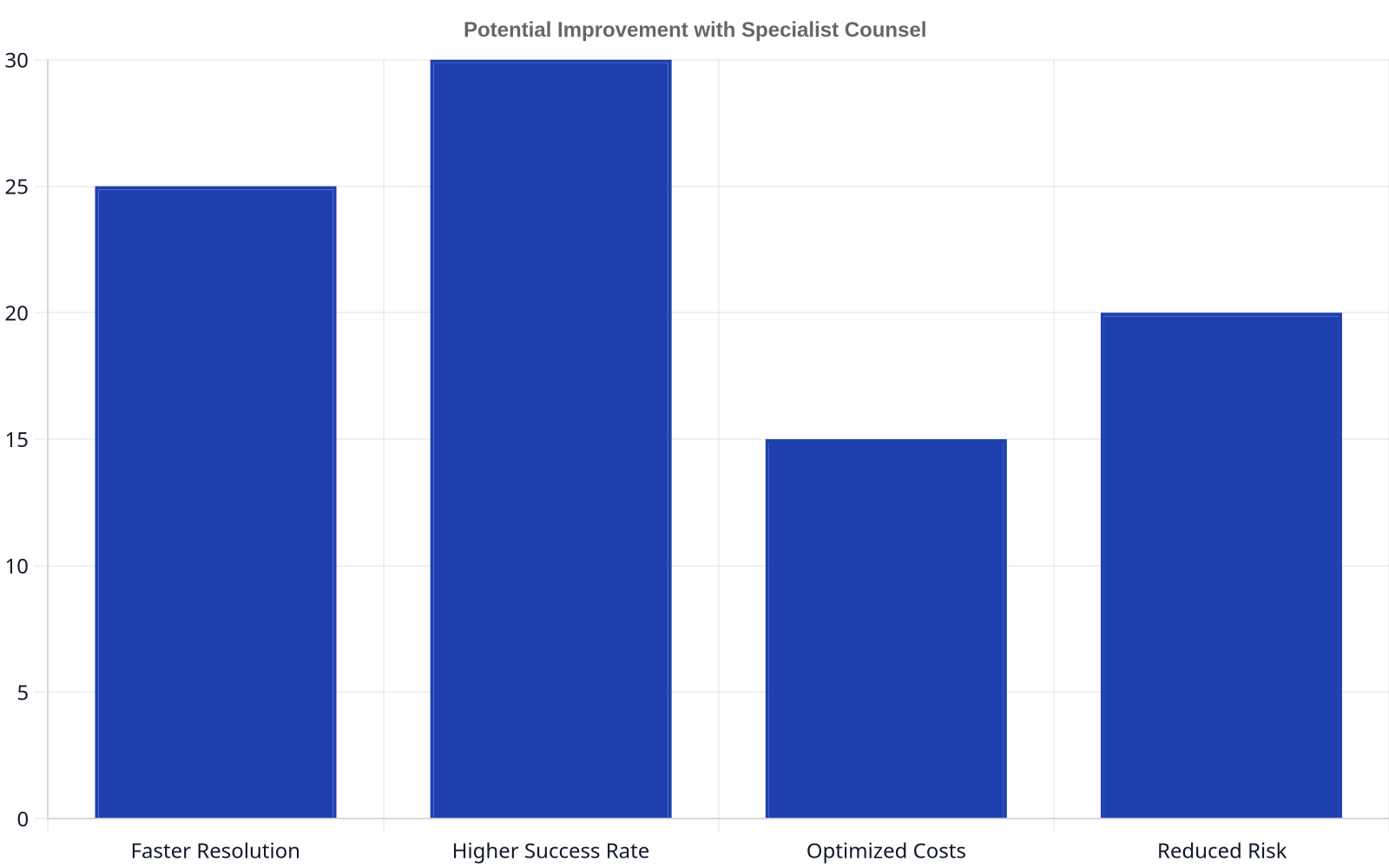
Just as you would not see a general practitioner for heart surgery, you should not entrust a complex business dispute to a generalist lawyer. Commercial litigation is a highly specialized field. The rules are complex, the stakes are high, and the financial implications of a misstep can be devastating. Companies in Nigeria, including financial institutions and international investors, rely on specialists to protect their interests.
Deep Knowledge of Procedure
Much of litigation is won or lost on procedure. A specialist knows the intricate rules of the High Court, the Court of Appeal, and the Supreme Court. They understand the strategic implications of different types of motions, the nuances of evidence admissibility, and how to use the rules to their client’s advantage. This procedural mastery is something that can only be gained through years of focused practice in the field.
Industry-Specific Experience
Commercial disputes do not happen in a vacuum. A case involving an oil and gas contract is vastly different from one concerning a software licensing agreement. A specialist firm like Ardnas Legal often has lawyers with experience in specific sectors, such as oil & gas, real estate, or intellectual property. This industry knowledge is invaluable, allowing the lawyer to quickly grasp the commercial context of the dispute and tailor their legal strategy accordingly. This is a key reason we are engaged by clients ranging from government bodies to foreign law firms seeking local expertise.
Access to Networks
A specialist commercial litigator builds a network of trusted professionals over their career. This includes forensic accountants who can trace misappropriated funds, industry experts who can provide crucial testimony, and senior advocates (SANs) who can be brought in for appellate work. This ability to assemble a high-powered team quickly is a significant advantage in any complex litigation.
Hiring a litigator isn’t just about paying for legal advice; it’s about gaining an ally who is willing to immerse themselves in your business, understand your commercial objectives, and fight relentlessly to protect them.
Choosing the Right Lawyer in Lagos
Selecting the right legal representation is the most important decision you will make in a business dispute. The wrong choice can lead to a disastrous outcome, wasted time, and exorbitant costs. The right choice can mean the difference between a crippling loss and a successfully resolved issue.
Key Criteria for Selection
When evaluating a potential commercial litigation lawyer in Lagos, Nigeria, consider the following:
- Verifiable Experience: Ask for specific examples of cases they have handled that are similar to yours. How many of these cases went to trial? What were the outcomes?
- Specialization: Is commercial litigation their primary practice area, or is it just one of many things they do?
- Communication: How do they plan to keep you informed about your case? You should expect regular, clear, and concise updates.
- Fee Structure: Demand transparency. You need a clear understanding of their hourly rates, retainer policy, and any other potential costs. A reputable firm will provide this without hesitation.
- Strategy: Ask them to outline their initial strategic thoughts on your case. Even at an early stage, a good litigator should be able to articulate a coherent preliminary approach.
The Fee Structure Explained
Legal fees are a major concern for any business entering litigation. In Nigeria, the most common fee structures for commercial litigation are:
- Hourly Rate: The lawyer charges for each hour (or fraction of an hour) spent working on your case. Rates vary based on the lawyer’s seniority and experience.
- Fixed Fee: For discrete tasks like drafting a contract or filing a trademark, a flat fee may be charged.
- Retainer: This is an advance payment made by the client, which the law firm holds in trust. The firm then bills its hourly fees against the retainer. This is the most common model for ongoing litigation.
- Contingency Fees: While more common in other jurisdictions, Section 50(2) of the Rules of Professional Conduct for Legal Practitioners, 2023 places strict regulations on “contingent or success-based fees,” making them less common for general commercial litigation but permissible in certain contexts.
Comparison of Litigation vs. Alternative Dispute Resolution (ADR)
Before committing to litigation, it is crucial to understand the alternatives. ADR, which includes mediation and arbitration, offers different pathways to resolving disputes.
| Feature | Commercial Litigation | Arbitration | Mediation |
|---|---|---|---|
| Process | Formal, public court proceedings | Private, quasi-judicial hearing | Informal, facilitated negotiation |
| Decision Maker | Judge | Arbitrator(s) chosen by parties | Parties themselves (with mediator’s help) |
| Outcome | Binding judgment, subject to appeal | Binding award, very limited appeal | Non-binding settlement agreement |
| Cost | High (court fees, extensive procedure) | Can be high (arbitrator fees) but often faster | Generally lowest cost |
| Speed | Can be very slow (years) | Generally faster than court | Can be very fast (days or weeks) |
| Confidentiality | Public record | Private and confidential | Private and confidential |
| Best For | Establishing legal precedent, complex cases with uncooperative parties | Enforcing contracts with arbitration clauses, international disputes | Preserving business relationships, seeking creative solutions |
For many businesses in Lagos, a hybrid approach works best. Starting with mediation or arbitration, with the option to litigate if the ADR process fails, can provide a cost-effective and flexible strategy. A skilled commercial litigation lawyer will advise on the best approach for your specific situation.
FAQ
How long does commercial litigation take in Nigeria?
The timeline for a commercial case in Nigeria can vary dramatically. A straightforward debt recovery case might be resolved within 12-18 months at the High Court. However, a complex case involving multiple witnesses, expert evidence, and interlocutory appeals could take 3-5 years or even longer, especially if it proceeds to the Court of Appeal and the Supreme Court.
What are the estimated costs of commercial litigation in Lagos?
Costs are highly variable and depend on the complexity of the case, the seniority of the lawyers involved, and the duration of the litigation. Legal fees can range from a few million Naira for a simple matter to hundreds of millions for a large, complex corporate dispute. It is essential to have a frank discussion about costs and billing with your lawyer at the outset.
Can I sue a foreign company in Nigeria?
Yes, you can sue a foreign company in Nigeria, provided the Nigerian court has jurisdiction. Jurisdiction is typically established if the contract was made or was to be performed in Nigeria, or if the company has assets or a business presence within Nigeria. Suing foreign entities often involves additional procedural steps for serving legal documents, as guided by international treaties and court rules.
What is an injunction and when is it used?
An injunction is a court order that compels a party to either do a specific act (a mandatory injunction) or refrain from doing a specific act (a prohibitory injunction). In commercial litigation, they are powerful tools. For example, a court can grant an interim injunction to stop a former employee from using confidential information or to freeze a defendant’s assets (a Mareva injunction) to prevent them from being dissipated before a judgment can be enforced.
What is the difference between the High Court, the Court of Appeal, and the Supreme Court?
Nigeria has a hierarchical court system. The High Court (both Federal and State) is the primary court of first instance where most commercial litigation begins. If a party is dissatisfied with a High Court judgment, they can appeal to the Court of Appeal. The Court of Appeal’s decision can then be appealed to the Supreme Court, which is the final court in the land. Its decisions are binding on all other courts in Nigeria.
Navigating a business dispute in Lagos requires more than just legal knowledge; it demands strategic thinking, procedural expertise, and a deep understanding of the commercial landscape. Choosing the right legal partner is the first and most crucial step toward protecting your company’s interests. If your business is facing a potential conflict, the time to seek expert advice is now, not when a Writ of Summons arrives at your door.
If you are looking for a commercial litigation lawyer in Lagos, Nigeria, with a track record of delivering timely and cost-effective solutions, contact Ardnas Legal today for a consultation.
Related reading
- 5 Litigation Lawyer Cost Models for African Operations
- Rape in Nigeria: Why a Lawyer Is Your First, Most Critical Step.
About the author

Sandra Adeniran
Principal Partner
Adebola Adeniran is the Founding Partner of Ardnas Legal Practitioners. She is a dynamic and forward-thinking lawyer with a passion for providing innovative legal solutions to businesses and individuals. Adebola combines deep legal expertise with a practical, business-oriented approach, ensuring that clients receive advice that is both strategic and actionable.