

Many assume their closest relative automatically inherits everything. This is a costly mistake. When someone dies without a will in Nigeria, the law, not personal wishes, dictates how their assets are distributed. This legal state is called intestacy. The process falls under specific rules of succession that vary based on the deceased’s marriage type and local customs, often leading to outcomes the deceased never would have wanted. This means your spouse or children might not be the sole beneficiaries of your estate.
Intestacy is the default legal framework for distributing the property of a person who passed away without a valid will. The rules are not uniform across the country. The distribution of the estate of a person who dies intestate in Nigeria is governed by the Administration of Estates Law of the relevant state, English common law, and customary law. The specific law that applies depends on the type of marriage the deceased contracted and their personal law or customs.
For instance, if the deceased was married under the Marriage Act, the distribution of their estate is governed by English law and the Administration of Estates Law of their state of domicile. Conversely, if the deceased was married under customary law, then customary law will determine the succession to their estate. This distinction is critical and is a common point of confusion for many families we advise, including both public and private companies trying to support an employee’s family after a loss.

Understanding Intestacy in Nigeria
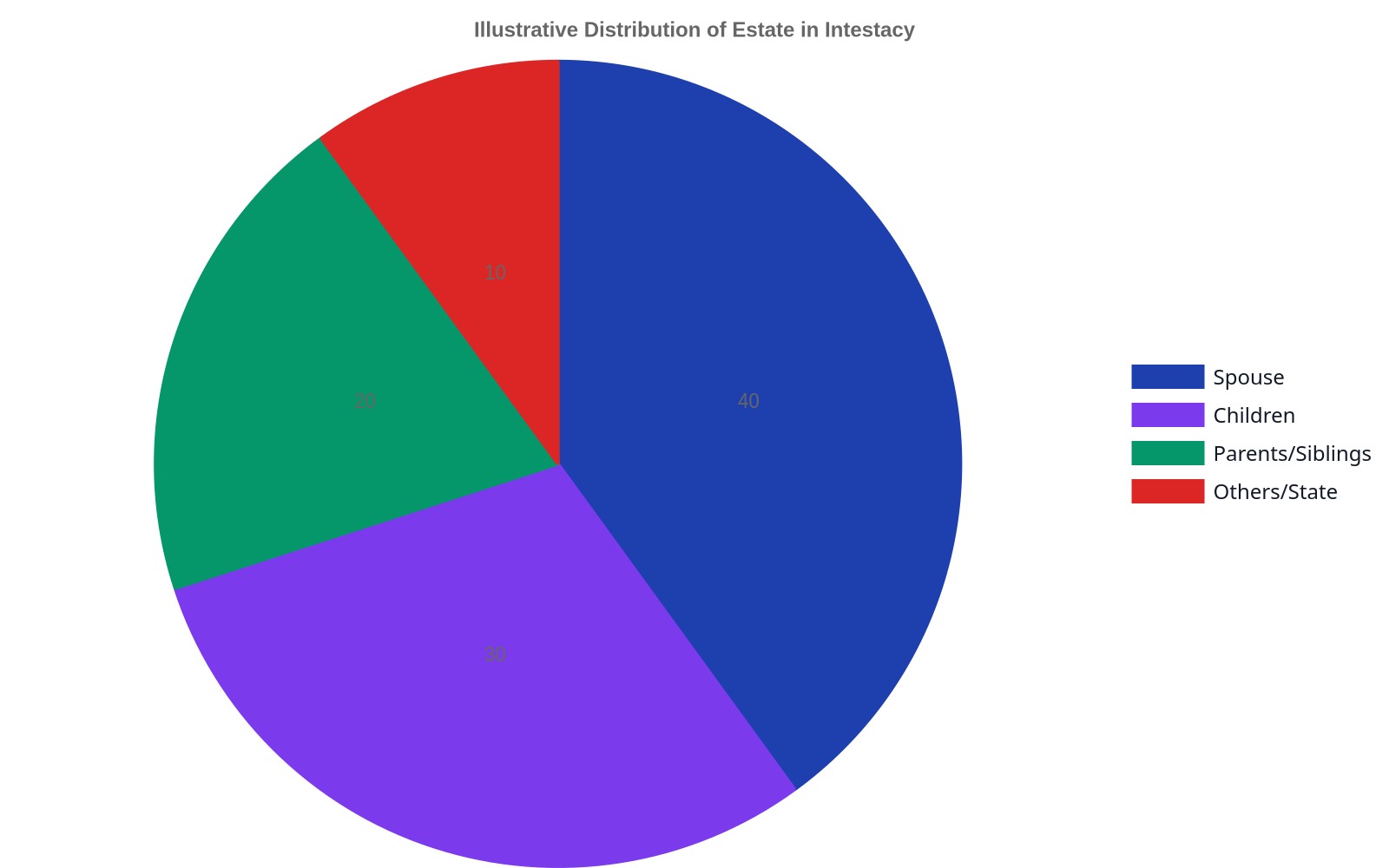
How does this work in practice? Let’s consider a common scenario. Mr. Adebayo, a resident of Lagos, passes away without a will. He is survived by his wife, whom he married under the Marriage Act, and two young children. His estate consists of a house in Lekki, shares in a company, and N10 million in a bank account. Under the Administration of Estates Law of Lagos State, his wife is entitled to one-third of the estate, and the remaining two-thirds will be shared equally among his children.
If Mr. Adebayo had instead married under Yoruba customary law, the distribution might be different. Depending on the specific customs of his family’s lineage, his eldest son could be appointed as the head of the family (the “Dawodu”) and inherit the primary residence to hold in trust for the other children. Some customs might favour male children over female children, a practice that Nigerian courts have increasingly ruled against, citing constitutional rights to freedom from discrimination as seen in cases like Ukeje v. Ukeje. These variations and potential for conflict are why relying on intestacy is so risky.
The belief that your next-of-kin designation at the bank is a substitute for a will is a widespread and dangerous myth. A next-of-kin is merely a contact person; they have no automatic right to inherit your money.
The Importance of a Will: Why You Need One

Writing a will is not about planning for death; it’s about taking control of your legacy and protecting your loved ones from legal ambiguity and potential strife. A will is a legal document that expresses your wishes for how your property should be distributed after your death. It allows you to appoint executors you trust to manage your estate, name guardians for your minor children, and ensure your assets go to the specific people and causes you care about.
Without a will, you give up this control. The state steps in, and the rigid application of intestacy rules can lead to unintended consequences. A dependent relative you supported financially might be left with nothing. Your business partner could find themselves in a difficult position if your shares are suddenly divided among family members unfamiliar with the business. We have seen this happen with Nigerian and foreign investors whose local partners passed away intestate, creating significant disruption and uncertainty for the enterprise.

What Intestacy Is Not
It’s crucial to understand what intestacy rules do not cover, as these are areas ripe for confusion.
- It is not a substitute for a next-of-kin designation. As mentioned, naming a next-of-kin on an employment form or bank account does not grant them inheritance rights. That person is simply a point of contact. The bank is legally obligated to release funds to the appointed administrators of the estate, not the named next-of-kin, as established by the Supreme Court of Nigeria.
- It does not apply to jointly owned assets. Property held in a joint tenancy, for example, automatically passes to the surviving joint owner(s) by the principle of survivorship. This is common with real estate and joint bank accounts. These assets fall outside the intestate estate and are not subject to the rules of distribution.
- It does not manage pension funds or life insurance proceeds. These assets are typically governed by the beneficiary designations made on the policies themselves. The proceeds are paid directly to the named beneficiary and do not form part of the deceased’s estate to be distributed under intestacy rules.
When Does This Matter Most?
While everyone should have a will, certain situations make it especially critical. If you have minor children, a will is the only way to legally appoint a guardian of your choosing. Without it, the court will make that decision, which may not align with your wishes.
Individuals with complex family structures, such as those with children from multiple partners or who support extended family members, must have a will. Intestacy rules follow strict bloodlines and legal marriage definitions, which may exclude dependents you consider family. For business owners, a will is an essential part of succession planning. It can direct how your shares are handled, preventing a scenario where your business continuity is threatened by a forced sale or mismanagement by heirs who are not prepared to take over. Our work with various financial institutions has shown that the absence of a will is a major risk factor in the stability of family-owned businesses after a founder’s death.
A will is not an instrument for the wealthy. It is a fundamental tool for anyone who wants to provide clarity, protect their family, and decide the fate of what they have worked for.
Ultimately, dying without a will in Nigeria creates a stressful, expensive, and often contentious situation for the loved ones left behind. The process of obtaining Letters of Administration can be long and arduous. By preparing a valid will, you provide a clear roadmap, minimize the potential for disputes, and ensure your legacy is handled exactly as you intend.
FAQ
### What is a Letter of Administration?
A Letter of Administration is a legal document issued by the High Court Probate Registry to appoint “Administrators” for an estate. These administrators are empowered to manage and distribute the assets of a person who died without a will. This is the legal authority needed to access bank accounts, transfer property, and otherwise deal with the deceased’s estate.
Who can apply for a Letter of Administration in Nigeria?
The law provides an order of priority for who can apply. According to the Administration of Estates Law of Lagos State, the order is typically: surviving spouse, children of the deceased, parents of the deceased, siblings of the deceased, and so on. The court has the discretion to appoint at least two people to administer the estate.
How long does it take to get a Letter of Administration?
The process can be lengthy, often taking anywhere from several months to over a year. The timeline depends on the complexity of the estate, the efficiency of the specific probate registry, and whether any disputes arise among the potential beneficiaries. Delays can freeze access to crucial assets for the family.
What happens to a minor’s inheritance in intestacy?
If a minor inherits property under intestacy rules, the property will be held in trust for them until they reach the age of majority (18 or 21, depending on the specific legal context). The administrators of the estate or court-appointed trustees are responsible for managing the asset for the child’s benefit.
Can customary law of inheritance be challenged?
Yes. While customary law is a recognized source of law in Nigeria, any custom that is discriminatory or conflicts with the Nigerian Constitution can be challenged in court. The Supreme Court has, in several cases, voided customs that disinherit female children or wives, affirming their constitutional rights to inheritance and freedom from discrimination.
*
Dealing with the aftermath of a death is difficult enough without the added complication of legal battles over property. If you need guidance on estate planning or require assistance with the administration of an intestate estate, contact a qualified legal professional. Contact Ardnas Legal for a consultation.
Related reading
- 7 Steps to Trademark Registration in Nigeria
- Trademark vs. Copyright in Nigeria: Which IP Is Right for You?.
About the author

Sandra Adeniran
Principal Partner
Adebola Adeniran is the Founding Partner of Ardnas Legal Practitioners. She is a dynamic and forward-thinking lawyer with a passion for providing innovative legal solutions to businesses and individuals. Adebola combines deep legal expertise with a practical, business-oriented approach, ensuring that clients receive advice that is both strategic and actionable.