

Is choosing a divorce lawyer the most important decision of the process? Many believe so, but the groundwork you lay before even contacting a firm is far more critical. A successful divorce outcome isn’t about finding a “shark”; it’s about strategic preparation and selecting counsel that aligns with a complex, cross-jurisdictional reality. Finding the right legal partner requires a deep understanding of varying legal frameworks, cultural nuances, and financial implications across the continent. For anyone searching for a “divorce lawyers Africa review,” the focus must be on compatibility, verifiable expertise in specific legal systems, and a clear fee structure, not just a firm’s win-loss record. This approach ensures you are not just hiring a lawyer, but a strategic partner for a complex life transition.

The Legal Mosaic: Divorce Laws Across Africa
Africa is not a monolith, and its legal systems reflect a rich tapestry of customary, religious, and statutory laws. A lawyer in Lagos operates under a different framework than one in Johannesburg or Cairo. Understanding this is the first step in a successful search for representation. Broadly, divorce proceedings on the continent fall into three categories: customary law, religious law (like Sharia), and civil (statutory) law. Many countries operate a pluralistic system where multiple legal frameworks coexist.
Statutory Law Systems
Most African nations have a form of statutory law governing divorce, often inherited from colonial legal systems and later amended. In Nigeria, for instance, the Matrimonial Causes Act of 1970 is the primary legislation governing statutory marriage dissolutions. Section 15(2) of the Act specifies that the sole ground for divorce is that the marriage has “broken down irretrievably.” The Act then lists eight facts or circumstances that the petitioner can prove to establish this breakdown. This is a crucial distinction. You don’t file for divorce on the grounds of adultery; you file because the marriage has broken down irretrievably, and you use adultery as proof of that breakdown.
Other countries have different thresholds. South Africa’s Divorce Act 70 of 1979 also cites irretrievable breakdown as the primary ground but has a more flexible interpretation. It also includes incurable mental illness or continuous unconsciousness as specific grounds. When vetting a lawyer, their demonstrated experience with the specific statutes of your jurisdiction is non-negotiable.
Customary and Religious Law
In many regions, customary law, which is based on the traditions and practices of indigenous communities, is a recognized part of the legal system. These divorces are often mediated by family heads or community elders. Their validity is often recognized by the state, provided they don’t conflict with public policy or natural justice. For example, the Nigerian constitution recognizes the validity of customary law, and many matrimonial disputes are resolved this way, particularly for marriages conducted under native law and custom. Ardnas Legal, as one of the leading law firms in Nigeria, regularly advises clients on the interplay between statutory and customary legal systems.
Similarly, Islamic law (Sharia) governs divorce for Muslim couples in many countries, especially in North Africa and the Horn of Africa. The process and grounds for a “Talaq” (initiated by the husband) or “Khul'” (initiated by the wife) are distinct from civil court proceedings. A lawyer practicing in these jurisdictions must be an expert in both the civil and religious legal codes that apply. We often collaborate with foreign law firms to navigate these complex cases for international clients.
Cross-Border and International Divorces
What happens when a couple married in Ghana, lives in Nigeria, and one spouse is a citizen of the UK? This is an increasingly common scenario. These cases involve complex questions of jurisdiction (which country’s courts can hear the case) and applicable law (which country’s laws will be used to decide the outcome). The Hague Conference on Private International Law provides conventions that help determine jurisdiction, but not all African countries are signatories to all relevant treaties. A competent divorce lawyer in this space must have a strong grounding in private international law and, ideally, established relationships with firms in other jurisdictions.

Divorce Trends Across Africa
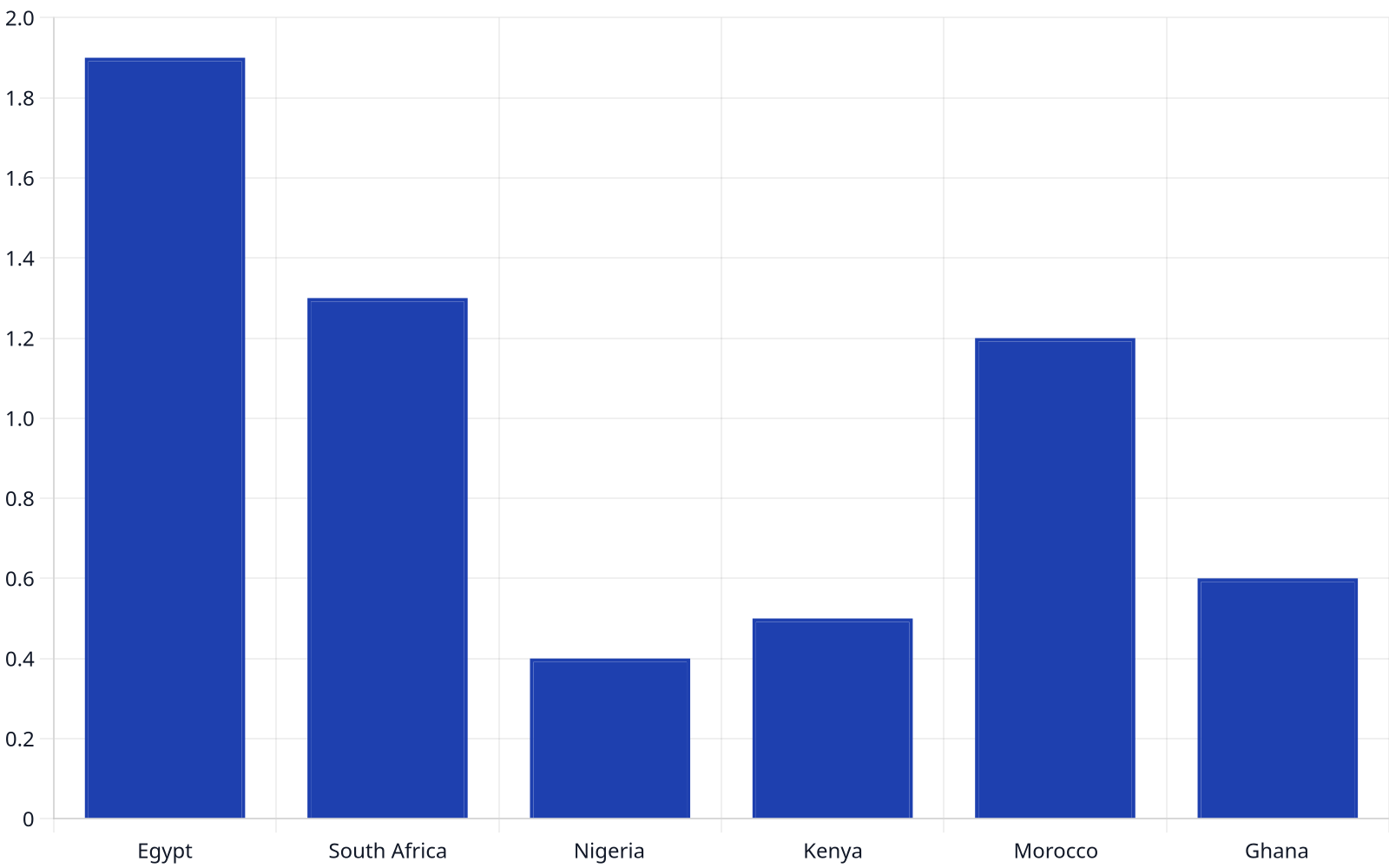
While continent-wide data is notoriously difficult to aggregate, individual country reports and academic studies show a clear trend of increasing divorce rates in many urban centers across Africa. This is driven by factors like urbanization, increased economic independence for women, and changing social norms. Rates have been rising in countries like Ghana and Ethiopia. Understanding these trends provides context for the growing need for specialized legal services in family law.
Regional Variations
North African countries tend to have higher officially recorded crude divorce rates than many sub-Saharan African nations. This can be partly attributed to differences in data collection and the legal recognition of different types of separation. In many parts of sub-Saharan Africa, separations under customary law may not be formally registered, thus not appearing in national statistics. This statistical gap makes it even more important to get on-the-ground legal advice from a practitioner who understands the local reality, not just the official numbers.
The most contentious divorces are rarely about the law itself. They are about money, children, and a breakdown in communication. A good lawyer manages all three, not just the legal filings.
The Impact of Urbanization and Economic Growth
The correlation between economic development and divorce is well-documented globally. As African economies grow and more people move to cities, traditional family structures and support systems can weaken. This social shift contributes to a higher incidence of marital breakdown. For example, Lagos, as a major economic hub, sees a significant volume of matrimonial cases. The legal issues here are often more complex, involving disputes over significant assets, business ownership, and international property, requiring a high degree of financial and legal sophistication from the representing counsel.
Key Criteria for Your Divorce Lawyers Africa Review
A proper divorce lawyers Africa review isn’t a simple Google search. It’s a structured evaluation process. You need to assess potential lawyers based on a clear set of criteria that go far beyond a fancy website or a list of services. This is about finding the right fit for the specific facts of your case.
Specialization and Verifiable Experience
Does the lawyer focus primarily on family law, or is it one of twenty items on their practice area list? A general practitioner is not sufficient for a complex divorce. Ask direct questions: “How many contested divorce cases involving international child custody have you handled in the last three years?” or “Can you describe a case you handled with similar asset complexities to mine?” Their answers should be specific and confidence-inspiring. Look for lawyers who are members of family law associations, like the International Academy of Family Lawyers (IAFL), which indicates a level of peer-recognized expertise.
Understanding of Financial Nuances
Divorce is, in large part, a financial transaction. Your lawyer must be financially literate. They should be comfortable analyzing business valuations, tracing hidden assets, and understanding the tax implications of different settlement structures. In high-net-worth divorces, the lawyer often acts as a project manager, coordinating with forensic accountants, property valuers, and other financial experts. Ask them how they approach asset discovery and valuation. Their ability to speak fluently about these topics is a strong indicator of their competence.
Communication Style and Accessibility
Your lawyer will be your primary guide through a stressful process. You need someone whose communication style works for you. Do they explain complex legal concepts in a way you can understand? Are they responsive to your calls and emails? A common complaint against lawyers is a lack of communication. During the initial consultation, pay close attention to how they listen and how clearly they outline their proposed strategy. This initial interaction is often a reliable preview of your future working relationship.
Fee Structure and Transparency
Legal fees are a major source of anxiety in any divorce. A reputable lawyer will be transparent about their fee structure from the very beginning. Common models include:
- Hourly Rate: The most common model, where you are billed for the time the lawyer and their team spend on your case.
- Flat Fee: Sometimes used for uncontested divorces or specific services like drafting a prenuptial agreement.
- Retainer: An upfront payment that the lawyer bills their hourly fees against. You will be asked to replenish the retainer as it is depleted.
Ask for a detailed fee agreement and make sure you understand it completely before signing. Be wary of any lawyer who is vague about costs or promises a specific outcome for a fixed price, as this is often unethical and impractical.

Understanding the Cost of Divorce
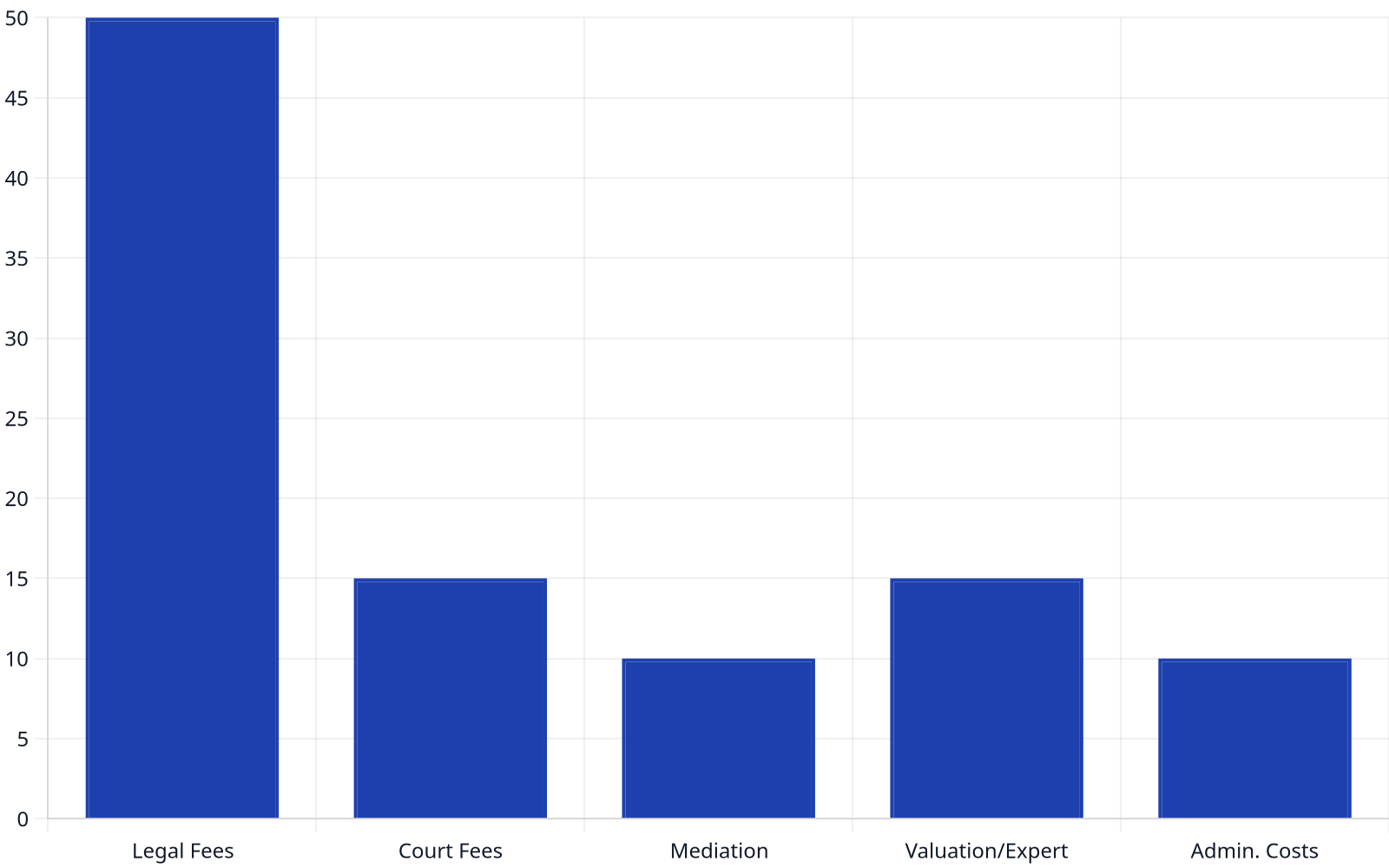
Many factors influence the final cost of a divorce. An uncontested divorce where both parties agree on all major issues will be significantly cheaper than a contested case that goes to trial. The complexity of assets, the need for expert witnesses (like child psychologists or forensic accountants), and the level of conflict between the spouses are all major cost drivers.
Common Cost Components
Beyond legal fees, you should budget for other expenses. Court filing fees, costs for serving legal papers, fees for obtaining certified copies of documents, and the cost of mediation can add up. If you need to hire experts, their professional fees can also be substantial. A good lawyer will provide you with a realistic estimate of these associated costs so you can plan accordingly. Thinking about the cost of divorce in Nigeria is a critical part of the process.
Comparing Costs Across Jurisdictions
Legal costs vary significantly across the continent. A divorce in a major metropolitan city like Johannesburg will likely be more expensive than one in a smaller city. However, choosing a lawyer based solely on the lowest price is a false economy. An inexperienced lawyer may make costly mistakes that need to be fixed later, or they may fail to secure a fair settlement for you. The focus should be on value and expertise, not just the hourly rate.
| Feature | Statutory Divorce | Customary Divorce | Religious (Islamic) Divorce |
|---|---|---|---|
| Governing Law | Matrimonial Causes Act (or equivalent) | Local ethnic customs and traditions | Sharia Law / Islamic Jurisprudence |
| Primary Venue | High Court | Family/Community elders, Customary Courts | Sharia Court or Panel |
| Grounds | Irretrievable breakdown (proven by facts) | Varies; often mutual consent, adultery, cruelty | Talaq (by husband), Khul’ (by wife), Faskh (judicial decree) |
| Asset Division | Based on contribution, needs, and statute | Determined by customary rules; may differ from civil law | Governed by Islamic principles (e.g., Mahr) |
| Child Custody | Best interests of the child is paramount | Traditionally paternal, but evolving | Often favors mother for young children, father for older |
| Typical Lawyer Role | Formal representation, advocacy, negotiation | Adviser, sometimes mediator with elders | Adviser, representation in Sharia Court |
Factors Influencing Divorce Outcomes
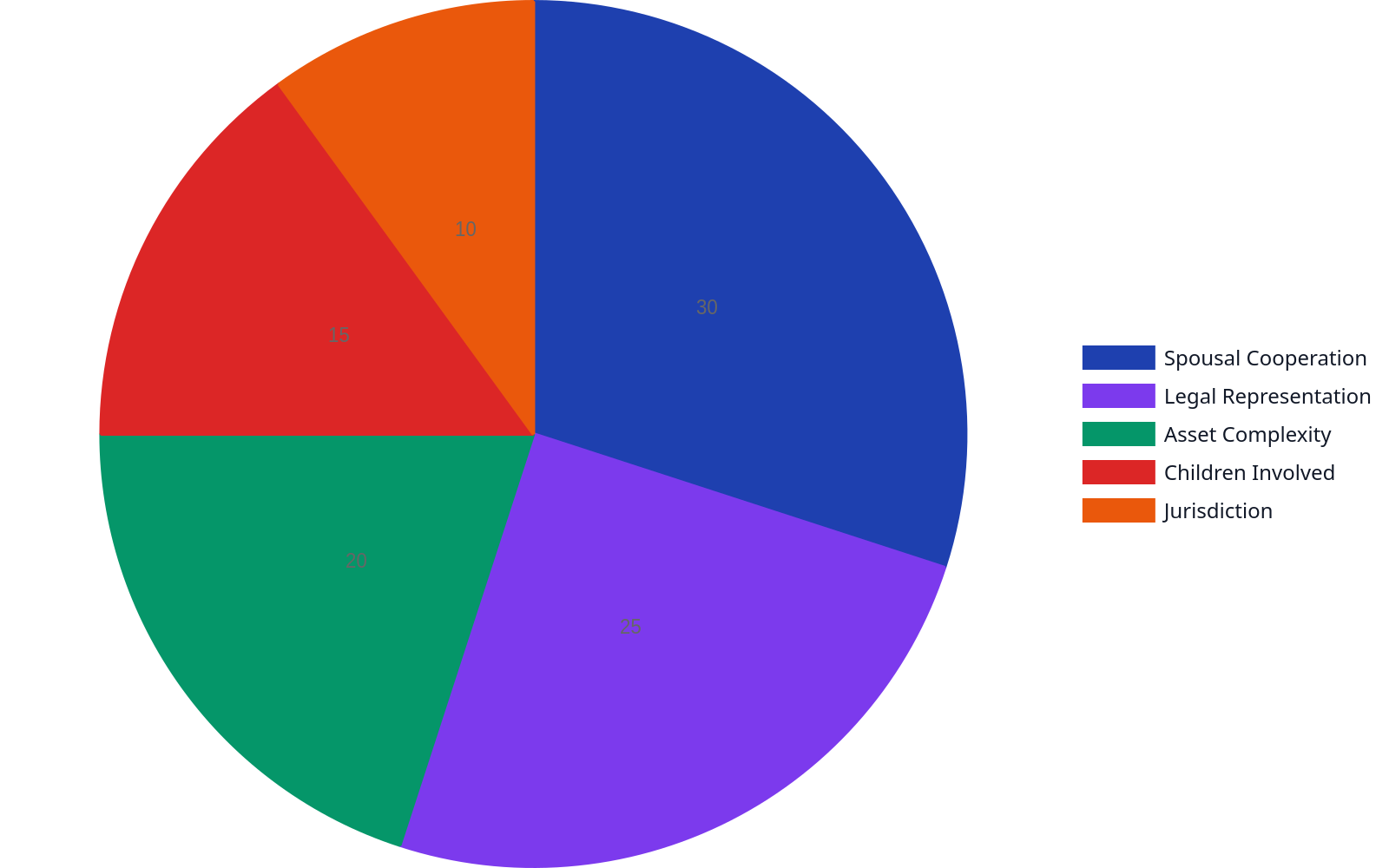
No lawyer can guarantee a specific outcome. The resolution of a divorce case is influenced by a multitude of factors, some of which are outside of your or your lawyer’s control. However, a skilled legal team can strategically navigate these factors to your advantage.
The Role of Spousal Cooperation (or Lack Thereof)
The single biggest factor impacting the cost, duration, and stress of a divorce is the degree of cooperation between the spouses. If you and your spouse can agree on key issues like child custody and asset division, you can pursue a more amicable, streamlined process like mediation or an uncontested divorce. When one party is determined to fight, the process inevitably becomes longer and more expensive.
Don’t confuse legal grounds with moral justification. The court is a venue for enforcing legal rights based on evidence, not a forum for validating personal grievances.
The Quality of Legal Representation
While spousal cooperation is key, the competence of your legal counsel is a close second. A proactive, strategic lawyer can de-escalate conflict, find creative settlement solutions, and protect you from the mistakes of an overly aggressive or incompetent opposing counsel. This is where a thorough divorce lawyers Africa review pays dividends. Your lawyer’s reputation, experience, and strategic thinking are your most valuable assets in the process.
The Nigerian Divorce Process: A Step-by-Step Example
To make this concrete, let’s walk through a simplified statutory divorce process in Nigeria:
- Consultation: The process begins with consulting a lawyer to discuss the facts of your case and determine if grounds for divorce exist.
- Filing the Petition: Your lawyer will draft and file a “Petition for Dissolution of Marriage” at the High Court. This document outlines the facts of the marriage and the grounds on which the divorce is being sought.
- Service of Process: The petition must be formally served on the other spouse (the “Respondent”).
- Respondent’s Reply: The Respondent has a specific timeframe to file a response, either agreeing to the divorce or contesting it.
- Pre-Trial Conferences & Discovery: Both sides may exchange financial information and other relevant documents. The court may order mediation or a settlement conference.
- Trial: If no settlement is reached, the case proceeds to trial where both sides present evidence and arguments before a judge.
- Judgment: The judge issues a Decree Nisi. This is a provisional decree of divorce.
- Decree Absolute: After a waiting period of three months, the petitioner can apply for the Decree Absolute, which formally and finally dissolves the marriage. Our firm guides clients through each stage of the Nigerian divorce process to ensure compliance and protect their interests.
This structured process highlights the importance of having knowledgeable legal counsel from the very beginning.
FAQ
What is the first step in filing for divorce in Africa?
The very first step, before any filing, is to seek a consultation with a family law specialist in the jurisdiction where you reside or were married. They will assess your situation, explain your legal rights and options under the applicable law (be it statutory, customary, or religious), and outline a potential strategy. Do not take any legal action without this initial expert guidance.
How much does a divorce cost in Nigeria?
Costs vary dramatically. A simple, uncontested divorce where both parties agree on all terms might cost a few hundred thousand naira. However, a complex, contested divorce involving disputes over high-value assets, business ownership, or child custody can run into several million naira. The final cost depends on the lawyer’s hourly rate, the time required, the need for expert witnesses, and the level of conflict.
Can I get a divorce if my spouse lives in another country?
Yes, it is usually possible, but it creates a cross-border case with jurisdictional complexities. You will need a lawyer experienced in private international law. The court will first need to determine if it has the authority (jurisdiction) to hear the case, which depends on factors like where you were married, your last matrimonial home, and the current residency of both spouses.
How is child custody determined in Nigeria?
Under the Matrimonial Causes Act, the guiding principle is the “best interest and welfare of the child.” The court considers factors such as the child’s wishes (depending on age), the ability of each parent to provide care, the emotional ties between the child and each parent, and the proposed living arrangements. It is no longer an automatic decision based on the gender of the parent.
How long does a divorce take in Nigeria?
An uncontested statutory divorce can be completed in as little as 4-6 months. However, a contested divorce that goes to trial can easily take 18 months to several years to conclude, depending on the complexity of the issues, court backlogs, and the tactics employed by either side. This is why exploring legal grounds for divorce early is so important for strategy.
Do I need a lawyer for a customary divorce?
While a lawyer may not formally represent you before a panel of elders in the same way as in a High Court, it is highly advisable to seek legal counsel. A lawyer can advise you on your rights under customary law, ensure the process is fair, and help you understand the legal implications of the outcome, especially regarding asset division and ensuring the divorce is legally recognized by the state.
If you are contemplating a divorce or are in the midst of matrimonial proceedings, the complexity can be overwhelming. As a premier law firm in Nigeria, Ardnas Legal provides competent, cost-effective, and well-timed solutions for domestic and international clients. Our team has considerable experience in navigating the intricate landscape of family law. Contact us today for a confidential consultation to understand your rights and chart the best path forward.
About the author

Sandra Adeniran
Principal Partner
Adebola Adeniran is the Founding Partner of Ardnas Legal Practitioners. She is a dynamic and forward-thinking lawyer with a passion for providing innovative legal solutions to businesses and individuals. Adebola combines deep legal expertise with a practical, business-oriented approach, ensuring that clients receive advice that is both strategic and actionable.