

Buying land in Nigeria can be incredibly rewarding, but it can also be a minefield of risks if you don’t verify the property’s legal status. Effective land due diligence in Nigeria is the essential investigation process that confirms all facts about a property, from its ownership history to any encumbrances, before you commit financially. It involves a systematic check of title documents, physical inspections, and searches at various government registries. This process ensures the seller has the legal right to sell the property and that you are acquiring a clean, unproblematic title, protecting your investment from future disputes.
This guide breaks down the essential steps for conducting thorough land due diligence. Our methodology is based on a comprehensive review of the Nigerian Land Use Act of 1978, the property registration processes across different states (with a focus on Lagos), and our firm’s extensive experience handling real estate transactions for both Nigerian and foreign investors. The steps are ranked in chronological order, reflecting the logical sequence of investigation from initial document review to final physical verification, ensuring a comprehensive and risk-averse approach to your property acquisition.

1. Verify the Seller’s Identity and Authority
Before you even look at the land documents, the first step is to confirm that the person or entity selling the property is who they claim to be and has the legal authority to sell. This seems basic, but it’s a checkpoint where many fraudulent transactions begin. For an individual seller, you need to see a valid government-issued ID, such as a National Identity Card, passport, or driver’s license. Compare the name on the ID with the name on the title documents. Any discrepancy is a major red flag.
If the seller is a company, the process is more involved. You must conduct a search at the Corporate Affairs Commission (CAC) to verify the company’s status, its directors, and any resolutions passed that authorize the sale of the property. For family land, you must confirm that all principal members of the family have consented to the sale. For an estate property, you need to see the Letters of Administration or Grant of Probate, which grants the administrators or executors the authority to sell. Overlooking this step can lead to deals that are void from the start.
- Best for: All land transactions, especially those involving companies, families, or estates.
- Watch out for: Sellers who are hesitant to provide identification, pressure you to act quickly, or present photocopies instead of original documents.
2. Conduct a Comprehensive Title Document Review
Once you’ve verified the seller, the next step is to scrutinize the title documents. These documents are the seller’s proof of ownership. The type of document varies depending on the property’s history and location. Common title documents in Nigeria include a Certificate of Occupancy (C of O), Deed of Assignment, Governor’s Consent, and Survey Plan.
Your legal counsel should meticulously review these documents for authenticity and completeness. This includes checking that the names are correct, the property descriptions match, signatures are valid, and the history of ownership (chain of title) is unbroken. A critical component is the Survey Plan. This document, prepared by a registered surveyor, shows the exact boundaries and location of the land. Ensure it is not a forgery by verifying it with the Surveyor-General’s office. A properly registered survey plan is crucial for preventing boundary disputes, which are a common source of land litigation.
- Best for: Identifying the legal owner and understanding the history of the property.
- Watch out for: Missing pages in documents, unreadable text, unstamped or unregistered deeds, and discrepancies between the land size on the survey plan and the physical site.
3. Perform a Search at the Lands Registry
This is the core of land due diligence in Nigeria. After reviewing the documents provided by the seller, you must independently verify them at the official source: the Lands Registry in the state where the property is located. This search will confirm whether the seller is the registered owner of the property and reveal the status of the title. It uncovers the entire history of the property’s transactions.
A search at the Lands Registry isn’t just about confirming ownership. It’s about uncovering the land’s hidden story—mortgages, court judgments, or government acquisitions that the seller might conveniently forget to mention.
The search report will show any encumbrances, such as a mortgage that hasn’t been paid off, a lien placed on the property due to a debt, or a pending lawsuit involving the land. The search will also confirm if the property is subject to government acquisition for public use. For example, in Lagos State, a search at the Lagos State Lands Bureau in Alausa is non-negotiable. Ignoring this step is like buying a car without checking if it’s been reported stolen or has outstanding financing. A massive and avoidable risk.
- Best for: Uncovering liens, mortgages, court judgments, and government acquisition notices.
- Watch out for: Properties with a “caution” or “caveat” lodged against them, which indicates a dispute or a third-party interest.
4. Investigate for Omo-Onile or Community Issues
In many parts of Nigeria, particularly the Southwest, you will encounter “Omo-Onile” (a Yoruba term meaning “children of the original landowners”) or community land-owning families. These families often continue to demand payment or assert rights over land that was sold generations ago. Failing to properly engage with and settle any claims from the legitimate Omo-Onile family can lead to endless harassment, financial extortion, and even violent confrontations that prevent you from developing or enjoying your property.
Investigating this aspect involves more than just registry searches. It requires on-the-ground inquiry. Speak to residents in the area, community leaders (Baales or Chiefs), and other property owners. Find out which family is recognized as the original owner and whether they have any unresolved issues with the seller or previous owners. While their legal claims may be tenuous after the initial sale, their practical ability to disrupt your project is very real. We often advise clients, including public and private companies, to ensure all community dues are settled as part of the transaction.
- Best for: Properties in developing areas or regions with a strong history of ancestral land ownership.
- Watch out for: Multiple competing families claiming ownership, or sellers who claim “all Omo-Onile issues are settled” without providing proof of a final agreement or receipt.
5. Conduct a Physical Inspection and Survey Beacon Check
A physical visit to the property is essential. You need to see the land for yourself to ensure its physical state matches the description in the documents. Is it dry land or a swamp? Is it accessible? Are there any existing structures or, more importantly, any signs of adverse possession (i.e., squatters)? A physical inspection gives you a real-world understanding of what you are buying.
During this visit, you should go with a registered surveyor to conduct a beacon check. The surveyor will use the coordinates from the seller’s survey plan to locate the property on the ground and verify its boundaries using a GPS device. This process, often called a “re-establishment survey,” confirms two critical things: that the survey plan is for the exact piece of land you were shown, and that the land’s boundaries do not encroach on a neighbor’s property or a government-committed area (like a road setback). Boundary disputes are a leading cause of property litigation in Nigeria.
- Best for: Confirming the land’s physical attributes, size, and exact location, and identifying encroachments.
- Watch out for: Discrepancies between the survey plan and the physical land, presence of squatters, or boundary pillars that appear to have been recently moved.

6. Verify Zoning and Land Use Regulations
Every parcel of land is subject to zoning laws that dictate how it can be used. You cannot assume you can build a factory on land zoned for residential use, or a high-rise apartment on land designated for agricultural purposes. Verifying the land’s designated use is a crucial step to ensure your development plans are legally permissible.
This check is done at the state’s ministry of physical planning or urban development authority, such as the Lagos State Physical Planning Permit Authority (LASPPPA). They can confirm the official zoning for the area and inform you of any restrictions, such as height limits, building setbacks, or designated green areas. Building without the proper permits or in violation of zoning regulations can result in hefty fines, demolition orders, and the total loss of your investment. It’s a costly mistake that is easily avoided with a simple inquiry.
- Best for: Buyers with specific development plans, such as commercial, industrial, or high-density residential projects.
- Watch out for: Land designated for agricultural use or zoned as a government acquisition area, which would prohibit private development.
7. Check for Pending Litigation and Tax Compliance
The final check is to ensure the property is free from legal battles and outstanding taxes. A search can be conducted at the High Court in the judicial division where the property is located to see if there are any ongoing lawsuits concerning the land. A property that is the subject of litigation (a lis pendens) cannot be validly sold until the case is resolved.
Additionally, you must verify that all land-related taxes and fees have been paid by the seller. This includes Land Use Charge, tenement rates, and any other applicable property taxes. Unpaid taxes can accumulate into significant sums and may become the new owner’s responsibility. Ask the seller for evidence of payment (receipts or a tax clearance certificate). A lack of tax compliance can create future liabilities for the buyer, making tax verification an essential part of a clean transaction.
- Best for: Final confirmation that the property is unencumbered by legal disputes or financial liabilities.
- Watch out for: Sellers who cannot produce recent tax receipts or who are evasive about court cases. A simple “no litigation” clause in the sale agreement is not a substitute for an actual court search.
Common Pitfalls and How to Avoid Them
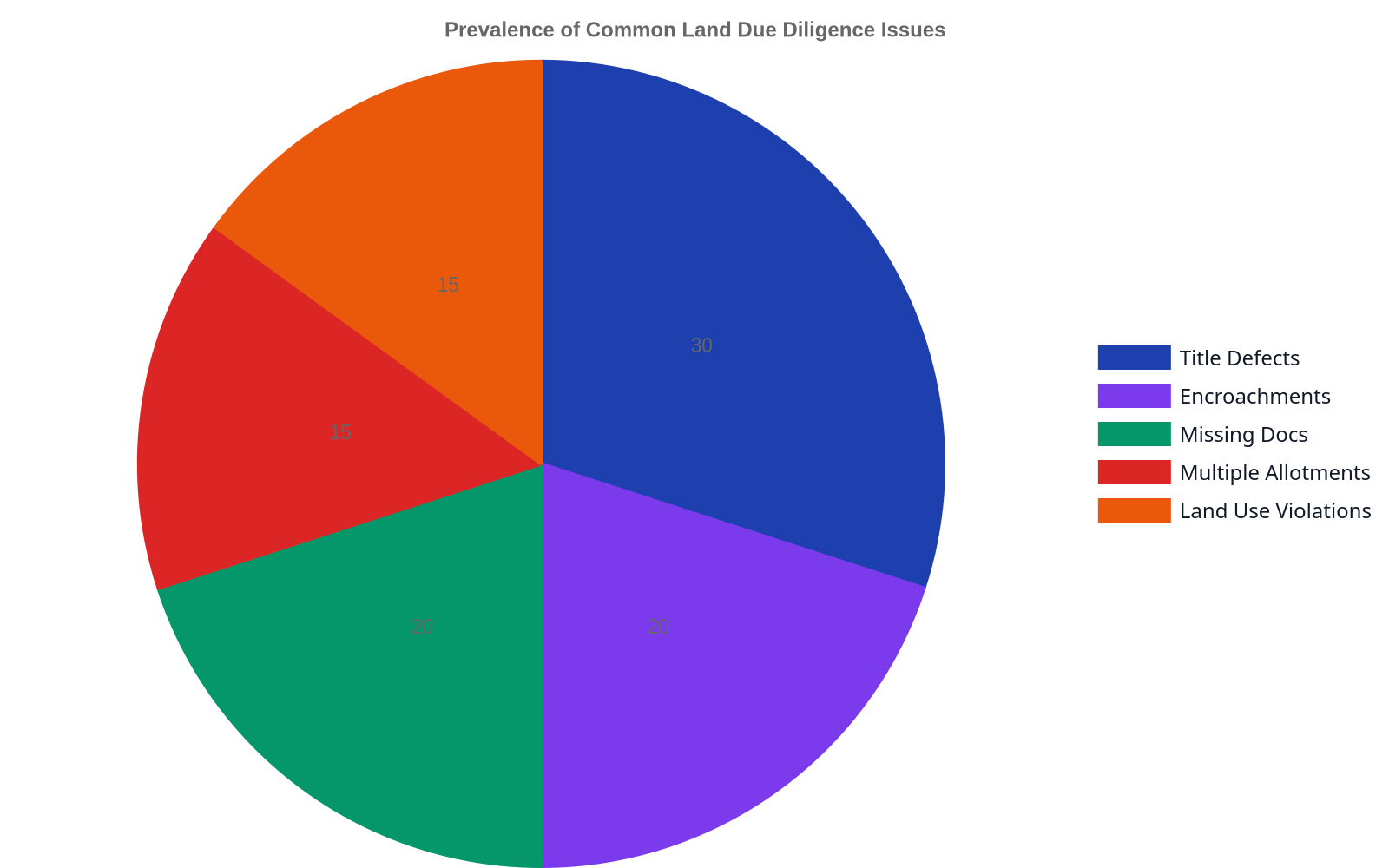
Even with a checklist, certain traps are common in Nigerian real estate. A frequent issue is a defective title, where the seller’s claim to ownership is flawed due to a forgery or a break in the chain of title. Another is government acquisition; large portions of land are often technically owned by the government, and private sales may be invalid. The World Bank’s Doing Business 2020 report noted that registering property in Nigeria involves multiple procedures, which can create opportunities for errors and fraud.
Understanding the Costs of Land Due Diligence
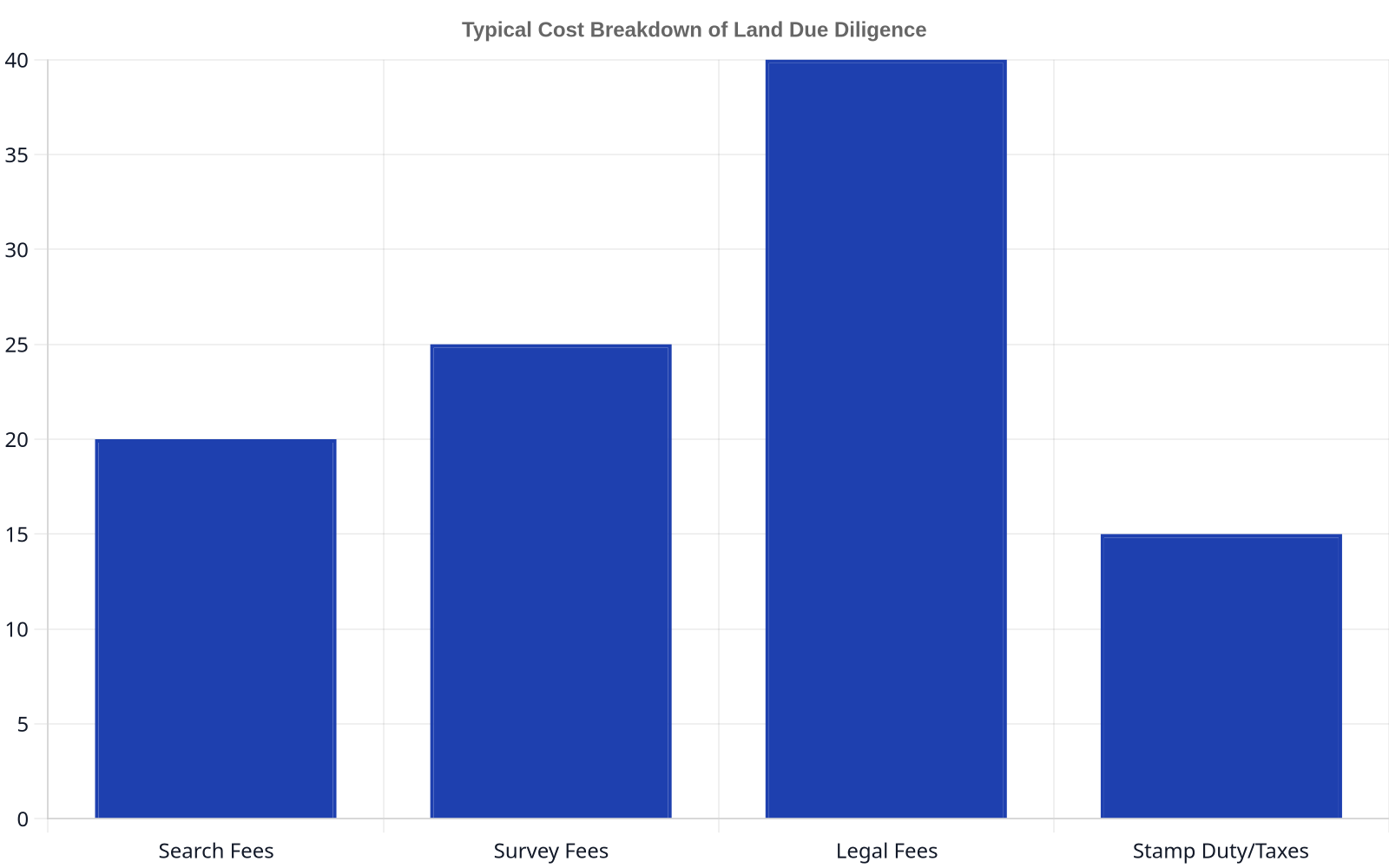
The cost of due diligence is not fixed; it varies based on the property’s location, value, and the complexity of the search. Professional fees for lawyers and surveyors constitute a significant portion. Legal fees for due diligence are often calculated as a percentage of the property value, as recommended by the Nigerian Bar Association’s scale of charges. Search fees at registries, survey costs, and other administrative expenses also add up. While it may seem like an extra expense, the cost of proper due diligence is a fraction of the potential loss from a fraudulent transaction.
Summary of Due Diligence Steps
| Step | Key Action | Why It Matters | Relevant Authority |
|---|---|---|---|
| 1. Seller Verification | Confirm identity and authority to sell. | Prevents fraud from the outset. | Corporate Affairs Commission (for companies) |
| 2. Title Document Review | Analyze C of O, Deed, Survey Plan, etc. | Identifies ownership claims and property details. | Surveyor-General’s Office (for surveys) |
| 3. Lands Registry Search | Verify title and check for encumbrances. | Uncovers mortgages, liens, and legal status. | State Lands Registry (e.g., Lagos Lands Bureau) |
| 4. Community/Omo-Onile Check | Investigate traditional ownership claims. | Avoids future harassment and extortion. | Local Community Leaders (Baale/Chief) |
| 5. Physical Inspection | Visit the site with a surveyor. | Confirms physical state, boundaries, and access. | Registered Surveyor |
| 6. Zoning Verification | Check land use regulations. | Ensures your development plans are legal. | State Ministry of Physical Planning |
| 7. Litigation & Tax Check | Search court records and tax status. | Avoids buying into a lawsuit or tax debt. | High Court Registry, State Internal Revenue Service |
Take Professional Advice
Conducting thorough land due diligence in Nigeria is a detailed and technical process. While this guide provides a framework, it is not a substitute for professional legal advice. The nuances of property law, combined with the prevalence of sophisticated fraud, make it essential to engage an experienced real estate lawyer.
At Ardnas Legal, we have guided numerous clients through complex property transactions across Nigeria. We provide the meticulous oversight needed to protect your interests and ensure your investment is secure. If you are considering a property purchase, contact us to help you navigate the process with confidence.
FAQ
How long does land due diligence take in Nigeria?
The timeline for land due diligence in Nigeria can vary significantly, typically ranging from a few days to several weeks. A straightforward search at the Lagos Lands Registry might take 5-10 business days, but complexities like manual records, public holidays, or the need for searches in multiple registries (e.g., CAC, courts) can extend the process to a month or more.
What is a Certificate of Occupancy (C of O)?
A Certificate of Occupancy (C of O) is the primary title document issued by a state government in Nigeria to a landowner as evidence of ownership. As stipulated by the Land Use Act of 1978, it grants a statutory right of occupancy for a term, typically 99 years. It is the most secure form of land title, but its authenticity must still be verified at the issuing Lands Registry.
Can I do land due diligence myself?
While you can perform some initial checks yourself, like a physical inspection, a comprehensive due diligence process requires professional expertise. A lawyer is needed to interpret legal documents, identify red flags, and conduct official searches at registries, which are often not accessible to the general public. A surveyor is required for all boundary and coordinate verifications.
What happens if I buy land without due diligence?
Buying land without due diligence exposes you to immense risks, including purchasing from a fraudulent seller, acquiring a property with a defective title, buying land that is the subject of a lawsuit, or inheriting significant debts like mortgages or unpaid taxes. In the worst-case scenario, you could lose your entire investment and the land itself.
What is the difference between a C of O and a Governor’s Consent?
A Certificate of Occupancy (C of O) is issued by the government for new or undeveloped land. A Governor’s Consent is a consent given by the governor to a transaction involving land that already has a C of O. For example, when a person who holds a C of O decides to sell their land to another person, the transaction requires the governor’s consent to be valid, which is then registered on the new Deed of Assignment.
What is a survey plan?
A survey plan is a crucial document prepared by a registered surveyor that shows the precise location, dimensions, and boundaries of a parcel of land. It contains specific coordinates that can be used to verify the land’s location on the ground. A survey plan is essential for confirming that the land being sold is the same as the one described in the title documents and for preventing future boundary disputes.
What does “encumbrance” mean in real estate?
An encumbrance is a claim or liability against a property that can diminish its value or restrict its use. Common encumbrances in Nigeria include mortgages, liens (a legal claim for a debt), restrictive covenants, easements (a right for someone else to use part of the property), or a pending court case (lis pendens). A key goal of due diligence is to uncover any such encumbrances.
Related reading
- 7 Steps to Trademark Registration in Nigeria
- Trademark vs. Copyright in Nigeria: Which IP Is Right for You?.
About the author

Sandra Adeniran
Principal Partner
Adebola Adeniran is the Founding Partner of Ardnas Legal Practitioners. She is a dynamic and forward-thinking lawyer with a passion for providing innovative legal solutions to businesses and individuals. Adebola combines deep legal expertise with a practical, business-oriented approach, ensuring that clients receive advice that is both strategic and actionable.