

Is a handshake and a receipt enough to transfer land ownership in Nigeria? Many people think so, and they are dangerously wrong. Relying on informal agreements for something as significant as real estate is like building a house on a foundation of sand. In Nigeria, the only legally recognized method to prove final transfer of property ownership is through a perfected Deed of Assignment. Without it, you do not truly own the property, no matter what you paid.
A Deed of Assignment in Nigeria is the primary legal document that transfers ownership, interest, and title in a real property from one party (the Assignor) to another (the Assignee). To be valid, this document must be in writing, signed by both parties, and “perfected” through Governor’s Consent, stamping, and registration. It serves as the final proof of ownership, detailing the history of the land, the consideration paid, and the specific property being transferred. It is the most crucial document in any land transaction.

The Legal Foundation of the Deed of Assignment
Every land transaction in Nigeria operates under a specific legal framework. The foundation for modern land ownership is the Land Use Act of 1978. This legislation fundamentally changed land ownership by vesting all land within a state’s territory in the State Governor, who holds it in trust for the people. This means that individuals and entities do not have absolute ownership but rather a right of occupancy.
Governor’s Consent: The Cornerstone of a Valid Transfer
Because the Governor holds the land, any transfer of interest must receive his or her consent. This is a constitutional requirement under Section 22 of the Land Use Act. It is the first and most critical step in perfecting a Deed of Assignment. Without the Governor’s Consent, the transaction is considered “inchoate” or incomplete at law. This means the buyer has an equitable interest but not a legal one, leaving them vulnerable to future claims and making the property difficult to use as collateral or sell.
The Role of the Property Law and Conveyancing Law
Beyond the Land Use Act, various state laws govern the mechanics of property transfer. In the former Western and Mid-Western regions of Nigeria, the Property and Conveyancing Law of 1959 applies. For the former Eastern region, the principles are guided by the Conveyancing Act of 1881, an English statute of general application. Lagos State has its own set of property laws. These statutes dictate the necessary components of a valid deed, such as the requirement for it to be signed, sealed, and delivered. For instance, they establish that any transfer of land interest must be in writing. A verbal agreement is unenforceable.
The Statute of Frauds 1677
This may seem like ancient history, but the principles of the Statute of Frauds 1677, an old English statute, are still relevant in Nigerian law. Its primary requirement is that contracts for the sale of land, or any interest in land, must be evidenced in writing and signed by the party to be charged. This centuries-old law is the reason why a simple receipt or a verbal promise cannot legally transfer land title in Nigeria. It underscores the absolute necessity of a formal, written document like a Deed of Assignment.
Key Parties and Their Roles in the Transaction
A Deed of Assignment is not just a document; it’s an agreement between several key parties, each with distinct roles and responsibilities. Understanding these roles is crucial for a smooth transaction.
The Assignor (The Seller)
The Assignor is the current owner of the property interest who is transferring their title to the buyer. Their primary responsibility is to prove they have a good “root of title,” meaning they have the legal right to sell the property. This involves producing previous ownership documents. The Assignor must also deliver vacant possession of the property upon completion of payment and execute the Deed of Assignment. They warrant that the property is free from any encumbrances not disclosed to the buyer.
The Assignee (The Buyer)
The Assignee is the party acquiring the property. Their main duty is to pay the agreed-upon purchase price (the “consideration”). However, their responsibilities do not end there. It is the Assignee’s duty, usually through their lawyer, to conduct thorough due diligence on the property and the Assignor’s title before any money changes hands. After the deed is signed, the responsibility for perfecting the title (obtaining Governor’s Consent, stamping, and registration) falls squarely on the Assignee.
The Witnesses
For a Deed of Assignment to be valid, it must be signed by both the Assignor and Assignee in the presence of at least one witness each. The witness’s role is to attest to the fact that they saw the parties sign the document. The witness must be of legal age (18 or older) and of sound mind. Their name, address, and signature are required on the document, adding a layer of authenticity and fraud prevention to the process.
Essential Clauses Every Deed of Assignment Must Contain
A properly drafted Deed of Assignment is more than just a template. It is a detailed document that must contain specific clauses to be effective and protect the interests of the Assignee. While the exact wording may vary, these components are non-negotiable.
A Deed of Assignment is the final chapter in the story of a property’s ownership history. If it’s poorly written, that story will have a bad ending.
Introductory Part (Recitals)
The recitals form the preamble of the deed. They set the context for the transaction. The introductory part will state the date of the transfer and identify the parties involved (Assignor and Assignee) with their full names and addresses. This section then tells the story of the property: how the Assignor came to own it (e.g., through a previous purchase, inheritance, or government allocation) and that they have agreed to sell their remaining interest to the Assignee.
Operative Clauses
This is the heart of the deed. The operative clauses contain the active language that effects the transfer. This includes:
- The Consideration Clause: This states the exact amount the Assignee has paid for the property. A 2021 judgment by the Court of Appeal in Lagos reinforced the importance of stating the true consideration, as it has implications for stamp duty calculations.
- The Receipt Clause: A formal acknowledgement by the Assignor that they have received the consideration.
- The Words of Grant: The specific legal language that conveys the property, such as “doth hereby assign and transfer.”
- The Description of the Property: This must be meticulous. It should include the physical address, size of the land (e.g., in square meters), boundary descriptions, and the survey plan number. An ambiguous description can render the entire deed void.
Covenants and Indemnity Clauses
Covenants are promises made by the Assignor to the Assignee. These provide critical protection. Standard covenants include:
- Right to Convey: The Assignor promises they have the legal authority to sell the property.
- Quiet Enjoyment: The Assignee will be able to possess and use the property without disturbance from the Assignor or anyone claiming through them.
- Freedom from Encumbrances: The Assignor warrants that the property is free from mortgages, liens, or other hidden claims (other than those disclosed).
- Further Assurance: The Assignor promises to do any further acts necessary to perfect the Assignee’s title in the future.
An indemnity clause holds the Assignor liable if any of these promises are broken, requiring them to compensate the Assignee for any loss incurred.

The Process of Obtaining a Deed of Assignment
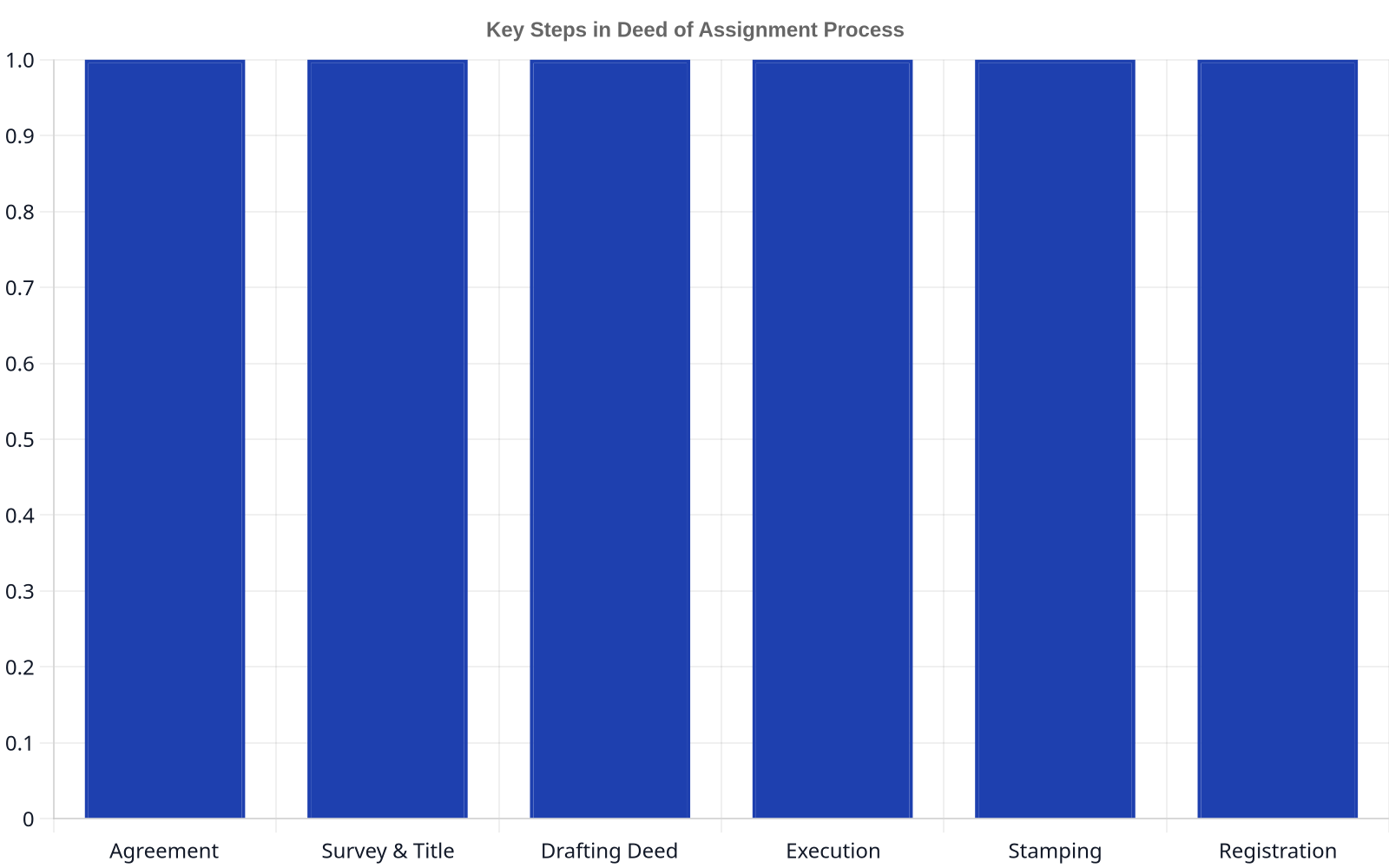
Securing a perfected Deed of Assignment is a multi-step process that requires diligence and professional guidance. It is not something to be rushed. For our clients, from public and private companies to individual investors, we emphasize a methodical approach to prevent future complications.
1. Pre-Contract Investigation (Due Diligence)
This is arguably the most important stage. Before any payment is made, the buyer’s solicitor must conduct a thorough investigation. This involves:
- Searching at the Lands Registry: A search is conducted at the relevant state’s Land Registry to confirm the seller’s title and to check for any registered encumbrances, mortgages, or government acquisitions.
- Physical Inspection: Visiting the property to ensure the boundaries match the survey plan and to check for any physical signs of dispute or competing claims.
- Verifying the Survey Plan: Confirming with the Surveyor-General’s office that the survey plan is genuine and the property is not under government acquisition.
2. Drafting and Exchange of the Contract of Sale
Once due diligence is satisfactory, a Contract of Sale is often drafted. This document outlines the terms of the sale, including the price, payment schedule, and completion date. It legally binds both parties. Upon signing, the buyer typically pays a deposit. While not the final transfer document, it is a crucial precursor that defines the obligations of each party leading up to the final transfer.
3. Drafting and Execution of the Deed of Assignment
After the buyer pays the final balance of the purchase price, the Deed of Assignment is drafted (usually by the buyer’s solicitor) and reviewed by the seller’s solicitor. Once both parties agree on the terms, they execute the document. This means they sign it in the presence of their respective witnesses. At this point, the seller hands over all original title documents and keys to the property to the buyer.
4. Perfection of the Title
Execution is not the end of the process. The deed must be “perfected” to be legally binding and admissible in court as proof of ownership. Perfection involves three steps:
- Obtaining Governor’s Consent: An application, including the executed deed and other required documents, is submitted to the Governor of the state where the property is located. This can be a lengthy process.
- Stamping: After consent is granted, the deed must be presented to the State’s Internal Revenue Service for stamping within 30 days of execution. Stamp Duty is a tax paid on the transaction, as stipulated by the Stamp Duties Act. Late stamping incurs financial penalties.
- Registration: The stamped deed is then taken to the State Lands Registry for registration. The transaction is recorded in the official registry, giving public notice of the new ownership. A registered deed has priority over any unregistered documents.
Deed of Assignment vs. Other Property Documents
It is common for buyers in Nigeria to be confused by the array of documents involved in property transactions. However, only the Deed of Assignment serves as the final instrument of transfer. Understanding the difference is vital.
Handing over cash for a Certificate of Occupancy or a Survey Plan does not make you the owner. Only a perfected Deed of Assignment transfers title.
| Document | Purpose | Legal Status | Can it Transfer Ownership? |
|---|---|---|---|
| Deed of Assignment | To transfer the unexpired residue of an interest in land. | The primary and final document for proving ownership after perfection. | Yes |
| Certificate of Occupancy (C of O) | Issued by the government to the first allottee of land. | It is a good root of title, but it is not an instrument of transfer between subsequent sellers and buyers. | No |
|---|---|---|---|
| Survey Plan | A document that shows the precise location, size, and boundaries of a parcel of land. | A vital part of describing the property, but it does not confer ownership. | No |
| Contract of Sale | An agreement that outlines the terms of a future transfer of land. | Creates an equitable interest and binds the parties, but does not transfer the legal title itself. | No |
| Purchase Receipt | Evidence of payment for the property. | Acknowledges a financial transaction but has no power to transfer legal title. | No |
Cost Implications of a Deed of Assignment
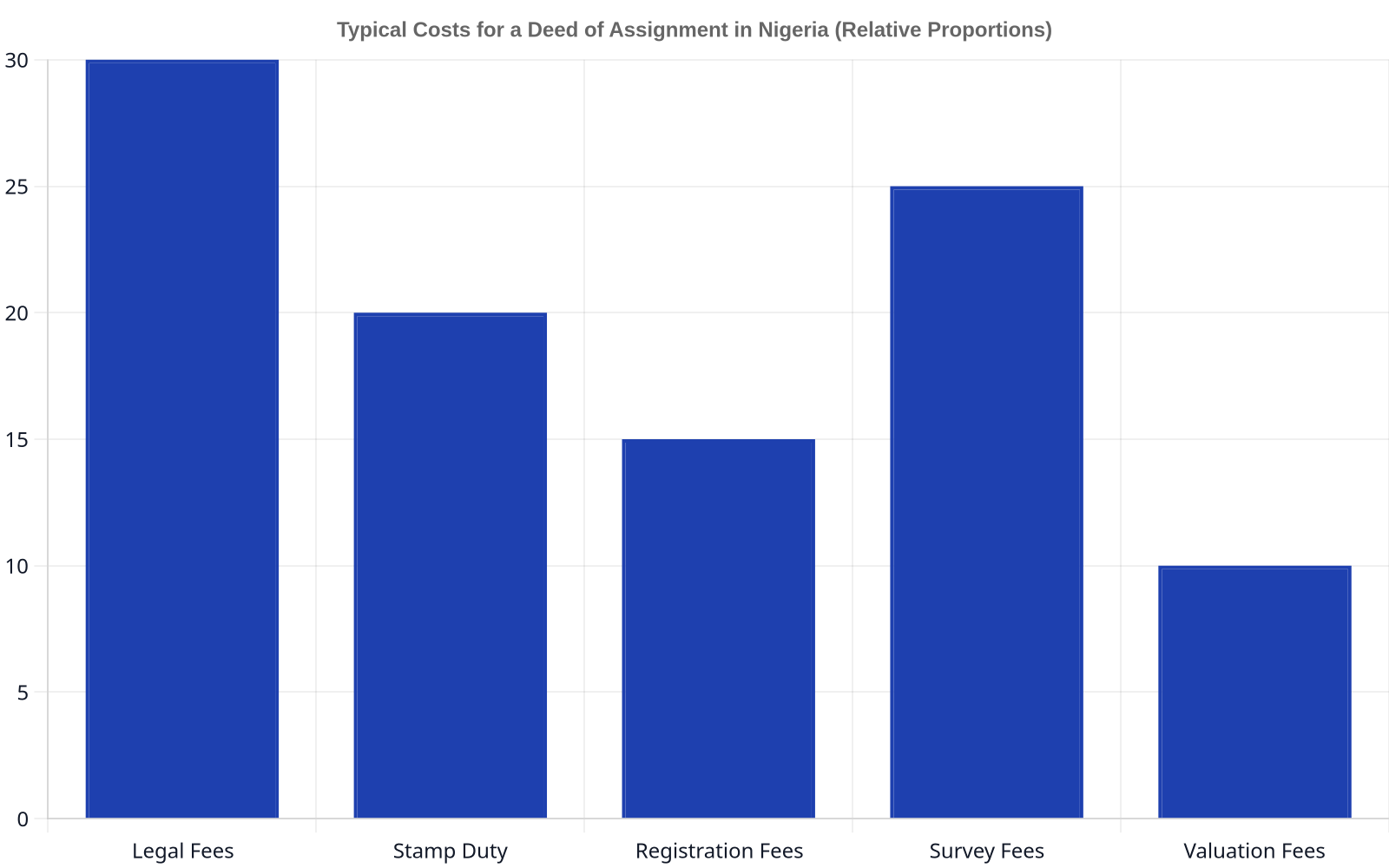
Budgeting for a property purchase goes beyond the sale price. The costs associated with perfecting a Deed of Assignment can be substantial, and they are the responsibility of the buyer (Assignee). These costs typically include:
- Legal Fees: Fees paid to the solicitor for conducting due diligence, drafting the documents, and processing the perfection. This is usually a percentage of the property’s value.
- Consent Fees: An administrative fee charged by the state government for granting Governor’s Consent. This varies significantly between states.
- Stamp Duty: A tax paid to the state’s internal revenue service. The rate is typically around 3% of the property’s value, as outlined in the Stamp Duties Act.
- Registration Fees: A fee paid to the Lands Registry to register the deed. This is often calculated as a percentage of the property value.
- Other Costs: These can include survey fees (if a new survey is needed), valuation fees, and other administrative charges.
Failing to properly budget for these costs is a common mistake that can stall the perfection process indefinitely, leaving the buyer’s title vulnerable.

Common Pitfalls and How to Avoid Them
Navigating a property transaction in Nigeria can be complex, but being aware of common pitfalls can save you from significant financial loss and legal trouble. As a firm that advises Nigerian and foreign investors, we have seen these issues arise frequently.
Failure to Conduct Proper Due Diligence
This is the most catastrophic mistake. Many buyers, in a rush to close a deal, skip or rush the due diligence process. This can lead to buying a property from someone who isn’t the rightful owner, buying a property that is subject to a lawsuit, or buying land designated for government use. The solution is simple: never skip due diligence. Engage a competent property lawyer to conduct a thorough search and physical inspection before any money is exchanged. An analysis of Nigerian property law cases shows a high percentage of litigation stems from failed due diligence.
Dealing with “Omo-Onile” (Land Grabbers)
In many parts of Nigeria, particularly Lagos and the South-West, families who claim ancestral ownership of land (known as “Omo-Onile”) can be a major source of conflict. They often attempt to resell land that has already been sold or demand additional payments after the sale. The best way to mitigate this risk is to ensure the seller has a perfected title (like a C of O or a registered Deed of Assignment) and to investigate the history of the land thoroughly. Never buy a property based solely on a receipt from an Omo-Onile family.
Not Perfecting the Title
Many buyers stop the process after signing the Deed of Assignment and taking possession. They believe ownership is complete. However, an unperfected deed is a weak document. It cannot be used as collateral for a loan from most financial institutions, and its admissibility in court to prove title is questionable. The cost and bureaucracy of perfection can be daunting, but it is an essential investment to secure your property rights. Always see the process through to registration.
FAQ
What happens if I lose my Deed of Assignment?
If your Deed of Assignment is registered, you can apply for a Certified True Copy (CTC) from the Lands Registry where it was registered. A CTC has the same legal force as the original for most purposes. If it was not registered, the process is far more complicated and may require a court order, underscoring the importance of registration.
How long does it take to perfect a Deed of Assignment?
The timeline for perfection varies greatly depending on the state and the efficiency of its land administration. Obtaining Governor’s Consent is often the longest part of the process. In states like Lagos, it can take anywhere from a few months to over a year. Stamping and registration are typically faster once consent is granted.
Can a Deed of Assignment be cancelled or revoked?
Yes, a Deed of Assignment can be set aside by a court if it was obtained fraudulently, through misrepresentation, or if the person who granted it had no legal title to sell. It can also be voided if it was created for an illegal purpose. This is why thorough due-diligence is critical to ensure the seller has a valid, unchallengeable right to sell.
What is the difference between a Deed of Assignment and a Deed of Gift?
A Deed of Assignment is used for a property transaction involving a sale, where monetary consideration is paid. A Deed of Gift, on the other hand, is used to transfer property from one person to another without any payment. It is a transfer based on goodwill. Both documents must be perfected to be legally valid, including obtaining Governor’s Consent.
Do I need a lawyer to draft a Deed of Assignment?
Absolutely. Under Nigerian law, specifically the Legal Practitioners Act, only a qualified legal practitioner is authorized to prepare any instrument relating to land. Having an unqualified person draft your deed can render it null and void. Always engage a competent solicitor to protect your interests and ensure the document is legally sound.
At Ardnas Legal, we provide comprehensive guidance on all aspects of real estate transactions, ensuring your investment is secure and your title is perfected. If you are considering buying or selling property in Nigeria, contact us to ensure your interests are protected from start to finish.
Related reading
- 7 Steps to Trademark Registration in Nigeria
- Trademark vs. Copyright in Nigeria: Which IP Is Right for You?.
About the author

Sandra Adeniran
Principal Partner
Adebola Adeniran is the Founding Partner of Ardnas Legal Practitioners. She is a dynamic and forward-thinking lawyer with a passion for providing innovative legal solutions to businesses and individuals. Adebola combines deep legal expertise with a practical, business-oriented approach, ensuring that clients receive advice that is both strategic and actionable.