

Is a handshake and a promise enough to secure your money? In business, and particularly in Nigeria, the answer is a resounding no. Unpaid invoices and defaulted loans are not just frustrating; they represent a significant threat to cash flow and business survival. Successful debt recovery in Nigeria requires a structured, multi-pronged approach, starting with direct communication and escalating methodically towards legal action if necessary. It combines informal methods like demand letters and negotiation with formal legal processes such as court actions and insolvency proceedings, all within the bounds of Nigerian law. This ensures creditors can reclaim assets lawfully and efficiently.
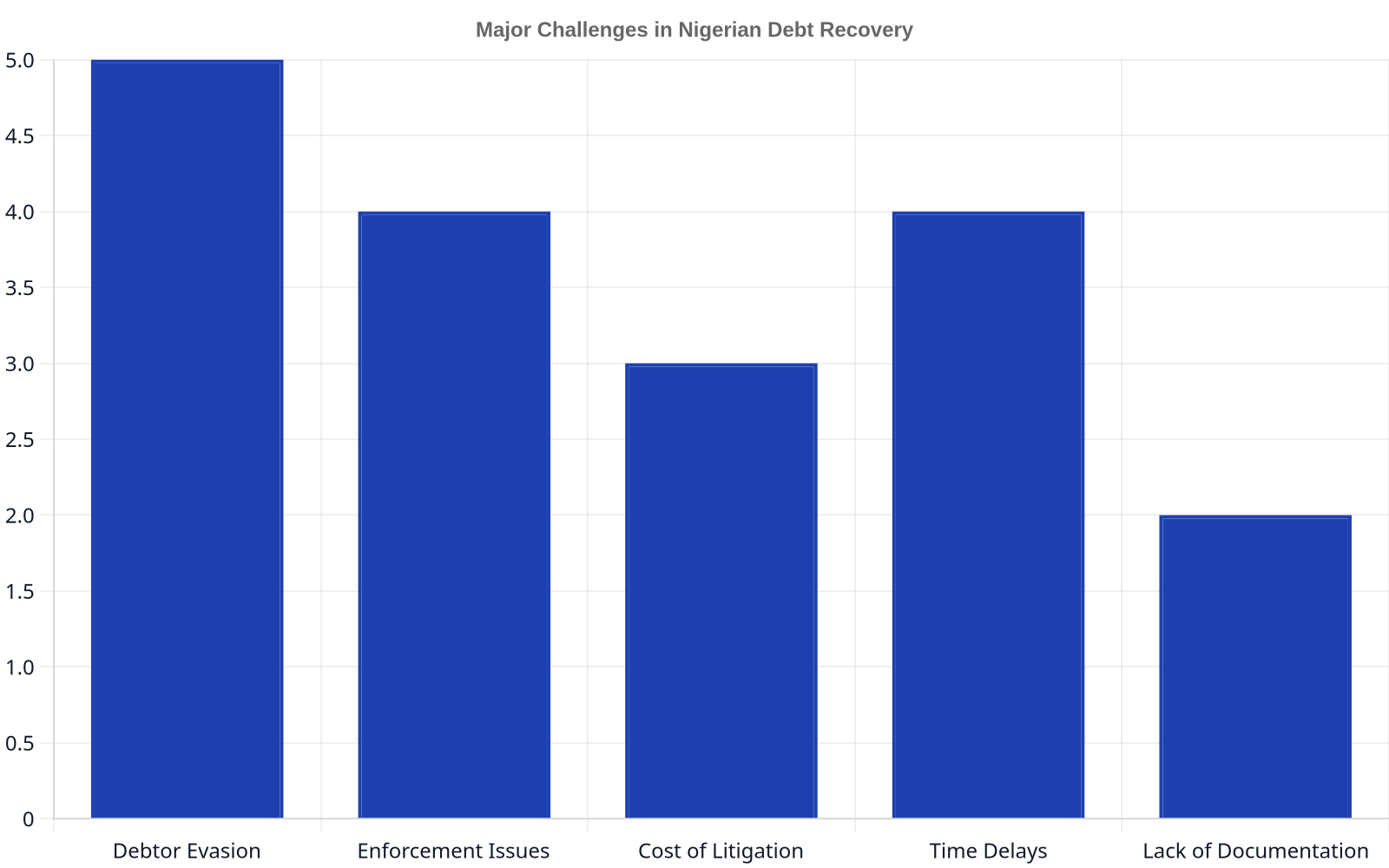
This guide outlines the most effective strategies for debt recovery in Nigeria. We’ve ranked these methods based on a combination of factors: their escalation level (from amicable to aggressive), cost-effectiveness, and legal enforceability. The ranking reflects a typical progression, starting with the least confrontational options and moving towards more formal legal interventions required for stubborn debts. This provides a clear roadmap for creditors, from small businesses to large financial institutions.

1. Amicable Settlement and Negotiation
Before any legal threats are made, the most professional and often most effective first step is direct, open communication. A simple phone call, a polite email, or a sit-down meeting can often resolve payment issues without destroying a business relationship. Many debtors are not malicious, but are facing their own cash flow problems or have simply overlooked an invoice. We have seen this countless times with the public and private companies we work with; an initial confrontational stance can burn bridges that a simple conversation could have maintained.
This approach prioritizes preserving the commercial relationship. It allows both parties to discuss the situation, understand any underlying issues, and agree on a new payment plan that is realistic for the debtor. This could involve installment payments, a deferred payment date, or even a small discount for prompt settlement. The key is to be flexible but firm, documenting any new agreement in writing to prevent future misunderstandings.
- Best for: Maintaining long-term business relationships, recovering smaller debts quickly, and when the debtor has a history of reliable payments.
- Watch out for: Debtors who make repeated promises without follow-through. A firm deadline must be set, after which you escalate to the next step. Early and consistent communication is critical, as the probability of collecting a debt decreases significantly with each passing month.
2. Formal Demand Letters from a Lawyer
When polite reminders are ignored, the next step is a formal Letter of Demand issued by a law firm. This is not just another email; it is a clear signal to the debtor that the creditor is now serious about recovery and is prepared to take legal action. The letter, printed on a law firm’s letterhead, communicates a level of authority that a standard company invoice reminder simply cannot match. It demonstrates that you have engaged legal counsel, a step that carries significant weight.
Under Nigerian law, a demand letter serves several purposes. It formally outlines the specific amount owed, the basis of the debt (e.g., contract, invoice), and a final deadline for payment. It also states the consequences of non-payment, which typically includes the commencement of legal proceedings. This letter often becomes a crucial piece of evidence if the matter proceeds to court, proving that the debtor was given a final opportunity to settle. The Rules of Professional Conduct for Legal Practitioners ensure that such letters are drafted professionally and without undue threats.
- Best for: Debtors who are ignoring direct communication, demonstrating the seriousness of your claim, and creating a formal record for potential court action.
- Watch out for: Ensure the letter is sent via a method that provides proof of delivery, such as a courier service or registered post. A debtor cannot claim they never received a demand they signed for.
A Letter of Demand from a law firm isn’t just asking for money. It’s a strategic move that shifts the psychological balance, informing the debtor that the cost and inconvenience of continued non-payment are about to escalate significantly.
3. Mediation and Alternative Dispute Resolution (ADR)
If a demand letter does not yield results, litigation is not the only remaining option. Alternative Dispute Resolution (ADR) mechanisms, particularly mediation, offer a middle ground. Mediation involves a neutral third-party mediator who facilitates a discussion between the creditor and the debtor to help them reach a mutually acceptable settlement agreement. It is less formal, less expensive, and much faster than going to court.
In Nigeria, many commercial courts now mandate a form of ADR before a case can be heard. The Lagos Multi-Door Courthouse (LMDC) was the first of its kind in Africa and has a strong track record of resolving commercial disputes, including debt recovery cases. The terms of settlement reached during mediation can be entered in court as a consent judgment, making the agreement as binding and enforceable as a court ruling. This approach is particularly effective for complex disputes where there may be counter-claims or ongoing business dependencies.
- Best for: Complex debt situations, preserving business relationships where possible, and when a faster, confidential resolution is preferred over public court proceedings.
- Watch out for: Mediation is a voluntary process. If the debtor is unwilling to participate in good faith, it can be a waste of time and money. It is crucial to assess the debtor’s willingness to genuinely negotiate before committing to this path.

4. Litigation (Civil Lawsuit)
When all other avenues have failed, initiating a lawsuit is the ultimate step for compelling payment. This is the most formal and often most powerful tool for debt recovery in Nigeria. The process begins with your lawyer filing a claim at the appropriate court, which could be a Magistrate Court or a High Court, depending on the monetary value of the debt. For certain types of undisputed debts, Nigerian courts offer a “summary judgment” procedure, which is a fast-track process.
Under the summary judgment procedure, if the debtor has no credible defense to the claim, the court can grant judgment in favor of the creditor without a full trial. This is particularly useful for straightforward cases like unpaid invoices or bounced cheques. For instance, the High Court of Lagos State (Civil Procedure) Rules 2019 provides for the Undefended List Procedure, designed specifically for these scenarios. If the debtor files a defense, the case proceeds to a full trial where both sides present evidence and arguments. While effective, litigation can be a lengthy and expensive process.
- Best for: Stubborn debtors who have refused all other settlement attempts, for large and significant debts where the cost of litigation is justified, and when you need a binding court judgment to enforce payment.
- Watch out for: The time and cost. Court processes in Nigeria can be slow. Be prepared for a potentially long-haul process and ensure the value of the debt justifies the legal fees and time investment.
5. Insolvency Proceedings (Winding-Up)
For corporate debtors, initiating insolvency (or winding-up) proceedings is perhaps the most aggressive debt recovery tool. It is a petition to the court to declare that a company is unable to pay its debts and should be dissolved, with its assets sold off to pay creditors. This is not a tool for recovering the debt itself, but rather a method of applying maximum pressure on the debtor company. The threat of being wound-up is often enough to compel a board of directors to find the funds to pay a creditor.
Under the Companies and Allied Matters Act (CAMA) 2020, a creditor can initiate winding-up proceedings if a company is indebted for a sum exceeding N200,000 and has failed to pay for three weeks after a formal statutory demand. Filing a winding-up petition is a matter of public record and can severely damage a company’s reputation and its ability to obtain credit or conduct business. Because of its severe consequences, courts scrutinize these petitions carefully and will dismiss them if the debt is genuinely disputed. It is a high-stakes strategy that should be used cautiously.
- Best for: Uncontested debts against a corporate debtor that is refusing to pay, and as a last-resort pressure tactic when you believe the company has assets to pay but is choosing not to.
- Watch out for: This tool is inappropriate for disputed debts. If a company can show a genuine dispute over the amount or validity of the debt, a court may dismiss the petition and even award costs against the creditor for abuse of court process.
Winding-up proceedings are the legal equivalent of a nuclear option. It tells the debtor company that you are prepared to see their business dissolved to get paid. It’s a powerful threat, but one that must be wielded with extreme care and only for undisputed debts.
Summary of Debt Recovery Methods
| Method | Best For | Key Consideration |
|---|---|---|
| Amicable Settlement | Preserving relationships, small debts | Set clear deadlines to avoid being strung along. |
| Formal Demand Letter | Ignored reminders, creating a paper trail | Use a law firm for authority and ensure proof of delivery. |
| Mediation (ADR) | Complex cases, confidential resolution | Relies on the debtor’s good-faith participation. |
| Litigation | Stubborn debtors, large undisputed debts | Can be expensive and time-consuming; use summary judgment where possible. |
| Insolvency Proceedings | Corporate debtors, applying maximum pressure | A high-stakes strategy only for undisputed debts; can backfire if misused. |
Conclusion: A Strategic Approach to Getting Paid
Recovering debts in Nigeria is not a single action but a strategic process of escalation. Starting with professional dialogue and moving methodically through formal demands, ADR, and finally, litigation or insolvency actions, provides the best chance of success. Each step serves a distinct purpose, from preserving relationships to asserting legal authority. As a firm that frequently assists clients, from individual investors to large financial institutions, in navigating these waters, we understand that the right strategy depends on the specific debtor, the nature of the debt, and your ultimate commercial goals. Choosing the right tool at the right time is the key to effective debt recovery in Nigeria.
If you are struggling with unpaid debts and need guidance on the best path forward, our team has the experience to help you formulate and execute a recovery strategy. Contact us today for a consultation.
FAQ
What is the first step I should take to recover a debt in Nigeria?
The first and most cost-effective step is always direct and amicable communication. Reach out to the debtor with polite reminders via phone call or email. This often resolves the issue without damaging the business relationship or incurring legal costs. Only after this fails should you escalate to more formal methods.
How long does it take to recover a debt through the courts in Nigeria?
The timeframe varies significantly. A straightforward case using the summary judgment procedure for an undisputed debt might be resolved in 6-9 months. However, a contested case that goes to a full trial can take several years, depending on the court’s schedule, the complexity of the case, and any appeals.
Is there a time limit for recovering a debt in Nigeria?
Yes, this is known as the statute of limitations. For simple contract debts, the Limitation Act (or equivalent state laws) provides that a creditor must commence legal action within six years from the date the cause of action arose (i.e., the date the debt became due). After this period, the debt becomes “statute-barred,” and you can no longer use the courts to recover it.
Can I use the police to recover a debt?
No, the police are not a debt collection agency. Debt is a civil matter, not a criminal one, unless there is evidence of fraud or a crime, such as issuing a dud cheque under the Dishonoured Cheques (Offences) Act. The Nigerian Supreme Court has repeatedly stated that using the police to intimidate debtors is illegal and an abuse of power. You must use civil remedies.
What is the difference between a secured and unsecured debt?
A secured debt is backed by an asset (collateral), such as a mortgage on a property or a charge on company assets. If the debtor defaults, the creditor can take possession of the asset to recover the debt. An unsecured debt has no collateral. Most trade debts (e.g., for goods or services supplied) are unsecured, making them harder to recover if the debtor becomes insolvent.
How much does it cost to hire a lawyer for debt recovery?
Legal fees can be structured in several ways: a flat fee, an hourly rate, or a percentage of the debt recovered (contingency fee), though contingency fees are subject to regulation in Nigeria. The total cost will depend on which recovery method is used. A simple demand letter is inexpensive, while a full-blown court case will be significantly more costly. It is important to discuss and agree on the fee structure with your lawyer upfront. The Legal Practitioners Act provides guidelines on remuneration for legal services.
Related reading
- 7 Steps to Trademark Registration in Nigeria
- Trademark vs. Copyright in Nigeria: Which IP Is Right for You?.
About the author

Sandra Adeniran
Principal Partner
Adebola Adeniran is the Founding Partner of Ardnas Legal Practitioners. She is a dynamic and forward-thinking lawyer with a passion for providing innovative legal solutions to businesses and individuals. Adebola combines deep legal expertise with a practical, business-oriented approach, ensuring that clients receive advice that is both strategic and actionable.